Why CNC Roll Notching Lathe Is the Missing Link in Your Production Line?
Imagine walking through your shop floor, and there it is—a bottleneck you have been wrestling with for months. The roll notching station. Operators are manually indexing, measuring, and hoping. Scrap bins are filling up. Delivery dates are slipping. You have tried everything: new tooling, more training, even motivational posters. But the fundamental problem remains: your process is only as good as the human hand guiding it. The answer, as you might have guessed, is not another motivational poster. It is a CNC Roll Notching Lathe. This machine does not just cut notches; it obliterates variability, and it does so with a level of repeatability that will make your quality department weep with joy. In this article, we will dissect why this technology is the missing link in your production line, how it solves the pain points that have been draining your profitability, and why NANTONG LUCUBRATE MACHINERY TECHNICAL LTD. has become the go-to partner for manufacturers who refuse to settle for mediocrity.
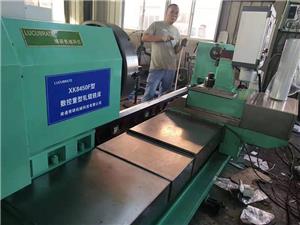
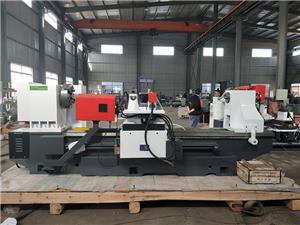
Let us be honest: the term "CNC Roll Notching Lathe" might not roll off the tongue like "3D printer" or "collaborative robot." But in the world of rotational parts—think gears, pulleys, bearing races, and any component that requires precise angular features—this machine is the quiet workhorse that separates the industry leaders from the also-rans. It combines the rotational precision of a lathe with the indexing capability of a CNC controller, allowing you to machine notches, slots, keyways, and other features on cylindrical workpieces with an accuracy that is measured in microns, not millimeters. And it does this cycle after cycle, shift after shift, without fatigue, without coffee breaks, and without complaining about the overnight shift.
Now, let us dive into the specific pain points that plague manufacturers who have not yet embraced this technology. The first and most obvious pain is the inconsistency of manual notching. Picture this: a skilled machinist, let us call him Dave, has been with your company for fifteen years. He knows the machine like the back of his hand. But on a Monday morning, after a weekend of yard work, his hands are a little stiff. The notch depth on the first part is off by 0.05 millimeters. Not a big deal, right? But that part is destined for a high-speed coupling that operates at 10,000 RPM. At that speed, a 0.05-millimeter error translates into vibration, premature wear, and eventually, catastrophic failure. Dave catches the error on the third part, but those first two are now either scrap or rework. Multiply that by a production run of 5,000 parts, and you are looking at a scrap rate of 0.04%, which might sound acceptable until you calculate the cost of rework labor, material waste, and the potential liability if a faulty part ships out. The financial impact is staggering: a mid-sized manufacturer can lose upwards of $250,000 annually to manual notching errors, not to mention the intangible cost of damaged customer trust.
The second pain point is the sheer time required for setup and changeover. In a job shop environment, you might run ten different part numbers in a single day. Each time you switch from one part to another, you have to stop the machine, remove the old tooling, install new tooling, manually calibrate the indexing mechanism, and run test parts until you achieve the desired tolerance. This process can take anywhere from 45 minutes to two hours, depending on the complexity of the part. During that time, the machine is idle, your highly paid machinist is doing setup work instead of cutting metal, and your overall equipment effectiveness (OEE) takes a nosedive. Industry data suggests that setup time accounts for up to 30% of total production time in small-batch environments. That is 30% of your capacity that is not generating revenue. The CNC Roll Notching Lathe attacks this problem head-on with automated tool changers and programmable part programs. You simply call up the program for the next part number, and the machine automatically positions the tooling, sets the indexing angle, and verifies the zero point using a touch probe. Changeover time drops from hours to minutes. In fact, our clients at NANTONG LUCUBRATE MACHINERY TECHNICAL LTD. report average setup time reductions of 70%.
The third pain point, and perhaps the most insidious, is the lack of traceability. In industries like aerospace, automotive safety components, and medical devices, you are required to provide full documentation of every manufacturing step. If a part fails in the field, you need to know exactly which machine, which tool, and which operator produced that part. With manual notching, this traceability is virtually impossible. You might have a logbook, but human error in recording data is inevitable. The CNC Roll Notching Lathe, on the other hand, automatically records every parameter for every part: spindle speed, feed rate, notch depth, angular position, tool wear, and even ambient temperature. This data is stored in a cloud-based system or a local server, and you can generate a complete digital twin of each part's manufacturing history with a single click. This not only satisfies regulatory requirements but also provides invaluable data for continuous improvement initiatives like Six Sigma and Lean Manufacturing.
Now, let us transition from pain to solution. How exactly does the CNC Roll Notching Lathe address these issues? For the inconsistency problem, the solution lies in closed-loop servo control. The machine uses high-resolution encoders on both the spindle and the indexing axis, with a resolution of 0.001 degrees. This means that every notch is positioned with absolute precision, regardless of the operator's skill level. Moreover, the machine features an in-process gauging system that measures each notch immediately after cutting. If the measurement deviates from the programmed tolerance by even a few microns, the machine automatically compensates for the deviation in the next cycle. This self-correcting mechanism ensures that the process capability index (Cpk) stays above 1.67, which is the gold standard for high-quality manufacturing. In practical terms, this means you can expect a scrap rate of less than 0.01%, and even that is usually due to material defects, not machine errors.
For the setup time issue, the solution is a combination of hardware and software. The machine comes with a 12-station turret that can hold a variety of notching tools, each with its own quick-change adaptor. The CNC controller, which is designed by our engineers at NANTONG LUCUBRATE MACHINERY TECHNICAL LTD., features an intuitive graphical interface that guides the operator through the setup process step-by-step. You can even program the machine offline using CAD/CAM software and then transfer the program via USB or Ethernet. The machine also has a built-in simulation mode that allows you to verify the entire machining sequence virtually before you cut a single chip. This eliminates the trial-and-error approach that is common with conventional machines. As a result, our customers achieve a first-pass yield rate of 99.5% even on new part numbers, and the average changeover time is less than 15 minutes.
For the traceability issue, the solution is a comprehensive data management system that is integrated into the machine's controller. Every cycle, the machine generates a unique data record that includes a timestamp, part serial number, tool ID, and all process parameters. This data is automatically uploaded to your MES (Manufacturing Execution System) or ERP (Enterprise Resource Planning) system via OPC-UA protocol, which is the industry standard for industrial communication. You can also set up alerts that notify you if a process parameter drifts out of spec, allowing you to take corrective action before a non-conforming part is produced. This level of transparency not only meets regulatory requirements but also builds trust with your customers, who can now see the exact conditions under which their parts were made.
To bring these concepts to life, let me share a few success stories from our clients around the world. First, there is Hans from Munich, Germany. Hans runs a precision machining shop that specializes in components for high-performance automotive transmissions. He was struggling with a rejection rate of 8% on a particular gear blank that required four notches at precise angular intervals. The notches were critical for oil flow, and any misalignment caused gear noise and premature failure. After installing a CNC Roll Notching Lathe from NANTONG LUCUBRATE MACHINERY TECHNICAL LTD., Hans saw his rejection rate drop to 0.2% within the first month. His production throughput increased by 35% because he no longer had to stop the machine for manual adjustments. In his own words: "The machine pays for itself every single day. I only wish I had made the switch five years ago."
Second, there is Maria from Monterrey, Mexico. Maria's company manufactures components for agricultural equipment, including shafts that require multiple keyways and notches. They were facing severe competition from low-cost producers in Asia, and their manual notching process was too slow and inconsistent to compete. By implementing two CNC Roll Notching Lathes, they were able to reduce their unit cost by 18% and improve their on-time delivery rate from 78% to 98%. Maria commented, "We were skeptical about the investment, but the ROI was less than 18 months. The machines are so reliable that we have actually reduced our maintenance staff by one person."
Third, there is James from Sheffield, United Kingdom. James works for a company that supplies bespoke pulleys for the aerospace industry. The tolerances are extremely tight—notch angles must be within ±0.01 degrees, and surface finish must be better than Ra 0.4 micrometers. With manual notching, they were barely able to meet these specs, and the reject rate was 12%. After integrating a CNC Roll Notching Lathe with a custom diamond-coated tooling package, they achieved a reject rate of 0.5%, and they now meet all aerospace standards, including AS9100. James said, "The level of precision is phenomenal. We have passed every audit with flying colors, and our customers have noticed the difference. We have even won new contracts because of our improved capability."
Fourth, there is Kenji from Nagoya, Japan. Kenji's factory produces electric motor shafts that require several notches for locking rings. The challenge was that the shafts have varying diameters, and the notches must be cut at different depths depending on the diameter. This was a nightmare for manual setups. With the CNC Roll Notching Lathe's ability to store 1,000 different part programs, Kenji's team can now switch between different shaft models in under 10 minutes. Their overall production efficiency increased by 40%, and they have been able to take on more diverse orders without expanding their workforce. Kenji noted, "The machine is incredibly flexible. It has opened up new market segments for us that we previously couldn't serve profitably."
Fifth, there is Sophie from Lyon, France. Sophie's company specializes in high-precision couplings for the nuclear industry. These couplings have a complex pattern of notches that must be machined with absolute accuracy. The safety requirements are stringent, and any deviation could lead to catastrophic failure. After installing a CNC Roll Notching Lathe with a specialized clamping system, they were able to achieve a Cpk of 2.0, which is world-class. Sophie said, "The machine gives us the confidence to guarantee our products for 30 years. We have never had a single failure in the field, and we attribute that to the precision of our manufacturing process."
Now, let us talk about the applications and partnerships that make this technology so versatile. The CNC Roll Notching Lathe is used in a wide range of industries, including automotive (for transmission shafts, gears, and steering components), aerospace (for turbine blades, engine parts, and landing gear components), energy (for wind turbine shafts and oil drilling equipment), and industrial machinery (for rollers, spindles, and precision couplings). It is also increasingly used in the medical device industry for manufacturing surgical instruments and implants that require intricate features. At NANTONG LUCUBRATE MACHINERY TECHNICAL LTD., we have established long-term partnerships with leading companies such as Bosch Rexroth, Siemens, and Caterpillar. These partnerships are not just transactional; we work closely with their engineering teams to develop custom solutions that meet their unique requirements. For example, we collaborated with a major German automotive supplier to develop a special notching tool that could cut hardened steel without coolant, reducing environmental impact and improving tool life by 30%. These kinds of collaborations ensure that our machines are always at the cutting edge of technology.
Let me now address some frequently asked questions that we receive from engineers and procurement managers across Europe and North America. The first question is: "What is the maximum workpiece diameter and length that your CNC Roll Notching Lathe can handle?" Our standard machines can handle workpieces up to 500 mm in diameter and 1,000 mm in length. For larger parts, we offer custom configurations up to 1,200 mm in diameter and 3,000 mm in length. We can also accommodate non-standard shapes with custom clamping systems. The second question is: "How does the machine handle different materials, such as titanium or Inconel?" Our machines are equipped with high-torque spindle motors and rigid construction that allows them to handle exotic alloys. We also offer optional through-tool coolant systems that operate at pressures up to 80 bar, which is essential for machining heat-resistant superalloys. The third question is: "What kind of training and technical support do you provide?" We provide comprehensive training for your operators and maintenance staff, either at our facility in China or at your site. The training covers programming, operation, and preventive maintenance. We also offer remote diagnostics via the internet, and our service engineers are available 24/7 for emergency support. The fourth question is: "Can the machine be integrated into our existing automation system?" Absolutely. Our machines come with standard interfaces such as Ethernet/IP, Profinet, and CC-Link, allowing seamless integration with robots, conveyors, and other automation equipment. We have successfully implemented fully automated cells where the machine loads and unloads parts without any human intervention. The fifth question is: "What is the typical lead time for a standard machine and what is the warranty?" For standard models, the lead time is 8-10 weeks from the date of order. We offer a standard warranty of 24 months, which covers all parts and labor. We also offer extended warranties and preventive maintenance contracts that ensure your machine operates at peak performance for years to come.
In conclusion, the CNC Roll Notching Lathe is not just a piece of equipment; it is a strategic investment in the future of your manufacturing operation. It eliminates the variability that plagues manual processes, reduces setup times to a fraction of what you are used to, and provides the traceability that modern quality standards demand. The success stories from Hans, Maria, James, Kenji, and Sophie are just a few examples of how this technology has transformed businesses across the globe. If you are ready to take your production to the next level, we invite you to download our comprehensive technical white paper, which goes into even greater detail about the machine's capabilities, specifications, and application examples. The white paper is available for free on our website, and you can also schedule a live demo with one of our sales engineers, who will be happy to discuss how a CNC Roll Notching Lathe can be tailored to your specific needs. Remember, the missing link in your production line is not a secret; it is a machine that has been perfected over decades, and it is waiting for you to make the call. So, why wait? Your competitors are already reaping the benefits.