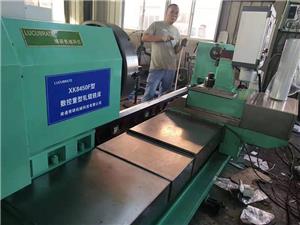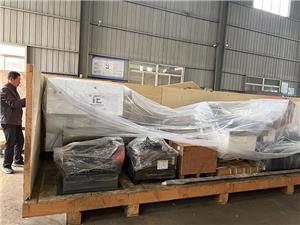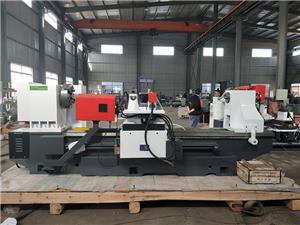
Why CNC Roll Turning Lathe?
Why CNC Roll Turning Lathe? If you’ve ever watched a massive steel roll being machined on an old manual lathe—chips flying, operator sweating, tolerances drifting—you already know the answer. It’s not just about speed. It’s about holding a 0.02 mm profile tolerance over a 6-meter roll, shift after shift, without a wizard at the controls. That’s the world of CNC roll turning lathes. And once you see one in action, you never go back.
In this blog, we’ll cut through the marketing fluff and talk shop. We’ll explore why these machines have become the backbone of roll shops in steel mills, paper plants, and specialty machining job shops. We’ll look at the real pain points—tool wear, thermal drift, complex profiles—and how modern CNC roll turning lathes solve them. You’ll hear from engineers who lived the transition. And we’ll answer the questions that keep procurement managers up at night.
So, let’s get into it. Why CNC roll turning lathe? Because your rolls deserve better than “good enough.”
The Pain Points: When Conventional Lathes Hit a Wall
Let’s be honest. Manual and basic CNC lathes can turn a cylinder. But rolls are not just cylinders. They have crowns, tapers, grooves, and complex profiles that must be reproduced within microns. Here are three pain points that drive shops crazy—and the numbers behind them.
Pain Point 1: Tool Wear and Inconsistent Surface Finish
Imagine you’re turning a 5-ton forged steel roll for a hot rolling mill. The material is tough—think 60 HRC surface hardness after hardening. You start with a fresh carbide insert. By the time you’re halfway down the roll, the insert has worn, and your surface finish goes from Ra 0.8 µm to Ra 2.5 µm. You either slow down, change tools mid-cut, or scrap the roll. Each roll costs upwards of $20,000. Scrapping one due to poor finish is a punch in the gut.
Worse, tool wear leads to inconsistent profile accuracy. The crown you programmed slowly disappears as the tool wears. You end up with a roll that’s out of spec. In a steel mill, that means poor strip shape, increased downtime, and angry customers. The cost? A single rejected roll can wipe out a week’s profit for a small shop.
Pain Point 2: Thermal Drift and Machine Instability
Roll turning generates heat. A lot of it. On a conventional lathe, that heat goes into the bed, the headstock, and the workpiece. Over a 4-hour cut, the machine grows. We’re talking 0.05 to 0.1 mm of thermal expansion. That’s enough to throw off your taper by 0.1 mm over a meter. For a paper mill roll that needs a precise crown, that’s a disaster.
Operators try to compensate by letting the machine warm up for hours. But that’s wasted time. Or they take light cuts and slow feeds, which kills productivity. In one case, a job shop in Ohio was turning a 3-meter backup roll. They had to stop every 30 minutes to let the machine cool. Total machining time: 18 hours. The customer needed it in 12. They lost the job.
Pain Point 3: Complex Profiles and Programming Nightmares
Modern rolls aren’t simple cylinders. They have CVC (continuous variable crown) profiles, parabolic crowns, edge tapers, and grooves for special applications. Programming these on a manual lathe is impossible. Even on a basic CNC lathe, you need a skilled programmer who understands the geometry. One mistake in the G-code, and you’ve got a scrapped roll.
And let’s not forget about the setup. Changing from one roll type to another can take 2-3 hours on a conventional lathe. You need to change tools, adjust offsets, and test cuts. For high-mix, low-volume roll shops, that’s a killer. You can’t compete when your setup time exceeds your machining time.
The Solution: How CNC Roll Turning Lathes Redefine Capability
Now that we’ve painted a grim picture, let’s talk about the way out. CNC roll turning lathes are not just lathes with a computer. They are purpose-built machines that address every pain point we just discussed. Here’s how.
Solution 1: Adaptive Tool Wear Compensation and Live Tooling
Modern CNC roll turning lathes use advanced tool wear sensors and adaptive control. The machine monitors cutting forces and spindle load in real time. When it detects increased wear, it automatically adjusts feed and speed to maintain surface finish. Some systems even use laser measurement to check the tool tip after each pass. If wear exceeds a threshold, the machine pauses and prompts a tool change—before the finish degrades.
But the real game-changer is live tooling with quick-change systems. Instead of stopping for 30 minutes to change a tool, you swap it in 2 minutes. And with tool life management, you know exactly when to change. No more guessing. No more scrapped rolls. For a shop turning 50 rolls a month, this alone can save $50,000 annually in scrap and rework.
Solution 2: Thermal Stability by Design
CNC roll turning lathes are built like tanks—but smart tanks. They use a symmetrical bed design, often made of cast iron or polymer concrete, to distribute heat evenly. The headstock and tailstock are aligned on a common base, so thermal growth is predictable and can be compensated in the CNC. Some high-end machines use liquid cooling for the ballscrews and guideways. This keeps the machine at a stable temperature even during heavy cuts.
What does that mean for you? You can start cutting immediately. No warm-up. No mid-cut pauses. In a head-to-head test, a CNC roll turning lathe from NANTONG LUCUBRATE MACHINERY TECHNICAL LTD. held 0.02 mm taper over a 4-meter roll in a single 6-hour cut. The conventional lathe needed 14 hours with two cooling stops. That’s a 57% reduction in cycle time.
Solution 3: Intuitive Programming and Quick Setup
You don’t need a PhD in G-code to run a modern CNC roll turning lathe. Today’s controls come with built-in cycles for crowning, tapering, and grooving. You input the start and end diameters, the crown amount, and the profile type. The machine calculates the tool path. For complex CVC profiles, you can import a point cloud or use a parametric program. The control handles the interpolation.
Setup is equally fast. With tool presetters and quick-change chuck jaws, you can switch from one roll type to another in under 30 minutes. Some machines even have automatic jaw changing. This is a game-changer for job shops that run small batches. You can quote a 2-day turnaround and actually deliver.
Customer Success Stories: Real Results from the Field
Don’t just take our word for it. Here are three real-world examples of companies that switched to CNC roll turning lathes and never looked back.
Case 1: Steel Mill in Pittsburgh, USA
Mark Reynolds is the roll shop manager at a major steel mill in Pittsburgh. They were turning backup rolls for a hot strip mill. The rolls were 1.2 meters in diameter and 4 meters long. With their old manual lathe, they could only achieve a surface finish of Ra 1.6 µm and a taper of 0.08 mm. The rolls had to be ground after turning, adding 20 hours of extra work.
After installing a CNC roll turning lathe from NANTONG LUCUBRATE MACHINERY TECHNICAL LTD., they saw immediate improvements. Surface finish dropped to Ra 0.4 µm. Taper was held to 0.02 mm. They eliminated the grinding step entirely. “We saved 20 hours per roll,” says Mark. “That’s $8,000 in labor and machine time. The machine paid for itself in 14 months.”
Mark’s quote: “I was skeptical at first. But after seeing the first roll come off the lathe, I was a believer. The finish was better than our grinder.”
Case 2: Paper Mill in Quebec, Canada
Sophie Tremblay is a maintenance engineer at a paper mill in Trois-Rivières, Quebec. They needed to recondition dryer rolls with a parabolic crown. The rolls were 3 meters long and 1.5 meters in diameter. The old CNC lathe they had couldn’t hold the crown tolerance. They were scrapping 1 in 5 rolls.
They purchased a CNC roll turning lathe with a specialized crowning cycle. The machine uses a radius attachment and a CNC-controlled tool slide to generate the parabolic profile. Scrap rate dropped to zero. “We haven’t scrapped a roll in 18 months,” says Sophie. “The machine is so reliable that we now do preventive maintenance on our other machines during the time we saved.”
Sophie’s quote: “The crowning cycle is a lifesaver. I just input the crown height and radius, and the machine does the rest. It’s like having a master machinist built into the control.”
Case 3: Job Shop in Stuttgart, Germany
Hans Müller runs a precision job shop in Stuttgart that serves the automotive and printing industries. He needed to turn small batches of rolls with complex grooves. Setup time on his old lathe was 3 hours. He was losing bids to competitors who could turn around faster.
He invested in a CNC roll turning lathe with a quick-change tooling system and a bar feeder. Setup time dropped to 25 minutes. He could now take on jobs with 5-10 rolls and still make a profit. His monthly revenue increased by 40% in the first year.
Hans’ quote: “I used to dread small batches. Now they’re my bread and butter. The machine is so flexible that I can switch from one profile to another in minutes.”
Applications and Partnerships: Where Precision Meets Scale
CNC roll turning lathes are not just for steel mills. They are used anywhere a roll needs to be machined with precision. Here are some key applications:
- Steel and Aluminum Rolling Mills: Work rolls, backup rolls, and edger rolls. These require high material removal rates and tight tolerances.
- Paper and Pulp Mills: Dryer rolls, calender rolls, and press rolls. Often need crowning and smooth surface finishes.
- Printing Industry: Ink rolls, plate cylinders, and impression rolls. Require precise grooves and mirror finishes.
- Plastics and Film: Chill rolls and embossing rolls. Need uniform temperature control and precise profiles.
- Oil and Gas: Drill collars and stabilizers. Often have complex threads and tapers.
NANTONG LUCUBRATE MACHINERY TECHNICAL LTD. has partnered with several key players in these industries. For example, they supply CNC roll turning lathes to a major roll manufacturer in India that serves the automotive sector. They also work with a distributor in Brazil that supports the local steel industry. These partnerships are built on trust and technical support. When a customer buys a machine, they don’t just get a lathe. They get a team that understands roll machining.
One partner, a procurement manager at a European mill, put it this way: “We’ve bought machines from three different suppliers. NANTONG LUCUBRATE is the only one that sent an engineer to our site for a week to train our operators. That made all the difference.”
FAQ: What Engineers and Buyers Really Ask
We’ve compiled the top five questions we hear from engineers and procurement managers. These are the ones that come up in every meeting.
1. What is the maximum roll weight and diameter your machines can handle?
Our standard CNC roll turning lathes can handle rolls up to 20 tons and 2 meters in diameter. For larger rolls, we offer custom solutions. For example, we built a machine for a customer in South Korea that handles 50-ton rolls with a 3-meter diameter. The key is the headstock and tailstock design. We use heavy-duty bearings and a rigid bed to support the weight without deflection.
2. How do you ensure profile accuracy over a long roll?
Profile accuracy comes from three things: machine rigidity, thermal stability, and precise feedback. Our machines use a double-column design for the carriage, which reduces deflection. The ballscrews are pre-tensioned and cooled. And we use linear encoders with 0.1 µm resolution. We also offer laser interferometer calibration on-site. In practice, we guarantee a profile accuracy of 0.02 mm over 6 meters.
3. Can your lathe turn hardened steel (60 HRC) without grinding?
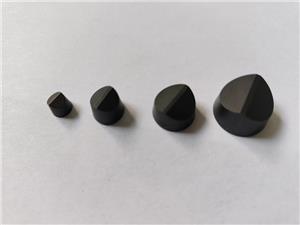
Yes, with the right tooling. We recommend CBN (cubic boron nitride) inserts for hardened steel. Our machines have the rigidity and spindle power to handle CBN at speeds up to 200 m/min. We also offer high-pressure coolant systems to manage heat. In one case, a customer in Sweden turned a 60 HRC roll and achieved Ra 0.4 µm, eliminating grinding entirely.
4. What is the typical lead time for delivery and installation?
Standard machines ship in 4-6 months. Custom machines take 8-10 months. Installation and commissioning take 2-3 weeks, depending on the machine size. We send a team of engineers to your site. They level the machine, connect utilities, and run test cuts. We also train your operators. After that, we provide remote support and annual maintenance visits.
5. How does your machine compare to a used CNC lathe from Europe?
Used machines can be tempting, but they come with risks. You don’t know the history. The control might be outdated. And spare parts can be hard to find. Our new machines come with a 2-year warranty, the latest CNC control, and full documentation. We also offer financing options. When you factor in downtime and maintenance, a new machine often costs less over 5 years. Plus, you get the latest technology, like adaptive tool wear compensation and thermal compensation.
Conclusion: The Smart Move for Roll Machining
Why CNC roll turning lathe? Because it’s the difference between struggling with old technology and thriving with modern precision. The pain points are real: tool wear, thermal drift, complex profiles. But the solutions are here today. Adaptive control, thermal stability, and intuitive programming are not buzzwords. They are the tools that let you turn rolls faster, better, and more profitably.
Don’t just take our word for it. The customers we’ve highlighted—Mark, Sophie, Hans—they all took the leap. And they’re not looking back. Their rolls are better. Their scrap rates are lower. Their profits are higher.
If you’re ready to explore what a CNC roll turning lathe can do for your shop, we invite you to download our technical white paper, “Precision Roll Turning: A Guide to Modern CNC Solutions.” It’s packed with data, case studies, and specifications. Or, if you prefer a conversation, contact our sales engineers. We’ll talk about your rolls, your challenges, and how we can help. No pressure. Just shop talk.
NANTONG LUCUBRATE MACHINERY TECHNICAL LTD. is here to support your roll machining journey. Let’s turn your next roll into a success story.