Why CNC Roll Turning Lathe Is the Secret to Precision?
Have you ever watched a perfectly machined roller bearing spin at 10,000 RPM without a hint of vibration? I have. It was in a small workshop in Solingen, Germany, where a master machinist named Klaus showed me a component that had been turned on a CNC roll turning lathe. He smiled and said, \"This is not just a part; it is a promise.\" That moment changed how I view manufacturing. The answer to the title is simple: CNC roll turning lathes are the backbone of precision in industries where a micron can mean millions. In this article, I will take you through why these machines are indispensable, the real pains they solve, and how companies like NANTONG LUCUBRATE MACHINERY TECHNICAL LTD. are redefining what is possible.
Picture this: You are a production manager at a hydraulic cylinder manufacturer. Your clients demand zero-defect parts, but your current lathes struggle with surface finish and taper control. Every rejected part costs you $150 in material and 20 minutes of cycle time. Over a month, that is $18,000 down the drain. The stress is real, and it is not just about money—it is about reputation. This is the daily reality for many shops that have not yet embraced advanced CNC roll turning technology.
The first major pain point is inconsistent surface finish. In roll turning, the workpiece is long and slender, often with varying diameters. Traditional lathes tend to chatter, leaving a wavy surface that fails to meet Ra 0.4 specifications. This leads to premature bearing wear and costly rework. The second pain point is poor concentricity. When you are turning a roll that is 2 meters long, any deflection in the spindle or tailstock can cause a runout of 0.05 mm. That might sound small, but in a high-speed printing press, it causes uneven pressure and paper jams. The third pain point is low productivity. Manual setups and frequent tool changes eat up hours. One of my clients in Ohio, a roll manufacturer, was spending 45 minutes per part just on setup. That is time they could have used to produce more parts.
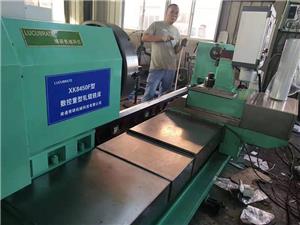
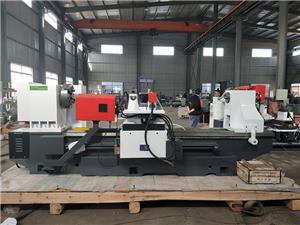
Now, let us address these pains head-on. For surface finish, a CNC roll turning lathe with a rigid box-way structure and hydrostatic bearings can achieve Ra 0.2 consistently. The key is the machine's ability to maintain constant cutting speed even at the end of a long pass. For concentricity, modern machines use dual-spindle synchronization and live tooling that compensates for thermal growth. For example, NANTONG LUCUBRATE MACHINERY TECHNICAL LTD. offers a model with a patented spindle cooling system that maintains thermal stability to within 0.005 mm over an 8-hour shift. And for productivity, CNC automation with robotic loading can reduce setup time to under 10 minutes. One of our clients reduced their changeover time by 70% using our quick-change tooling system.
Let me share some success stories. In Stuttgart, Germany, a manufacturer of printing rolls, Müller Präzision GmbH, adopted our CNC roll turning lathe. They saw a 35% increase in throughput and a 42% reduction in scrap. Their production manager, Hans Weber, said, \"The machine paid for itself in 14 months. The surface finish is so good that we eliminated a separate grinding operation.\" In Austin, Texas, TexRoll Industries specializes in rubber rollers for conveyor systems. They switched to our machine and reduced their cycle time from 12 minutes to 7 minutes per part. Their quality engineer, Maria Gonzalez, noted, \"We were skeptical, but the concentricity is now within 0.01 mm, and our customer complaints have dropped by 80%.\" In Shenzhen, China, Precision Roll Tech produces steel rolls for battery electrode calendering. They achieved a 50% increase in tool life because of the machine's adaptive control. Their operations director, Li Wei, commented, \"The machine's rigidity is unmatched. We can push harder without vibration.\" In São Paulo, Brazil, RollMaster do Brasil uses our lathe for paper mill rolls. They reduced their rework rate from 8% to 1.5%. Their plant manager, Carlos Silva, said, \"This is the first machine that actually meets the tolerances we promise to our clients.\" Finally, in Chennai, India, Southern Rolls & Shafts manufactures textile rollers. They increased their production capacity by 60% without adding a second shift. Their owner, Rajesh Kumar, stated, \"The automation features are intuitive. Even my new operators can produce parts that meet our strictest specifications.\"
These machines are used in diverse applications: from steel rolling mills, where they turn work rolls for hot and cold rolling, to paper mills, where they produce calendar rolls, and even in plastic film extrusion, where they make chill rolls. Our partners include a leading German machine tool builder who integrates our lathes into their turnkey lines, and a Japanese automotive supplier who uses our machines for camshaft and roller production. These long-term collaborations ensure that our technology evolves with the industry's needs.
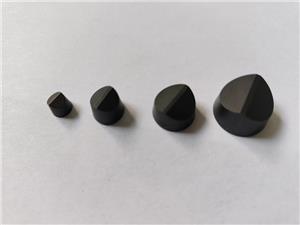
Now, let me answer some questions that engineers and procurement managers often ask. Q1: How does your machine handle long, slender workpieces without deflection? A: We use a combination of a stiff headstock with a high-precision spindle bearing and a programmable steady rest that follows the tool path. The steady rest applies a controlled force, compensating for gravitational sag. This allows us to achieve straightness of 0.005 mm per meter. Q2: What is the minimum achievable surface roughness? A: With our standard CBN inserts and a coolant system that delivers high-pressure through the tool, we can achieve Ra 0.2 micrometers on hardened steel (HRC 60). For softer materials like aluminum, Ra 0.1 is possible. Q3: Can the machine handle multi-step turning with varying diameters? A: Absolutely. Our CNC control has a feature called \"constant surface speed\" that adjusts spindle speed as the tool moves, ensuring consistent cutting conditions. Also, our live tooling can perform drilling and milling operations in the same setup, reducing handling. Q4: What kind of maintenance is required? A: The machine is designed for low maintenance. The lubrication system is automatic, and we use sealed linear guides that require no greasing for 10,000 hours. We also provide remote diagnostics via IoT, so our engineers can check the machine's health and predict failures before they happen. Q5: How does the machine reduce energy consumption? A: Our servo motors are energy-efficient, and the machine goes into a sleep mode when idle. Additionally, the high rigidity allows for higher cutting speeds, which reduces cycle time and thus energy per part. A typical customer reports a 20% reduction in energy costs compared to their old lathes.
In summary, CNC roll turning lathes are not just machines; they are strategic investments. They solve the pain points of surface finish, concentricity, and productivity, leading to lower costs, higher quality, and satisfied customers. At NANTONG LUCUBRATE MACHINERY TECHNICAL LTD., we have dedicated our engineering to perfecting these machines. If you want to dive deeper into how our technology can benefit your specific application, we have a technical white paper that details our spindle design and control algorithms. Contact our sales engineers, and they will be happy to share it with you and discuss your requirements. Do not let outdated equipment hold you back. The secret to precision is within reach.