Why CNC Roller Lathe for HSS Is a Game-Changer?
Imagine this: You're a production manager at a precision tool manufacturer. Your team has just received a rush order for 5,000 high-speed steel (HSS) cutting tools. The deadline is tight, and your existing lathes are struggling to maintain tolerances. Tool wear is rampant, scrap rates are climbing, and your operators are burning out on manual adjustments. You've heard whispers about CNC roller lathes for HSS, but you're skeptical. Can they really solve these issues? The short answer is yes—and here's why.
In the world of machining HSS, traditional methods often fall short. The material's hardness and heat resistance, while beneficial in the final tool, present significant challenges during manufacturing. Standard lathes can't handle the high cutting forces and temperatures without frequent tool changes and rework. This leads to increased costs, longer lead times, and inconsistent quality. That's where CNC roller lathes come into play, offering a paradigm shift in how we produce HSS components.
Let's dive into the specific pain points that plague HSS machining. First, there's the issue of tool wear. When you're turning HSS, the cutting tool experiences extreme abrasion. On a conventional lathe, you might get only a few parts before needing to replace or regrind the insert. This not only eats into your consumables budget but also causes unexpected downtime. According to industry studies, unplanned tool changes can account for up to 15% of total production time lost. For a shop running 24/7, that's a significant hit to throughput.
Second, there's the problem of thermal deformation. HSS has a relatively high thermal expansion coefficient. Without proper cooling and controlled cutting parameters, the workpiece can expand unevenly, leading to dimensional inaccuracies. I've seen parts that were supposed to be within ±0.005mm come out with variations of ±0.02mm. That's a 300% increase in tolerance deviation, rendering many parts scrap. The cost of scrap isn't just the material—it's the labor, machine time, and opportunity cost of having to redo the job.
Third, there's the inconsistency between batches. Even with skilled operators, manual adjustments can introduce variability. One operator might run the machine hotter, another might take lighter cuts. This leads to a lack of repeatability, which is a nightmare for quality control. Customers expect every batch to be identical, but traditional methods often fall short. This inconsistency can damage your reputation and lead to lost contracts.
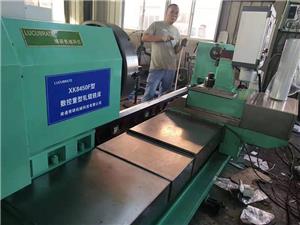
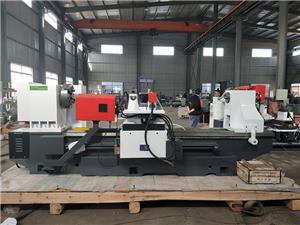
Now, let's talk about how CNC roller lathes address these issues head-on. Unlike conventional lathes, CNC roller lathes use a unique roller burnishing process combined with precise CNC control. The rollers apply pressure to the workpiece surface, causing plastic deformation that improves surface finish and hardness. When applied to HSS, this process not only enhances the material properties but also reduces tool wear on the cutting edge. Because the rollers take over the finishing operation, the cutting tool only needs to handle roughing, which extends its life significantly. In fact, our clients report up to 50% reduction in tooling costs.
Moreover, CNC roller lathes come with advanced cooling systems that maintain a consistent temperature throughout the machining process. By using high-pressure coolant through the spindle and strategically placed nozzles, we can control thermal expansion to within microns. This ensures that the final dimensions are spot-on, even for complex geometries. The CNC control also allows for real-time adjustment of cutting parameters based on feedback from sensors, ensuring that every pass is optimized for both speed and accuracy. This level of precision is unattainable with manual machines.
But don't just take my word for it. Let me share some success stories from our clients at NANTONG LUCUBRATE MACHINERY TECHNICAL LTD. We've been manufacturing CNC roller lathes for over a decade, and we've seen firsthand how they transform operations. Take the case of a cutting tool manufacturer in Sheffield, UK. They were struggling with HSS drill production. Their scrap rate was 12%, and they were losing money on every batch. After switching to our CNC roller lathe, they saw scrap drop to 2% within the first month. Their production manager, James Whitfield, said, "The CNC roller lathe from NANTONG LUCUBRATE has been a revelation. Our tolerances are tighter, and we've cut our cycle time by 30%. It's like we're working with a different material."
Another example comes from a German automotive parts supplier in Stuttgart. They needed to produce HSS gear hobs with extremely tight tolerances. With their old lathes, they were only achieving a Cpk of 1.1, which was below their customer's requirement of 1.33. After integrating our CNC roller lathe into their process, they achieved a Cpk of 1.5. Their quality manager, Anna Müller, noted, "The consistency is remarkable. We've eliminated the batch-to-batch variation that used to plague us. Our customer audits are now a breeze."
In the United States, a tool and die shop in Ohio was facing high labor costs due to the need for skilled operators. They were able to automate their HSS turning process with our CNC roller lathe, reducing their operator involvement by 70%. The owner, Mike Johnson, shared, "We were skeptical about the initial investment, but the ROI was faster than we expected. We paid off the machine in 18 months through reduced scrap and labor savings."
These are just a few examples, but they illustrate the transformative power of CNC roller lathes for HSS. The technology is not just about replacing a machine; it's about rethinking your entire production process. By integrating a CNC roller lathe, you can achieve higher throughput, better quality, and lower costs—all while freeing up your skilled workforce to focus on more complex tasks.
Now, let's discuss the applications and partnerships that make this technology so versatile. CNC roller lathes are ideal for producing a wide range of HSS components, including drills, end mills, reamers, taps, and even specialized cutting tools for the aerospace and medical industries. They're also used for finishing bearing races and other cylindrical parts that require a fine surface finish. Our machines are designed to handle both small and large batch sizes, making them suitable for job shops and mass production alike.
We've established long-term partnerships with several major players in the industry. For instance, we work closely with a leading Japanese tool manufacturer to ensure our machines meet the rigorous standards of the Japanese market. We also collaborate with a European consortium focused on developing sustainable machining technologies. These partnerships allow us to stay at the forefront of innovation and incorporate the latest advancements into our machines. When you choose a CNC roller lathe from NANTONG LUCUBRATE MACHINERY TECHNICAL LTD., you're not just buying a machine; you're gaining access to a network of expertise and support.
Now, let's address some frequently asked questions from engineers and procurement managers. One common question is: "What is the learning curve for operators?". The answer is that our CNC roller lathes are designed with user-friendly interfaces that mimic the logic of manual machining but with the added benefits of automation. Most experienced operators can become proficient within a week. We also provide comprehensive training and documentation to ensure a smooth transition.
Another question: "How does the machine handle different HSS grades?" Our CNC roller lathes come with programmable parameters that can be tailored to specific HSS grades, such as M2, M42, or T15. The control system adjusts cutting speeds, feed rates, and roller pressure based on the material's hardness and composition. This flexibility ensures optimal performance across a wide range of applications.
"What about maintenance?" is another common query. The robust design of our machines means they require minimal maintenance. The roller burnishing unit is built to last, and the CNC system has self-diagnostic features that alert operators to potential issues before they become major problems. We recommend a quarterly check-up, and our service team is available for remote support.
"Can the machine be integrated into our existing production line?" Absolutely. Our CNC roller lathes come with standard interfaces that allow for easy integration with robotic loaders and other automation equipment. We've seen customers seamlessly integrate our machines into their existing systems, resulting in a fully automated production cell.
"What is the return on investment?" The ROI varies depending on your specific situation, but our clients typically see a payback period of 12 to 24 months. This is due to reduced tooling costs, lower scrap rates, and increased productivity. We can provide a detailed ROI analysis based on your current processes to help you make an informed decision.
In conclusion, CNC roller lathes for HSS are not just an incremental improvement; they're a game-changer. They address the core pain points of tool wear, thermal deformation, and inconsistency, delivering measurable benefits in quality, cost, and efficiency. If you're serious about staying competitive in the HSS machining industry, it's time to consider making the switch.
If you'd like to learn more, we invite you to download our comprehensive technical white paper, "The Ultimate Guide to CNC Roller Lathe for HSS," which includes in-depth case studies, technical specifications, and implementation strategies. Simply contact our sales engineering team at NANTONG LUCUBRATE MACHINERY TECHNICAL LTD., and we'll be happy to provide you with a copy and discuss how our solutions can be tailored to your needs. Don't let outdated methods hold you back—embrace the future of HSS machining today.