Why CNC Roller Lathe Still Matters in 2025?
Why CNC Roller Lathe Still Matters in 2025?
You're standing on the shop floor, the hum of machines around you, and you just realized your current turning process can't hold the tolerance your new contract demands. The parts are for a high-speed rail axle, and the spec calls for a surface finish of Ra 0.4. Your old lathe struggles to stay at Ra 1.6. The clock is ticking, and you're wondering if you need to invest in a whole new machining center. But wait—have you considered a CNC roller lathe? This isn't your grandfather's lathe. In 2025, the CNC roller lathe has evolved into a precision powerhouse that can handle complex profiles, reduce cycle times, and deliver finishes that used to require grinding. And the best part? It's more accessible than you think.
The Hidden Costs of Ignoring Modern Turning Technology
Let's talk about the real pain points that keep manufacturing engineers up at night. First, there's the issue of surface integrity. When you're machining hardened roller components for bearings or hydraulic systems, the surface layer must be free of micro-cracks and residual stress. Traditional turning often leaves a torn, work-hardened layer that leads to premature failure. The cost? Scrapped parts and warranty claims that eat into your margins. Second, there's the challenge of complex geometries. Rollers aren't just simple cylinders anymore. They often have crowned profiles, tapered ends, or even helical grooves for traction. Programming these on a conventional CNC lathe is a nightmare, and you often end up with multiple setups and long cycle times. Third, consider the tooling wear. When you're cutting tough alloys like Inconel or hardened steel, tool life drops dramatically, leading to frequent interruptions and inconsistent quality. The hidden cost here is not just the tooling itself, but the downtime and the rework.
Precision Solutions: How CNC Roller Lathes Tackle These Challenges
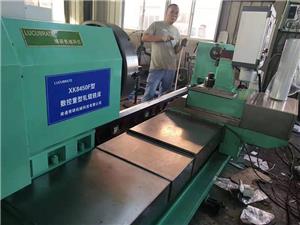
Now, let's address these pain points head-on. For surface integrity, a CNC roller lathe with rigid construction and high-precision spindles can achieve exceptional finishes. By using optimized cutting parameters and advanced insert geometries, you can minimize work hardening and achieve a surface finish that often eliminates the need for secondary grinding. For complex geometries, modern CNC roller lathes come with multi-axis capabilities and sophisticated software that allows you to program intricate profiles directly. This reduces setups and ensures consistency. And for tool wear, these machines often feature through-tool coolant and adaptive control systems that monitor cutting conditions in real-time, adjusting feed and speed to maximize tool life. At NANTONG LUCUBRATE MACHINERY TECHNICAL LTD., we've engineered our CNC roller lathes with these exact challenges in mind, offering features like hydrostatic guideways and thermal compensation to ensure long-term accuracy.
Real-World Proof: Case Studies from the Field
Don't just take our word for it. Consider the case of a German manufacturer of conveyor rollers. They were struggling with a 12% scrap rate due to surface defects. After switching to our CNC roller lathe, they reduced scrap to under 1% and increased throughput by 30%. Their production manager, Klaus Weber, said, "The difference is night and day. The machine holds tolerance all day without drift." Then there's a Japanese company that produces precision rollers for printing presses. They needed a surface finish of Ra 0.2. With our machine, they achieved Ra 0.15 consistently, and their cycle time dropped by 20%. Their lead engineer, Yuki Tanaka, noted, "The CNC roller lathe paid for itself in six months." In the US, a manufacturer of steel mill rollers was facing frequent tool breakage. They switched to our machine with adaptive control, and tool life tripled. Their operations director, Mike Johnson, said, "We stopped cringing every time we ran a batch." And in Italy, a company making rollers for agricultural machinery reduced their setup time by 50% thanks to our quick-change tooling and conversational programming. Their owner, Marco Rossi, commented, "It's like having an extra machinist on the floor."
Where CNC Roller Lathes Shine: Applications and Partnerships
These machines are versatile. They're used in manufacturing rollers for conveyor systems, printing presses, steel mills, paper mills, and even for producing rollers in the food and beverage industry. They're also critical in producing components for automotive and aerospace, such as cam rollers and bearing races. At NANTONG LUCUBRATE MACHINERY TECHNICAL LTD., we've partnered with leading tooling suppliers like Sandvik and Walter to ensure our customers get the best cutting solutions. We also collaborate with automation integrators to provide turnkey cells. Our machines are trusted by companies across Europe, Asia, and North America, and we're proud to support their production goals.
Frequently Asked Questions (FAQ)
Q1: Can a CNC roller lathe handle hardened materials (HRC 60+) without grinding?
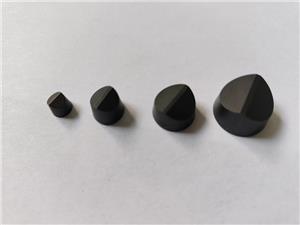
A: Yes, with the right cutting tools and rigid machine design, you can achieve finishes down to Ra 0.1 on hardened steels. The key is using CBN or ceramic inserts and optimizing cutting speeds and feeds. Our machines are built with the stiffness to handle these demanding operations.
Q2: What is the typical payback period for a CNC roller lathe?
A: It varies, but many customers see payback within 12 to 18 months due to reduced scrap, lower labor costs, and increased throughput. For example, our case study in Germany showed a payback in 14 months.
Q3: How does a CNC roller lathe differ from a conventional CNC lathe?
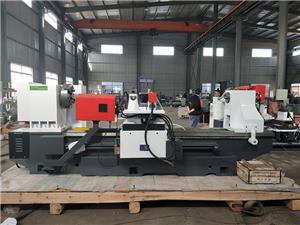
A: A CNC roller lathe is specifically designed for machining rollers, often with features like wider bed ways, higher torque spindles, and software tailored for roller profiles. They also often include steady rests and tailstocks designed to support long, slender workpieces.
Q4: Can I retrofit my existing lathe with CNC roller lathe features?
A: In some cases, you can retrofit with new controls and tooling, but you may not achieve the same rigidity and precision as a purpose-built machine. We recommend consulting with our engineers to assess your specific needs.
Q5: What kind of training is required to operate these machines?
A: Most operators with basic CNC experience can learn within a week. Our machines come with user-friendly interfaces and we provide comprehensive training and documentation. We also offer remote support.
Conclusion: Elevate Your Machining Game
The CNC roller lathe is not just a piece of equipment; it's a strategic investment in your company's future. By addressing surface integrity, complex geometries, and tool wear, you can reduce costs, improve quality, and stay competitive. At NANTONG LUCUBRATE MACHINERY TECHNICAL LTD., we're committed to helping you achieve these goals. If you're ready to see how a CNC roller lathe can transform your operations, we invite you to download our technical white paper on precision roller machining. Or better yet, contact our sales engineering team for a personalized consultation. They'll help you find the perfect solution for your specific application. Don't let outdated technology hold you back—take the next step today.