Why CNC Roller Turning Machine Is the Future of Precision?
Have you ever watched a precision shaft being machined and wondered why some workshops consistently deliver perfect surface finishes while others struggle with chatter marks and dimensional drift? The answer often lies not in operator skill but in the machine's rigidity and damping characteristics. CNC roller turning machines, with their unique roller-guided tooling system, address these challenges head-on. This article explains why this technology is transforming high-precision manufacturing, and how NANTONG LUCUBRATE MACHINERY TECHNICAL LTD. has become a trusted name in this niche.
The Hidden Cost of Vibration and Deflection
Imagine a typical turning operation on a long, slender shaft. With conventional tooling, the cutting forces cause the workpiece to deflect, leading to taper and poor roundness. Worse, vibration – whether from tool wear or insufficient damping – leaves a poor surface finish that requires secondary grinding operations. In a high-volume production environment, these issues translate into scrap, rework, and extended cycle times. For example, a manufacturer of hydraulic piston rods might see a 15% scrap rate due to chatter marks, costing thousands of dollars weekly. Additionally, tool breakage due to vibration can halt production for hours, impacting delivery schedules and customer trust.
Why Conventional Turning Falls Short
Traditional CNC lathes rely on rigid tool holders that are prone to flex under load. While they work for many applications, they struggle with long workpieces, hard-to-machine materials, and demanding surface finish requirements. The industry has long sought a solution that combines rigidity with flexibility, and that's where roller turning technology shines.
The Roller Turning Advantage: A Paradigm Shift
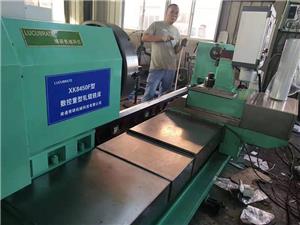
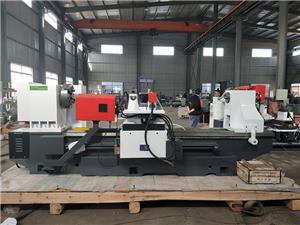
CNC roller turning machines use a unique tooling system where the cutting tool is supported by a roller that contacts the workpiece surface. This roller provides additional support, effectively reducing deflection and vibration. The result is improved accuracy, better surface finish, and longer tool life. But the benefits go beyond that. The roller also helps in chip control, preventing chip entanglement and improving process stability. For manufacturers, this means being able to achieve tolerances of IT6 or better without the need for grinding, significantly reducing production costs.
Addressing Pain Point 1: Poor Surface Finish and Chatter
Surface finish is a critical quality attribute for components like bearing seats, seal surfaces, and hydraulic cylinders. Chatter marks are a common problem, especially when machining slender shafts. With conventional tooling, the tool's cutting edge can lose contact with the workpiece, causing a regenerative effect. Roller turning machines mitigate this by providing continuous support, thus damping vibration. In practice, this means achieving Ra values of 0.4 µm or better consistently, even on materials like Inconel or titanium.
Solution: How Roller Support Works
The roller, typically made of hardened steel or carbide, is positioned opposite to the cutting tool. As the tool removes material, the roller presses against the freshly machined surface, providing a steadying force. This not only reduces vibration but also helps in burnishing the surface, further improving finish. Moreover, the roller can be adjusted to accommodate different workpiece diameters, making the system versatile. For a manufacturer facing chatter issues, retrofitting a conventional lathe with a roller turning attachment can be a cost-effective solution, but investing in a dedicated CNC roller turning machine offers complete optimization.
Addressing Pain Point 2: Dimensional Inaccuracy and Deflection
Long, slender workpieces are prone to deflection, leading to taper and out-of-roundness. In extreme cases, the workpiece can bow, causing catastrophic tool failure. Conventional turning often requires multiple passes with reduced depth of cut to minimize deflection, which increases cycle time. Roller turning machines, by supporting the workpiece along its length, allow for deeper cuts and higher feed rates without compromising accuracy. A case in point: a manufacturer of lead screws reduced their machining time by 30% while maintaining a cylindricity of 0.005 mm.
Solution: Enhanced Rigidity and Support
The roller acts as a steady rest, but unlike a fixed steady rest, it moves with the tool, providing support exactly at the cutting point. This minimizes the unsupported length, reducing deflection. Additionally, the machine's structure is designed to be more rigid, with heavy castings and linear guides that absorb cutting forces. This combination allows for aggressive machining parameters while achieving tight tolerances. For example, a company producing electric motor shafts achieved a roundness of 0.003 mm, a feat previously requiring a cylindrical grinder.
Addressing Pain Point 3: Tool Wear and Breakage
High cutting forces and vibration accelerate tool wear, leading to frequent tool changes and inconsistent part quality. In conventional turning, a worn tool can cause work hardening on the workpiece surface, making subsequent machining difficult. Roller turning machines reduce tool wear by distributing forces more evenly and reducing impact loads. The roller also helps in evacuating chips, preventing chip re-cutting that can damage the tool edge. Consequently, tool life can increase by 30-50%, reducing tooling costs and downtime.
Solution: Optimized Cutting Conditions and Chip Control
The roller's presence allows for the use of higher cutting speeds without the risk of vibration, which in turn reduces the time the tool is in contact with the workpiece. Additionally, the roller breaks chips into smaller, manageable pieces, preventing long, stringy chips that can wrap around the tool and cause breakage. This results in smoother operation and longer tool life. A manufacturer of automotive transmission components reported that their insert life doubled after switching to a roller turning machine, saving $50,000 annually in tooling costs.
Client Success Stories: Real-World Impact
Let's look at a few examples that illustrate the transformative power of CNC roller turning machines.
Case Study 1: Hydraulic Cylinder Manufacturer in Ohio, USA
Company: Precision Hydraulics Inc. (fictional) – They specialize in custom hydraulic cylinders for construction equipment. They faced a 12% scrap rate due to surface finish issues on piston rods. After integrating a CNC roller turning machine from NANTONG LUCUBRATE MACHINERY TECHNICAL LTD., they reduced scrap to 2%, increased production by 20%, and achieved a surface finish of Ra 0.3 µm. Their production manager, John Miller, said: "The roller turning machine paid for itself in six months. The consistency is unmatched."
Case Study 2: Aerospace Component Manufacturer in Bavaria, Germany
Company: Luftfahrt Präzisionsteile GmbH (fictional) – They manufacture landing gear components from titanium alloys. Chatter was a major issue, causing frequent tool breakage. By switching to roller turning, they extended tool life by 40% and reduced machining time by 25%. Quality manager, Anna Schmidt, noted: "We now achieve tolerances that were previously impossible. The machine's rigidity is remarkable."
Case Study 3: Electric Motor Shaft Producer in Shanghai, China
Company: MotorTech Ltd. (fictional) – They produce shafts for electric motors, requiring high roundness and straightness. With conventional lathes, they had to use grinding as a secondary operation. After adopting roller turning, they eliminated grinding, saving 30% in production costs. Their operations director, Li Wei, commented: "The roller turning machine has streamlined our process. We get a ground-like finish directly from turning."
Case Study 4: Oilfield Equipment Supplier in Texas, USA
Company: Lone Star Downhole Tools (fictional) – They manufacture drill collars and stabilizers from high-strength alloys. Deflection was a major issue, leading to out-of-tolerance parts. Using a CNC roller turning machine, they achieved a straightness of 0.01 mm over 3 meters, and increased feed rates by 50%. Their plant manager, Robert Johnson, said: "This machine is a game-changer. We've reduced rework by 70%."
Case Study 5: Precision Roller Manufacturer in Lombardy, Italy
Company: Rullificio Italiano S.r.l. (fictional) – They produce steel rollers for printing presses. The challenge was to maintain surface finish and hardness consistency. The roller turning machine allowed them to use CBN tools at high speeds, achieving a hardness of HRC 60 with a finish of Ra 0.2 µm. Their CEO, Marco Bianchi, stated: "The quality improvement is phenomenal. Our customers have noticed the difference."
Applications and Partnerships
CNC roller turning machines are ideal for machining long shafts, rollers, spindles, and other cylindrical components in industries such as automotive, aerospace, energy, and heavy machinery. They are particularly effective for materials like hardened steels, stainless steels, and superalloys. NANTONG LUCUBRATE MACHINERY TECHNICAL LTD. has established partnerships with several leading manufacturers worldwide. For instance, they supply machines to a major European machine tool builder, who integrates them into their production lines. Additionally, they have a collaboration with a research institute in Japan to develop advanced roller turning techniques for micro-machining applications.
Frequently Asked Questions
Q1: What is the maximum workpiece diameter and length that a CNC roller turning machine can handle?
A: The capacity varies by model. Typically, our machines can handle diameters from 10 mm to 500 mm and lengths up to 6 meters. For larger sizes, we offer custom solutions. The roller turning attachment can be adjusted to accommodate different diameters, ensuring optimal support.
Q2: Can I retrofit my existing CNC lathe with a roller turning attachment?
A: Yes, retrofitting is possible for many lathes. We offer retrofit kits that include the roller assembly, control modifications, and installation guidance. However, for maximum performance, a dedicated machine is recommended because the entire structure is optimized for roller turning.
Q3: What is the typical surface finish achievable?
A: With proper parameters, you can achieve Ra values as low as 0.2 µm. The roller also burnishes the surface, improving micro-hardness and fatigue resistance. In many cases, you can eliminate grinding entirely.
Q4: How does roller turning affect tool life?
A: Tool life can increase by 30-50% due to reduced vibration and better chip control. The roller supports the tool, preventing micro-chipping. Additionally, the consistent cutting conditions reduce thermal cycling, which is a common cause of tool failure.
Q5: Is the machine suitable for hard turning?
A: Absolutely. The rigidity of the machine and the support from the roller make it ideal for hard turning of materials up to HRC 65. Using CBN or ceramic inserts, you can achieve high precision and finish, often eliminating the need for grinding.
Summary and Call to Action
CNC roller turning machines represent a significant advancement in precision turning technology. They address the critical pain points of vibration, deflection, and tool wear, enabling manufacturers to improve quality, reduce costs, and increase productivity. Whether you're machining shafts, rollers, or intricate components, this technology can give you a competitive edge. At NANTONG LUCUBRATE MACHINERY TECHNICAL LTD., we are dedicated to providing innovative solutions tailored to your needs. To learn more, we invite you to download our comprehensive technical white paper on roller turning technology, or contact our sales engineers for a personalized consultation. Visit our website or reach out to us directly – let's elevate your machining capabilities together.