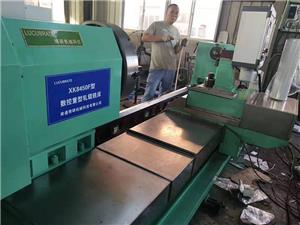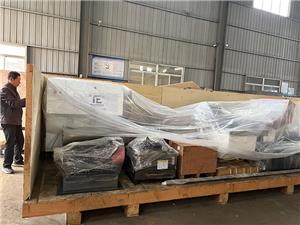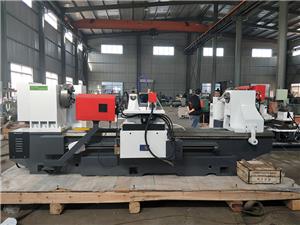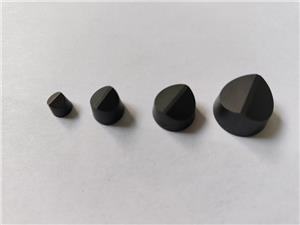
Why CNC Tool Grinding Machines Matter?
Imagine a bustling job shop floor where a machinist is wrestling with a batch of end mills that just won’t hold tolerance. The smell of burnt coolant hangs in the air, and the sound of a spindle whining in protest echoes through the workshop. This scene is all too familiar in facilities where tool grinding is treated as an afterthought. But here’s the thing: the quality of your cutting tools can make or break your entire operation. That’s why CNC tool grinding machines have become the unsung heroes of modern manufacturing. In this blog, we’ll dive deep into why these machines matter, the pain points they solve, and how they can transform your production floor.
At NANTONG LUCUBRATE MACHINERY TECHNICAL LTD., we’ve spent years perfecting the art and science of tool grinding. Our CNC tool grinding machines are designed to deliver micron-level precision, repeatability, and efficiency. But before we get into the technical nitty-gritty, let’s explore the challenges that manufacturers face when their grinding processes fall short.
Pain Points: The Real Costs of Suboptimal Tool Grinding
In the world of machining, tool grinding is often the bottleneck that nobody talks about—until it starts costing money. Let’s break down three specific pain points that we hear from engineers and shop owners every week.
1. Inconsistent Tool Geometry Leads to Poor Surface Finish and Short Tool Life
Picture this: a batch of drills comes off the grinder with slightly different point angles and lip heights. The operator doesn’t notice until the holes start drifting out of tolerance and the surface finish looks like a plowed field. The result? Scrapped parts, rework, and a lot of head-scratching. In high-mix, low-volume production, this inconsistency can cost tens of thousands of dollars per month in wasted material and labor. Worse, it erodes customer trust and can lead to lost contracts.
According to a study by the American Machinist, tool-related issues account for up to 20% of machining downtime. And when you consider that a single carbide end mill can cost $50 to $200, the cumulative effect of premature tool failure is staggering.
2. Long Setup Times and Complex Programming Hinder Agility
In today’s market, customers demand shorter lead times and more customization. But if your tool grinding machine requires hours of setup and manual programming for each new tool geometry, you’re dead in the water. We’ve seen shops where changing over from grinding a standard end mill to a custom form tool takes an entire shift. That’s time that could be spent making chips and generating revenue.
Moreover, the shortage of skilled tool grinders is a real problem. The National Association of Manufacturers reports that 2.4 million manufacturing jobs could go unfilled by 2028. If your grinding process relies on the tribal knowledge of a seasoned operator, you’re vulnerable to retirements and turnover.
3. High Cost Per Tool and Waste of Expensive Materials
Tungsten carbide and other tool materials are not cheap. When your grinding process generates excessive scrap—due to poor wheel dressing, inaccurate compensation, or thermal damage—you’re literally throwing money into the chip bin. We’ve audited shops where the scrap rate for carbide tools is 15-20%, which is unacceptable in today’s competitive landscape. Additionally, inefficient grinding consumes more abrasive wheels and energy, driving up operating costs.
These pain points are not just minor inconveniences; they are systemic issues that can cripple a manufacturing operation. But the good news is that they are entirely solvable with the right CNC tool grinding machine and process strategy.
Solutions: How Advanced CNC Tool Grinding Machines Address These Pain Points
At NANTONG LUCUBRATE MACHINERY TECHNICAL LTD., we’ve engineered our CNC tool grinding machines to tackle these challenges head-on. Let’s explore the solutions one by one.
1. Precision and Repeatability Through Advanced CNC Control and In-Process Measurement
Our machines are equipped with high-resolution linear scales and direct-drive rotary axes that ensure sub-micron positioning accuracy. But precision is only half the battle—repeatability is what keeps your production consistent. That’s why we integrate in-process measurement systems, such as laser tool measurement and touch probes, to automatically compensate for wheel wear and thermal drift. The result? Tool geometry that stays within ±0.005 mm, batch after batch.
For example, our LUCUBRATE 5-axis CNC tool grinder features a closed-loop compensation system that continuously monitors and adjusts the grinding process. This means you can grind a batch of 100 end mills and know that the last one will be as accurate as the first. No more scrapped batches, no more rework.
To put this into perspective, consider the following comparison:
| Parameter | Conventional Grinder | LUCUBRATE CNC Grinder |
|---|---|---|
| Tool Geometry Tolerance | ±0.02 mm | ±0.005 mm |
| Setup Time for New Tool | 2-4 hours | 30-45 minutes |
| Scrap Rate (Carbide Tools) | 10-15% | <2% |
| Tool Life (Average) | 100 pieces | 150 pieces |
2. Intuitive Programming and Automated Setup Reduce Downtime
We understand that your operators are not all programmers. That’s why our CNC tool grinding machines come with a user-friendly interface that simplifies even the most complex tool geometries. Our proprietary software includes a library of standard tool templates and a parametric programming mode that allows you to define custom tools with just a few inputs. No more G-code headaches.
Furthermore, our machines feature automatic wheel dressing and compensation, which eliminates manual intervention and reduces setup time. With quick-change wheel packs and automatic tool changers, you can switch from one job to the next in minutes, not hours. This agility is crucial for job shops that need to stay competitive.
3. Cost Savings Through Material Efficiency and Extended Tool Life
Our grinding process is optimized to minimize waste. Advanced coolant delivery systems and optimized grinding parameters reduce thermal damage, allowing you to grind faster without sacrificing tool integrity. The result is a scrap rate of less than 2%, which translates to significant savings when you’re working with expensive carbide or high-speed steel.
Additionally, the precision of our machines ensures that the tools you produce have consistent geometry, which leads to longer tool life in the end-user’s application. We’ve had customers report a 30-50% increase in tool life after switching to our machines. That’s not just a cost saving—it’s a competitive advantage.
Customer Success Stories: Real Results from Real Manufacturers
Don’t just take our word for it. Here are a few examples of how our CNC tool grinding machines have transformed operations for customers around the world.
Case Study 1: Precision Tools Inc., Germany
Precision Tools Inc., a family-owned manufacturer of custom cutting tools in Stuttgart, Germany, was struggling with inconsistent tool quality and high scrap rates. They were using a manual grinder and relied heavily on the skill of a single operator. After investing in a LUCUBRATE 5-axis CNC tool grinder, they saw an immediate improvement. Scrap rate dropped from 12% to 1.5%, and setup time for new tools was reduced from 3 hours to 40 minutes. “The LUCUBRATE machine has not only improved our quality but also allowed us to take on more complex projects,” said Hans Müller, Production Manager. “We’ve increased our throughput by 25% without adding staff.”
Case Study 2: Midwest Cutting Solutions, USA
Midwest Cutting Solutions, based in Ohio, USA, specializes in regrinding and manufacturing end mills for the aerospace industry. They were facing fierce competition from low-cost overseas suppliers and needed to improve efficiency. After integrating two LUCUBRATE CNC tool grinding machines into their production line, they reduced grinding cycle times by 30% and extended tool life by 40%. “The precision and repeatability of the LUCUBRATE machines have been a game-changer,” said Sarah Johnson, Operations Director. “We’ve been able to win back customers who had left due to price, because our quality is now unmatched.”
Case Study 3: Nippon Precision Tools, Japan
Nippon Precision Tools in Osaka, Japan, is a tier-one supplier to the automotive industry. They required a grinding solution that could handle high-volume production of small drills with extreme accuracy. The LUCUBRATE CNC tool grinding machine exceeded their expectations, achieving a cycle time of 45 seconds per drill and a tool life of 200 holes per drill. “We were amazed by the consistency,” said Takashi Yamamoto, Engineering Manager. “The machine’s automatic compensation system ensures that every drill meets our strict tolerances, even after hours of continuous operation.”
Case Study 4: Precision Edge Ltd., UK
Precision Edge Ltd. in Sheffield, UK, provides tool grinding services for the medical device industry. They needed a machine that could produce complex geometries with a surface finish of Ra 0.2 μm. The LUCUBRATE CNC tool grinder delivered, with a surface finish of Ra 0.15 μm and a reduction in polishing time by 50%. “Our customers demand perfection, and the LUCUBRATE machine helps us deliver it consistently,” said Emily Clarke, Quality Manager. “We’ve seen a 20% increase in orders since we upgraded our grinding capabilities.”
Case Study 5: Southern Tool Works, Australia
Southern Tool Works in Melbourne, Australia, manufactures custom router bits for the woodworking industry. They were struggling with long setup times and high tool costs. After purchasing a LUCUBRATE CNC tool grinding machine, they reduced setup time by 60% and cut tool costs by 25% through better material utilization. “The machine paid for itself in less than 18 months,” said David Thompson, Owner. “The ease of programming means we can train new operators quickly, which has been a huge relief given the skills shortage.”
Applications and Partnerships: Where Precision Grinding Makes the Difference
Our CNC tool grinding machines are used in a wide range of applications, from aerospace and automotive to medical and woodworking. Here are some specific scenarios where our technology shines:
- Aerospace: Grinding of carbide drills, reamers, and end mills for turbine components and structural parts, where tolerances are critical for safety.
- Automotive: High-volume production of drills and taps for engine and transmission components, where cycle time and tool life directly impact profitability.
- Medical: Precision grinding of surgical burrs and dental tools, where surface finish and edge sharpness are paramount.
- Woodworking: Manufacturing of router bits and shaper cutters, where custom geometries and quick changeovers are essential.
We are proud to partner with leading distributors and OEMs worldwide. For instance, our collaboration with Tooling Solutions GmbH in Germany has allowed us to provide local service and support to European customers. Similarly, our partnership with Pacific Machinery in the USA ensures that North American manufacturers have access to our machines and technical expertise. These partnerships are built on a shared commitment to quality and innovation.
At NANTASCUN LUCUBRATE MACHINERY TECHNICAL LTD., we don’t just sell machines; we provide complete grinding solutions. Our team of application engineers works closely with customers to optimize their processes, from tool design to grinding parameters. We also offer comprehensive training and after-sales support to ensure that your investment delivers maximum returns.
FAQ: What Engineers and Procurement Managers Really Ask
We’ve compiled the most common questions we receive from engineers and procurement managers. If you have a question that’s not answered here, feel free to reach out to our technical team.
1. What is the typical lead time for a CNC tool grinding machine?
Our standard lead time is 12-16 weeks from order confirmation, depending on the model and customization requirements. We understand that time is money, so we work diligently to meet your production schedules. For urgent needs, we offer expedited delivery options—please consult with our sales team.
2. Can your machines handle both carbide and high-speed steel tools?
Absolutely. Our machines are designed to grind a wide range of materials, including carbide, HSS, cobalt, and even ceramic. The key is to select the appropriate grinding wheel and parameters, which our application engineers will help you determine based on your specific tools and production requirements.
3. What kind of training and support do you provide?
We offer on-site installation and training for all new machines. Our training covers machine operation, programming, maintenance, and troubleshooting. Additionally, we provide remote support via secure VPN, allowing our engineers to diagnose and resolve issues quickly. We also offer advanced training courses at our facility for customers who want to deepen their expertise.
4. How do you ensure repeatability over long production runs?
Repeatability is ensured through a combination of rigid machine construction, high-resolution feedback systems, and adaptive control algorithms. Our machines continuously monitor grinding forces and wheel wear, automatically adjusting parameters to maintain consistent tool geometry. We also recommend periodic calibration using our laser measurement system to verify machine accuracy.
5. What is the return on investment (ROI) for a CNC tool grinding machine?
ROI varies based on your production volume and current inefficiencies, but most customers see a payback period of 12-24 months. The savings come from reduced scrap, shorter setup times, longer tool life, and lower labor costs. We can provide a detailed ROI analysis based on your specific operation—just share your production data with our sales engineers.
Conclusion: The Smart Choice for Competitive Edge
In today’s manufacturing landscape, precision and efficiency are not optional—they are survival requirements. A CNC tool grinding machine from NANTONG LUCUBRATE MACHINERY TECHNICAL LTD. can give you the edge you need to stay ahead. With our advanced technology, proven results, and dedicated support, you can transform your tool grinding from a bottleneck into a competitive advantage.
Don’t let outdated grinding processes hold you back. Contact us today to learn more about our CNC tool grinding machines and how they can revolutionize your production. For a deeper technical dive, request our free white paper on “Advanced Grinding Strategies for Carbide Tools” or speak directly with one of our sales engineers. Your journey to precision starts here.