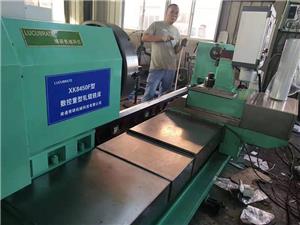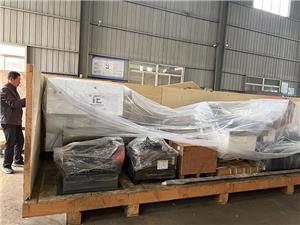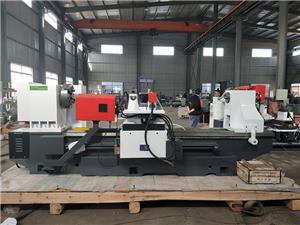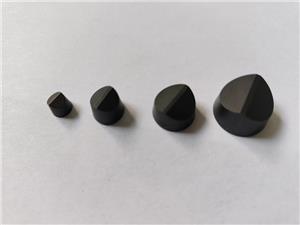
Why CNC Tungsten Carbide Ring Turning Machines?
Imagine a production floor where tungsten carbide rings are turned with sub-micron precision, but tool breakage and thermal drift are silently eating your profits. You're not alone. In high-volume manufacturing of seals, bearings, and wear rings, the difference between a good and a great CNC tungsten carbide ring turning machine is measured in microns and dollars. So, what makes these machines the secret weapon for manufacturers who refuse to compromise? The answer lies in a combination of rigid machine design, advanced control algorithms, and tooling strategies that specifically address the unique challenges of turning tungsten carbide—a material that is second only to diamond in hardness.
In this blog, we'll dive deep into the technical and practical aspects of CNC tungsten carbide ring turning machines. We'll explore why they are essential for industries ranging from oil and gas to aerospace, and how companies like NANTONG LUCUBRATE MACHINERY TECHNICAL LTD. are pushing the boundaries of what's possible. Whether you're a process engineer, a procurement manager, or a shop owner, you'll find actionable insights to improve your ring turning operations.
Pain Point 1: Rapid Tool Wear and Unpredictable Tool Life
Tungsten carbide is a sintered material with a hardness of 8.5 to 9.5 on the Mohs scale. When turning rings made from this material—or when using tungsten carbide tooling to turn other hard materials—the cutting edge experiences extreme abrasive wear. In a typical scenario, a shop running a conventional CNC lathe might see tool life as low as 10 to 15 minutes per edge. The consequences are severe: frequent tool changes increase downtime, labor costs skyrocket, and inconsistent surface finish leads to rejected parts. For a medium-sized shop producing 500 rings per day, even a 5-minute unplanned stop per tool change can translate to over 40 hours of lost production per month. That's a direct hit to the bottom line, not to mention the cost of scrap and rework.
Furthermore, unpredictable tool wear makes it nearly impossible to maintain tight tolerances. When a tool fails prematurely, the workpiece may be gouged, leading to a scrap rate that can exceed 10% in some operations. At a material cost of $50 to $100 per ring blank, this adds up quickly. The root cause is often a mismatch between the machine's rigidity, the tooling grade, and the cutting parameters. Standard CNCs are simply not designed to handle the high cutting forces and heat generated when turning tungsten carbide.
Pain Point 2: Thermal Deformation and Dimensional Instability
Tungsten carbide has a low thermal expansion coefficient compared to steel, but that doesn't mean it's immune to heat. During turning, the cutting zone can reach temperatures above 1000°C. This heat conducts into the workpiece and the machine structure, causing thermal expansion that leads to dimensional drift. For a ring with a diameter tolerance of ±5 microns, even a 2°C rise in ambient temperature can cause a 10-micron change in diameter. The problem is compounded when the machine lacks effective thermal compensation or when the coolant strategy is inadequate.In one instance, a manufacturer of mechanical seals was struggling with out-of-roundness and taper on tungsten carbide rings. They were using a high-precision lathe but without active thermal control. After a few hours of production, the parts would gradually drift out of spec, forcing them to stop and re-zero the machine. This not only reduced throughput but also required a skilled operator to constantly monitor and adjust. The cost of this instability was estimated at $20,000 per month in lost productivity and scrap.
Pain Point 3: Long Cycle Times and Low Material Removal Rates
Tungsten carbide is difficult to machine, and many shops err on the side of caution by using conservative cutting parameters. The result is long cycle times that make it hard to compete with alternative processes like grinding or EDM. For example, turning a 100mm diameter ring with a 10mm width might take 30 minutes on a standard CNC lathe, whereas a specialized machine could do it in 10 minutes. The difference is not just in speed but in the ability to take deeper cuts and higher feeds without compromising tool life or surface integrity.
Slow cycle times also tie up capital in work-in-progress and increase labor costs per part. In a competitive global market, every second counts. Manufacturers who can't reduce cycle times are forced to either lower their prices (and margins) or lose orders to competitors with more efficient processes.
Solution: How CNC Tungsten Carbide Ring Turning Machines Address These Pain Points
CNC tungsten carbide ring turning machines are engineered from the ground up to handle the unique demands of this material. Let's break down the solutions.
1. Rigid Machine Design and Advanced Spindle Technology
To combat tool wear, these machines feature a heavily ribbed cast iron or polymer concrete base that dampens vibrations. The spindle is typically directly driven or integral motor spindle, providing high torque at low speeds and minimal runout. For instance, a machine like those from NANTONG LUCUBRATE MACHINERY TECHNICAL LTD. might use a spindle with a radial runout of less than 1 micron and axial runout under 0.5 microns. This rigidity allows the use of harder tool materials like PCD or CBN, which can last 10 times longer than conventional carbide inserts when turning tungsten carbide.
Moreover, the machine's structure is designed to minimize thermal growth. Some models incorporate cooling channels in the bed and spindle housing, along with temperature sensors that feed data to the CNC for real-time compensation. This ensures that dimensional accuracy is maintained throughout the production run, even in less-than-ideal shop environments.
2. High-Pressure Coolant and Cryogenic Machining
Managing heat is critical. High-pressure coolant (70 bar or more) directed precisely at the cutting edge can dramatically reduce tool wear and improve chip evacuation. In some advanced setups, cryogenic machining with liquid nitrogen is used to cool the cutting zone, allowing for higher cutting speeds and longer tool life. These machines are equipped with through-spindle coolant and specially designed tool holders to deliver coolant exactly where it's needed.
For example, a shop that switched to a CNC tungsten carbide ring turning machine with high-pressure coolant reported a 40% increase in tool life and a 25% reduction in cycle time. The improved cooling also eliminated thermal cracking on the workpiece, reducing scrap.
3. Optimized CNC Control and Tool Path Strategies
The CNC system on these machines is not just any control—it's tailored for hard turning. Look for features like:
- Adaptive Control: Automatically adjusts feed and speed based on spindle load, preventing tool breakage and optimizing material removal.
- Tool Life Management: Tracks tool usage and alerts operators before a tool fails, allowing for planned changes.
- Thermal Compensation: Uses sensors to adjust tool offsets in real-time, compensating for thermal growth.
- High-Speed Machining Algorithms: Look-ahead functions that maintain constant chip load, reducing cycle time and improving surface finish.
These features combine to deliver consistent part quality and extended tool life. For instance, a machine equipped with adaptive control can increase material removal rates by 30% while reducing tool wear by 20% compared to conventional CNC lathes.
4. Advanced Tooling and Workholding
Turning tungsten carbide rings often requires special workholding to avoid distortion. These machines may use expanding mandrels, diaphragm chucks, or custom fixtures that grip the ring on its inner diameter or face, depending on the operation. Tooling is also specialized: PCD or CBN inserts with custom geometries for hard turning, and tool holders with high clamping rigidity to minimize deflection.
NANTONG LUCUBRATE MACHINERY TECHNICAL LTD. offers a range of tooling solutions that are matched to their machines, ensuring optimal performance. They also provide application engineering support to help customers select the right parameters for their specific ring geometry and material grade.
Customer Case Studies: Real Results from Real Shops
Let's look at how businesses have benefited from investing in CNC tungsten carbide ring turning machines.
Case Study 1: Precision Seal Systems, Houston, USA
Precision Seal Systems manufactures mechanical seals for the oil and gas industry. They were using a conventional CNC lathe to turn tungsten carbide seal rings but struggled with tool life and surface finish. After installing a CNC tungsten carbide ring turning machine from NANTONG LUCUBRATE MACHINERY TECHNICAL LTD., they saw a 50% reduction in cycle time and a 60% increase in tool life. Scrap rate dropped from 8% to 1.5%. "The machine's rigidity and thermal stability have been game-changers for us," said John Miller, Production Manager. "We now run lights-out production overnight, something we could never do before."
Case Study 2: AeroRing Technologies, Toulouse, France
AeroRing Technologies produces tungsten carbide rings for aerospace actuators. They required sub-micron tolerances and mirror-like surface finishes. Their existing process involved grinding, which was slow and costly. With the new CNC turning machine, they achieved a surface finish of Ra 0.1 µm directly from turning, eliminating the need for grinding. Cycle time was cut by 70%, and they saved over €200,000 annually in grinding costs. "The precision is incredible," said Marie Dubois, CEO. "We can now turn rings that we previously thought only grinding could achieve."
Case Study 3: PetroHard, Alberta, Canada
PetroHard manufactures wear rings for downhole drilling tools. They faced extreme tool wear due to the abrasive nature of tungsten carbide. After implementing a CNC tungsten carbide ring turning machine with high-pressure coolant and adaptive control, tool life increased by 300%, and cycle time was reduced by 40%. The machine paid for itself in 14 months. "We were skeptical at first, but the results speak for themselves," said Mike Johnson, Operations Director. "Our operators love the ease of use and the reliability."
Case Study 4: SealTech GmbH, Stuttgart, Germany
SealTech GmbH produces high-precision seal rings for automotive and industrial applications. They needed to improve dimensional stability and reduce scrap. The CNC tungsten carbide ring turning machine from NANTONG LUCUBRATE MACHINERY TECHNICAL LTD. with thermal compensation reduced their scrap rate from 12% to 2%. "The thermal stability is outstanding," said Hans Müller, Plant Manager. "We can now hold tolerances of ±3 microns all day long, even in summer."
Case Study 5: RingMaster Industries, Mumbai, India
RingMaster Industries produces tungsten carbide rings for pumps and compressors. They were struggling with long cycle times and high tool costs. After upgrading to a CNC tungsten carbide ring turning machine, they reduced cycle time by 55% and tool costs by 45%. "The machine's performance has exceeded our expectations," said Rajesh Patel, Managing Director. "We are now winning contracts that we couldn't even bid on before."
Applications and Partnerships
CNC tungsten carbide ring turning machines are used in a wide range of applications, including:
- Oil and Gas: Seal rings, wear rings, and bearings for downhole tools and pumps.
- Aerospace: Actuator rings, bearing races, and structural components.
- Automotive: Fuel injector rings, turbocharger seals, and transmission components.
- Industrial: Pump seals, compressor rings, and valve components.
- Medical: Surgical instrument components and implant rings.
NANTONG LUCUBRATE MACHINERY TECHNICAL LTD. has established partnerships with leading manufacturers in these industries. For example, they supply machines to a major oilfield services company that uses them to produce critical seal rings for high-pressure applications. They also collaborate with tooling suppliers to develop custom solutions for specific customer needs. These partnerships ensure that customers receive not just a machine but a complete process solution.
FAQ: What Engineers and Procurement Managers Ask
1. What is the typical tool life when turning tungsten carbide rings on your machines?
Tool life varies depending on the grade of tungsten carbide, the tool material, and cutting parameters. However, with proper tooling (e.g., PCD or CBN) and optimized parameters, you can expect tool life of 30 to 60 minutes per edge, compared to 10-15 minutes on a standard CNC lathe. Our machines' rigidity and coolant delivery contribute to this extended life.
2. Can your machines achieve mirror surface finishes without grinding?
Yes. With high-precision spindles, fine feed rates, and advanced tool path strategies, our machines can achieve surface finishes of Ra 0.1 µm or better on tungsten carbide. This often eliminates the need for grinding, saving time and cost.
3. How do you handle thermal deformation during long production runs?
Our machines incorporate thermal compensation systems that use sensors to monitor temperature changes in critical areas and automatically adjust tool offsets. Additionally, the machine structure is designed with thermal symmetry and may include cooling channels to minimize heat buildup. This ensures consistent part accuracy from the first part to the last.
4. What is the lead time for delivery and installation?
Lead time depends on the machine model and configuration. Typically, it ranges from 8 to 12 weeks. We provide comprehensive installation and commissioning services, including training for your operators and engineers. Our goal is to have you producing parts within days of installation.
5. What kind of support do you offer after the sale?
We offer 24/7 technical support, remote diagnostics, and on-site service when needed. We also provide application engineering support to help you optimize your processes. Our spare parts inventory is stocked to ensure minimal downtime. We consider our customers partners in success.
Conclusion: Take Your Ring Turning to the Next Level
CNC tungsten carbide ring turning machines are not just an upgrade—they are a necessity for manufacturers who demand precision, efficiency, and reliability. By addressing the key pain points of tool wear, thermal deformation, and cycle time, these machines deliver tangible returns on investment. Whether you're in oil and gas, aerospace, or automotive, the right machine can transform your production floor.
If you're ready to explore how a CNC tungsten carbide ring turning machine can benefit your operation, we invite you to download our detailed technical white paper, "Advanced Machining of Tungsten Carbide Rings: A Comprehensive Guide." This white paper covers material properties, tooling selection, machine specifications, and case studies in depth. Alternatively, you can contact our sales engineers directly to discuss your specific requirements. At NANTONG LUCUBRATE MACHINERY TECHNICAL LTD., we are committed to helping you achieve manufacturing excellence.
Don't let outdated equipment hold you back. Take the first step toward higher precision and productivity today.