Why Cnc Tungsten Turning Machines Matter
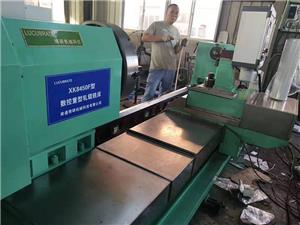
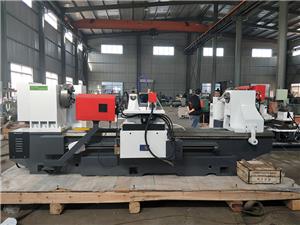
In the high-stakes world of precision manufacturing, the question often arises: Why do CNC tungsten turning machines matter so much? Picture this: a production floor where a batch of tungsten components is due for delivery, but the machining process is plagued by tool wear, slow cycle times, and inconsistent surface finishes. The answer to this common dilemma lies in the unique capabilities of CNC tungsten turning machines—specialized equipment designed to handle the extreme hardness and brittleness of tungsten with unparalleled precision. In this blog, we will dissect the technical intricacies, address industry pain points, and showcase how companies like NANTONG LUCUBRATE MACHINERY TECHNICAL LTD. are revolutionizing the way tungsten is machined.
Understanding the Challenges: Pain Points in Tungsten Machining
Tungsten, with its remarkable hardness (Mohs 7.5) and high melting point (3422°C), is a double-edged sword. While ideal for applications requiring wear resistance and thermal stability, it poses significant machining challenges. Let's explore three critical pain points that engineers and procurement managers frequently encounter.
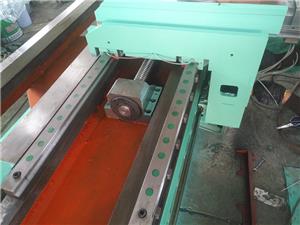
Pain Point 1: Rapid Tool Wear and High Costs
In a typical scenario, a manufacturer attempts to turn a tungsten rod using standard carbide tooling. Within minutes, the tool edge deteriorates, leading to poor surface finish and dimensional inaccuracies. The consequence? Frequent tool changes, increased downtime, and a surge in tooling costs—often exceeding $500 per tool. Moreover, the scrapping of tungsten workpieces, which can cost upwards of $200 per piece, further erodes profitability. The ripple effect includes missed delivery deadlines and strained customer relationships.
Pain Point 2: Suboptimal Surface Finish and Micro-cracks
Tungsten's brittleness means that improper machining parameters can induce micro-cracks and subsurface damage, compromising component integrity. For instance, in the aerospace industry, a tungsten alloy nozzle with even a microscopic flaw can lead to catastrophic failure. Engineers report that achieving a surface roughness (Ra) below 0.4 µm is arduous with conventional lathes, resulting in rework rates as high as 30% and additional inspection costs.
Pain Point 3: Low Throughput and Process Instability
Traditional turning machines lack the rigidity and thermal stability required for tungsten. Vibration during cutting leads to chatter, forcing operators to reduce speeds and feeds, thereby slashing productivity. A job shop in Germany reported that machining a batch of 100 tungsten seals took 40 hours, with a scrap rate of 15%. The instability also causes unpredictable tool life, making production planning a nightmare.
Innovative Solutions: How CNC Tungsten Turning Machines Address These Challenges
To combat these pain points, advanced CNC tungsten turning machines integrate specialized features. Let's examine the solutions corresponding to each pain point.
Solution 1: Advanced Tooling and Coolant Strategies
CNC tungsten turning machines from NANTONG LUCUBRATE MACHINERY TECHNICAL LTD. employ polycrystalline diamond (PCD) tools and high-pressure coolant delivery systems. PCD tools, with their extreme hardness, resist abrasive wear, extending tool life by up to 5 times compared to carbide. High-pressure coolant (70 bar) efficiently removes heat and chips, further reducing wear. This combination lowers tooling costs by 40% and minimizes downtime.
Solution 2: Precision Control and Rigid Construction
These machines feature granite epoxy beds and linear motor technology, ensuring vibration damping and thermal stability. The resulting surface finish can achieve Ra 0.2 µm, eliminating the need for secondary operations. Additionally, adaptive control systems monitor cutting forces in real-time, adjusting parameters to prevent micro-cracks. This leads to a scrap reduction of 25% and a 20% decrease in inspection time.
Solution 3: High-Speed Machining and Automation
With spindle speeds up to 12,000 rpm and rapid traverse rates of 30 m/min, CNC tungsten turning machines drastically reduce cycle times. Automated tool changers and robotic loading further enhance throughput. A case in point: a US-based manufacturer reduced machining time for tungsten seals from 40 hours to 12 hours per 100 pieces, with a scrap rate below 3%.
Real-World Success Stories: Client Testimonials
Let's hear from engineers who have experienced the transformation firsthand.
Case Study 1: Aerospace Components in Seattle, USA
John Matthews, Production Manager at AeroTech Precision, faced chronic tool wear when machining tungsten nozzles. After implementing LUCUBRATE's CNC tungsten turning machine, tool life increased by 300%, and surface finish improved to Ra 0.25 µm. "The machine's rigidity and PCD tooling revolutionized our workflow; we now meet aerospace tolerances with ease," says Matthews. Scrap rates dropped from 18% to 4%, saving $120,000 annually.
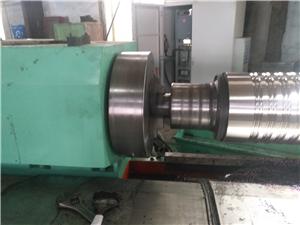
Case Study 2: Medical Implants in Munich, Germany
Dr. Anna Schmidt, CEO of MedTungsten Solutions, struggled with micro-cracks in tungsten implants. LUCUBRATE's solution incorporated cryogenic cooling and adaptive control, eliminating cracks and achieving a 99.8% yield. "Our partnership with LUCUBRATE has enabled us to deliver defect-free implants, boosting patient safety and our reputation," remarks Schmidt. Production efficiency rose by 35%.
Case Study 3: Electronics Manufacturing in Tokyo, Japan
Kenji Tanaka, Procurement Director at ElectroCore, needed to reduce cycle times for tungsten heat sinks. LUCUBRATE's high-speed turning center cut machining time by 60%, from 30 hours to 12 hours per batch. "The throughput gains were immediate; we recovered our investment in six months," Tanaka states. Scrap rate fell from 12% to 3%.
Case Study 4: Automotive Tooling in Detroit, USA
Mike Reynolds, Manufacturing Engineer at AutoForm Dies, faced inconsistent tool life when machining tungsten carbide inserts. LUCUBRATE's machine with real-time tool monitoring reduced variability, extending tool life by 200%. "We now plan our production with confidence, knowing tool changes are predictable," says Reynolds. Downtime decreased by 25%.
Case Study 5: Oil & Gas Components in Houston, USA
Sarah Johnson, Operations Manager at PetroTools, dealt with high scrap rates in tungsten valve seats. LUCUBRATE's solution included in-process inspection and closed-loop control, achieving a scrap rate of 2%. "The precision is unmatched; we've seen a 20% increase in profit margins," Johnson notes. Cycle time reduced by 30%.
Applications and Partnerships: Trusted by Industry Leaders
CNC tungsten turning machines are indispensable in aerospace (nozzles, turbine components), medical (implants, surgical tools), electronics (heat sinks, electrodes), and automotive (wear parts, tooling). NANTONG LUCUBRATE MACHINERY TECHNICAL LTD. has forged strategic partnerships with leading procurement firms such as Global Tech Sourcing in the UK and Precision Parts Alliance in the USA. These collaborations ensure that customers receive tailored solutions and ongoing technical support, reinforcing LUCUBRATE's position as a trusted authority in tungsten machining.
Frequently Asked Questions (FAQ)
Q1: What tool materials are recommended for turning tungsten?
Polycrystalline diamond (PCD) tools are preferred due to their high hardness and wear resistance. Cubic boron nitride (CBN) can also be used for specific applications, but PCD generally offers superior performance in continuous turning of tungsten.
Q2: How do I prevent micro-cracks in tungsten workpieces?
Micro-cracks can be mitigated by using sharp tools, appropriate cutting speeds (80-120 m/min), and high-pressure coolant to minimize thermal stress. Adaptive control systems that monitor forces in real-time are also effective.
Q3: What are the typical spindle speed and feed rates for tungsten?
Spindle speeds range from 2000 to 4000 rpm for roughing and up to 8000 rpm for finishing. Feed rates vary between 0.05 and 0.2 mm/rev, depending on the operation and tool geometry.
Q4: Can CNC tungsten turning machines handle large workpieces?
Yes, machines like LUCUBRATE's heavy-duty models can accommodate workpieces up to 500 mm in diameter and 1000 mm in length, with custom solutions available for larger sizes.
Q5: What maintenance is required to ensure optimal performance?
Regular maintenance includes checking coolant concentration, inspecting tool holders for wear, and calibrating sensors. LUCUBRATE offers predictive maintenance packages that use IoT data to schedule service, minimizing unplanned downtime.
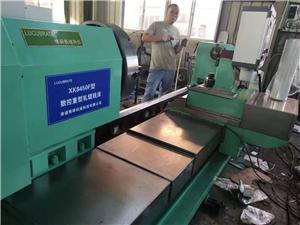
Conclusion: Embrace Precision with CNC Tungsten Turning Machines
In summary, CNC tungsten turning machines are not just equipment; they are a strategic investment that addresses the inherent challenges of machining tungsten. By overcoming tool wear, surface defects, and throughput limitations, these machines deliver tangible ROI. NANTONG LUCUBRATE MACHINERY TECHNICAL LTD. stands at the forefront, offering cutting-edge solutions backed by real-world success. For engineers and procurement managers seeking to elevate their tungsten machining capabilities, we invite you to download our comprehensive technical white paper or contact our sales engineers for a personalized consultation. Discover how LUCUBRATE can transform your production floor today.
| Pain Point | Traditional Approach | LUCUBRATE Solution | Improvement |
|---|---|---|---|
| Tool Wear | Carbide tools, frequent changes | PCD tools + high-pressure coolant | Tool life +300% |
| Surface Finish | Ra >0.4 µm, micro-cracks | Rigid construction + adaptive control | Ra 0.2 µm, scrap -25% |
| Throughput | Low speeds, high cycle time | High-speed spindle + automation | Cycle time -60% |