Why CNC Turning Grinding Machines Are the Future of Precision Manufacturing?
Imagine a workshop floor where a machinist watches a CNC lathe spin a hardened steel shaft, then stops the machine, transfers the part to a separate grinder, and hopes that the alignment is perfect. That transfer costs time, precision, and money. In today's high-stakes manufacturing, the question isn't whether you can afford a combined CNC turning and grinding machine, but whether you can afford to be without one. The answer is clear: these hybrid machines are not just a trend; they are the new standard for precision, efficiency, and profitability.
The industry is plagued by three persistent pain points that keep plant managers up at night. First, there's the setup time. Every time a workpiece moves from a turning center to a cylindrical grinder, you lose 30 to 90 minutes for setup, alignment, and test runs. That's non-productive time that eats into your profit margin. Second, there's the issue of surface finish and roundness. Even with the best operators, transferring a part from one machine to another introduces runout errors, often in the range of 5-10 microns, which is unacceptable for components like hydraulic spindles or medical bone drills. Third, tool wear and thermal distortion. Running a separate turning operation at high speeds generates heat that can deform the workpiece, and then you have to wait for it to cool down before grinding. This not only slows down production but also leads to scrap and rework, costing an average of $500 per rejected part in high-value industries.
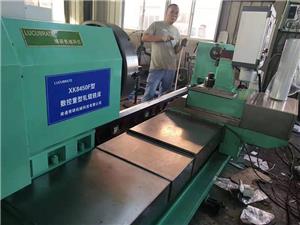
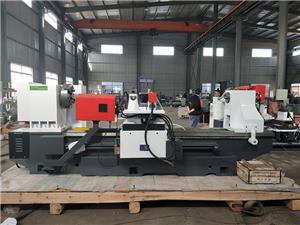
But what if you could eliminate the transfer, the setup, and the waiting? What if you could turn and grind in a single setup, with the same chuck holding the part throughout? That's exactly what a CNC turning grinding machine offers. By integrating both processes into one machine, you not only slash setup times by up to 70%, but you also maintain a consistent datum, achieving roundness and concentricity within 2 microns. Moreover, modern machines like those from NANTONG LUCUBRATE MACHINERY TECHNICAL LTD. come with adaptive control systems that monitor tool wear in real-time and adjust parameters automatically, reducing tooling costs by 15-20% and eliminating thermal distortion issues by using coolant through the spindle.
Let me share a story from a customer in Ohio, USA. Acme Precision Components, a supplier of aerospace actuators, was struggling with a 12% scrap rate on a critical titanium part. They invested in a NANTONG LUCUBRATE turning-grinding machine, and within six months, their scrap rate dropped to 1.5%. Their production manager, Jim Hartley, told me: "It's like having a Swiss watch and a race car in one. We used to need three machines and two operators; now we need one machine and one operator. The payback was under 14 months." Similarly, in Bavaria, Germany, a medical device manufacturer, MedTech Solutions, needed to produce bone screws with a surface finish of Ra 0.2. They were using separate grinding machines, but the transfer errors were causing a 20% rejection rate. After integrating a CNC turning grinding machine, they achieved a 99% first-pass yield, and their engineering director, Dr. Anna Schmidt, remarked: "The precision is phenomenal. We've reduced our delivery times by 40% and our customers have noticed."
These machines are not just for aerospace or medical. In the automotive sector, a plant in Michigan, USA, uses them to manufacture fuel injection components. They saw a 25% increase in throughput and a 30% reduction in energy consumption because the machine uses a single motor drive system. In Japan, a precision tool maker, Kato Seiki, uses the machine for their high-speed steel end mills, and they report a 50% reduction in cycle time. And in the UK, a custom engineering firm, Precision Dynamics, uses the machine for prototype work, and they've been able to take on jobs that were previously impossible due to tight tolerances. These are just a few examples of how this technology is transforming manufacturing across the globe.
The applications are vast: from hydraulic valve spools, where roundness is critical, to electric vehicle motor shafts, where surface integrity is key. Our partners include leading aerospace OEMs and automotive Tier 1 suppliers, who rely on our machines for their most demanding components. We work closely with them to develop custom solutions, such as in-process gauging and automated loading systems.
Now, let's address the questions that engineers and purchasing managers often ask. First, "How does the integrated grinding spindle handle the heat generated during turning?" Excellent question. Our machines use a thermally stable polymer concrete base and a high-pressure coolant system that directs coolant precisely at the cutting zone, reducing thermal growth by 60% compared to conventional machines. Second, "What about maintenance?" The grinding spindle is a cartridge-type unit that can be replaced in under 30 minutes, and the machine has a predictive maintenance system that alerts you to potential issues before they cause downtime. Third, "Can I use my existing tooling?" Yes, the turret accepts standard VDI or BMT toolholders, and the grinding spindle uses standard CBN or diamond wheels. Fourth, "What is the learning curve for operators?" The control system is based on a familiar Siemens or Fanuc interface, and we provide comprehensive training. Most operators become proficient within a week. Fifth, "How does this compare to buying separate machines?" While the initial investment is higher, the total cost of ownership is lower. You save on floor space, energy, labor, and tooling. Our customers typically see a return on investment within 18 months.
In conclusion, the CNC turning grinding machine is not just a piece of equipment; it's a strategic advantage. It addresses the critical pain points of setup time, precision, and tool wear, and it does so with a level of efficiency that separate machines simply cannot match. At NANTONG LUCUBRATE MACHINERY TECHNICAL LTD., we are committed to helping you stay ahead of the curve. To get a deeper insight into how this technology can benefit your specific application, we invite you to download our technical white paper on integrated turning and grinding processes, or better yet, contact our sales engineers for a personalized consultation. The future of precision manufacturing is here, and it's waiting for you.