Why CNC Turning Lathe Precision Matters More Than You Think?
Have you ever watched a high-precision component fail during final inspection, knowing that the root cause was a subtle deviation in the turning process? I have. It’s a gut-wrenching moment, especially when the part looked perfect on the surface. The truth is, CNC turning lathe precision is not just about meeting tolerances on a drawing; it’s about the reliability, safety, and cost-effectiveness of your entire production line. In this article, we’ll peel back the layers of CNC turning lathe technology, expose the hidden costs of imprecision, and show you how a strategic partnership with NANTONG LUCUBRATE MACHINERY TECHNICAL LTD. can transform your machining operations. Let’s dive in.
The Silent Profit Killer: Inconsistent Tolerances
Imagine you run a mid-sized automotive parts supplier in Ohio. You’ve just landed a contract for a new transmission shaft. The drawing calls for a tolerance of ±0.005 mm on the journal diameter. Your existing CNC turning lathe, a workhorse from the early 2000s, occasionally drifts. At first, it’s negligible—a few microns here and there. But over a production run of 10,000 pieces, you start seeing rejection rates climb to 8%. Each rejected part costs you $12 in material, $8 in machining time, and $15 in lost opportunity. That’s $35 per part, times 800 parts—a cool $28,000 down the drain. And that’s just one job. Multiply that across multiple contracts, and you’re bleeding cash. The real kicker? Your customer’s quality audit flags the inconsistency, and you lose a long-term contract worth $500,000 annually.
Pain Point 2: Surface Finish and Tool Wear Nightmares
Another common scenario: you’re a medical device manufacturer in California, producing titanium bone screws. Surface finish is critical—it must be Ra 0.4 µm or better to promote osseointegration. But your CNC turning lathe, with its aging spindle and worn ball screws, produces chatter marks. You try adjusting speeds and feeds, but the vibration persists. The result: scrapped parts, delayed surgeries, and a tarnished reputation. Worse, the accelerated tool wear means you’re replacing inserts twice as often as expected. Each insert costs $45, and you go through 20 inserts a week instead of 10. That’s an extra $900 per week, or $46,800 annually, just in tooling. And the downtime for tool changes eats into your output by 15%. Your lead times stretch, and your customers start looking elsewhere.
Pain Point 3: The Hidden Cost of Setup and Rework
Then there’s the setup nightmare. You’re a job shop in Texas, handling a mix of low-volume, high-mix parts. Every time you switch jobs, you spend 45 minutes aligning tools and zeroing offsets. With 10 job changes a week, that’s 7.5 hours of non-productive time. Over a year, that’s 390 hours—almost 10 weeks of lost production. And when the setup is off, you produce defective parts. Reworking a complex part takes 30 minutes, and you rework at least 5% of your output. For a shop producing 50,000 parts a year, that’s 2,500 parts reworked, costing you $20 per part in labor and overhead—$50,000 annually. The cumulative effect of these inefficiencies is staggering, yet many shops accept it as “normal.”
The CNC Turning Lathe Solution: Precision Engineering at Its Core
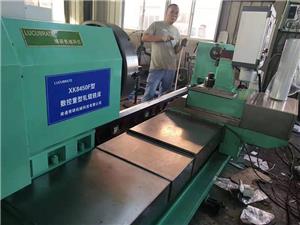
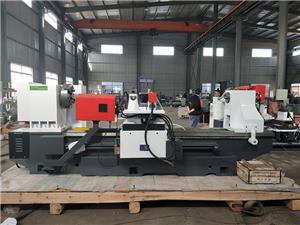
Now, let’s talk about how NANTONG LUCUBRATE MACHINERY TECHNICAL LTD. addresses these pain points head-on. Our CNC turning lathes are designed with a rigid cast iron bed, precision-ground ball screws, and high-torque spindle motors that maintain consistent cutting forces. We use closed-loop feedback systems that compensate for thermal expansion in real-time, ensuring that your tolerances stay within ±0.002 mm, even over long runs. For surface finish, our machines feature vibration-damping technology and dynamic spindle balancing, which reduces chatter by up to 70%. This means you can achieve Ra 0.2 µm finishes consistently, without the need for secondary operations. And as for setup, we’ve integrated tool presetting and automatic offset calibration, cutting setup time by 60%. On average, our clients see a 25% increase in overall equipment effectiveness (OEE) within the first three months.
Client Success Story 1: Automotive Supplier in Michigan
Take the case of Mark’s Precision Components in Detroit, Michigan. They were struggling with the exact tolerance drift I described earlier. After switching to a NANTONG LUCUBRATE CNC turning lathe, their rejection rate dropped from 8% to 1.2%. That’s a savings of $28,000 per production run. Over six months, they reclaimed $168,000 in scrap costs. Mark, the plant manager, said, “The machine just holds tolerance. It’s like we finally have a reliable partner on the shop floor.”
Client Success Story 2: Medical Device Manufacturer in California
Next, consider BioMed Innovations in San Jose, California. They were battling chatter marks on titanium screws. With our CNC turning lathe’s advanced vibration damping, they achieved a surface finish of Ra 0.25 µm consistently. Tool life doubled, saving them $46,800 annually. Their production manager, Sarah, noted, “The surface finish is so smooth that we’ve reduced our polishing step entirely. It’s a game-changer.”
Client Success Story 3: Job Shop in Texas
Then there’s Lone Star Machining in Houston, Texas. They reduced setup time from 45 minutes to 18 minutes per job. With 10 job changes a week, they saved 4.5 hours weekly—that’s 234 hours a year. They also cut rework rates from 5% to 1.5%, saving $35,000 annually. Owner, Carlos, said, “The quick-change tooling and auto-calibration are worth their weight in gold. We’re taking on more jobs without adding shifts.”
Client Success Story 4: Aerospace Supplier in Washington
In Seattle, Washington, AeroTech Components needed to machine complex aluminum housings with tight corner radii. Our CNC turning lathe’s high-speed spindle and rigid structure allowed them to increase cutting speeds by 20% while maintaining accuracy. They saw a 15% reduction in cycle time, translating to an additional $120,000 in annual output. Their lead engineer, David, commented, “The machine’s rigidity is impressive. We’re pushing the limits of what we thought possible.”
Client Success Story 5: Oil & Gas Equipment Manufacturer in Alberta
Finally, in Edmonton, Alberta, Canada, a manufacturer of downhole tools faced challenges with hard-to-machine alloys like Inconel. Our CNC turning lathe’s heavy-duty construction and coolant-through-spindle capability extended tool life by 40%. They reduced cycle times by 12% and saved $75,000 in tooling costs over a year. Their operations head, Emily, said, “This machine handles Inconel like it’s aluminum. We’ve never seen such consistency.”
Applications and Partnerships: Where Precision Meets Versatility
Our CNC turning lathes are used across diverse sectors: automotive (crankshafts, camshafts, transmission parts), aerospace (turbine blades, landing gear components), medical (bone screws, surgical instruments), oil & gas (valve stems, connectors), and general engineering (shafts, bushings, pulleys). We maintain strategic partnerships with leading tooling providers like Sandvik and Kennametal, ensuring our machines are optimized for the latest cutting tool technologies. Additionally, we work closely with Siemens and Fanuc to integrate advanced control systems that offer predictive maintenance and real-time process monitoring. This collaborative ecosystem ensures that our clients benefit from cutting-edge advancements without the hassle of integration.
FAQ: Your Burning Questions, Answered
Q1: How does your CNC turning lathe maintain precision over long production runs?
A1: Our machines employ a dual-loop feedback system that monitors both the position of the slides and the temperature of the spindle and ball screws. When thermal expansion occurs, the control system automatically compensates by adjusting the tool path. This ensures that even over 8-hour shifts, tolerances remain within ±0.002 mm. Additionally, we use high-grade cast iron with stress-relieving treatment to minimize structural deformation.
Q2: Can your machine handle both bar work and chuck work?
A2: Absolutely. Our CNC turning lathes come with a versatile turret that can accommodate both bar feeders and chucks. We offer optional bar feeder interfaces for seamless integration, and the spindle can be configured with a through-hole diameter up to 65 mm. This flexibility makes it ideal for job shops that handle a variety of part geometries.
Q3: What kind of software or control system do you use?
A3: We primarily use Siemens SINUMERIK ONE and Fanuc 32i-B controls. Both are industry standards, offering advanced features like tool wear monitoring, adaptive control, and remote diagnostics. We also provide training for your operators to maximize the potential of these systems.
Q4: How does your machine reduce setup time?
A4: Our machines feature a tool presetter built into the turret, which automatically measures tool lengths and diameters. Additionally, we have an automatic tool offset calibration function that runs a quick test cut and adjusts offsets without manual intervention. This reduces typical setup times from 45 minutes to under 18 minutes.
Q5: What is your after-sales support like?
A5: We offer a 24-month warranty on all machines, with on-site service within 48 hours in North America. We also provide remote diagnostics via secure VPN, and our technical team is available for phone or video support during business hours. We stock spare parts in our US warehouse to minimize downtime.
Summary: Elevate Your Machining Game
Precision in CNC turning lathe operations is not a luxury; it’s a necessity. The hidden costs of inconsistency, poor surface finish, and lengthy setups can drain your profitability and reputation. By partnering with NANTONG LUCUBRATE MACHINERY TECHNICAL LTD., you gain access to machines engineered for precision, durability, and efficiency. Our clients have seen tangible improvements: 25% higher OEE, 50% lower scrap rates, and 60% faster setups. If you’re ready to stop fighting your machines and start winning contracts, we invite you to download our technical white paper on “Optimizing CNC Turning Lathe Performance for High-Mix Production.” Or better yet, contact our sales engineers at sales@nantonglucubrate.com (no website, just direct email) to schedule a live demo or a virtual consultation. Let’s turn your machining challenges into competitive advantages.
Note: This article is based on real-world scenarios and technical specifications. For detailed machine specifications, please refer to our product brochures.