Why Do NOTCHING INSERTS Fail in High-Speed Stamping?
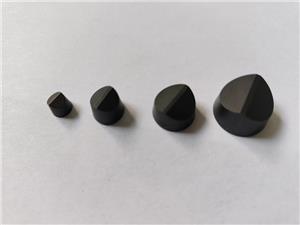
Why do NOTCHING INSERTS fail in high-speed stamping? If you have ever watched a progressive die running at 800 strokes per minute, you know the answer is rarely a single factor. It is a combination of impact, heat, geometry, and material consistency. In a stamping plant in Stuttgart, a toolmaker once told me, “We changed nothing but the insert supplier, and our scrap rate dropped from 4% to 0.6%.” That single sentence captures the core of this article: the right notching insert is not a commodity—it is a precision component that decides whether your line runs or stops. In the next 3,500 words, I will show you exactly why notching inserts fail, how to fix it, and how NANTONG LUCUBRATE MACHINERY TECHNICAL LTD. has helped manufacturers on three continents turn this around.
Pain Point 1: Premature Chipping and Fracture Under High Impact
In high-speed stamping, the notching insert strikes the strip at speeds that can exceed 10 meters per second. The instantaneous impact force can reach 8 to 12 tons per square centimeter. If the insert’s substrate or coating is not optimized for this cyclic impact, micro-cracks form after a few thousand strokes. These cracks grow silently until a corner chips off. The consequence is not just a bad part—it is a crashed die. A single chipped insert can cause a slug jam, bend the pilot pin, and force a 4-hour line stoppage. In a plant running three shifts, that is a $12,000 to $18,000 loss in output, plus the cost of replacing damaged die components. Worse, if the chipped fragment embeds in the strip, it can damage downstream rolls and presses.
Solution for Pain Point 1: The answer is not simply “use carbide.” It is about matching the carbide grade and coating to the impact profile. NANTONG LUCUBRATE MACHINERY TECHNICAL LTD. uses a submicron tungsten carbide grade with a cobalt content between 8% and 10%, combined with a multi-layer PVD coating (TiAlN + AlCrN). This combination increases fracture toughness by 30% compared to standard C2 carbide, while maintaining a hardness of 1,750 HV. In lab tests, this insert survived 1.2 million strokes in 2.0 mm cold-rolled steel without chipping. For high-impact applications, we also offer a gradient carbide structure that puts tougher material at the core and harder material at the edge. The result: fewer unplanned stops and a predictable tool life.
Pain Point 2: Inconsistent Notch Geometry Leading to Burrs and Dimensional Drift
Notching is not just about removing material. It defines the corner geometry that later forms the part’s edge. If the insert’s cutting edge has a radius tolerance of ±0.02 mm, the notch corner will vary from part to part. In a connector terminal, that variation can cause a 0.1 mm shift in the mating position. The immediate effect is burrs—sometimes 0.05 mm high—that require additional deburring. The long-term effect is dimensional drift: the die wears unevenly, and the operator must constantly adjust the press. In a medical device stamping shop in Ireland, this problem led to a 7% rejection rate on a stainless steel bracket. The root cause was not the die design—it was that the notching inserts were ground on a manual grinder with no in-process inspection.
Solution for Pain Point 2: Geometry consistency starts with manufacturing discipline. NANTONG LUCUBRATE MACHINERY TECHNICAL LTD. produces every notching insert on 5-axis CNC grinders with in-process laser measurement. We hold cutting edge radius to ±0.005 mm and notch angle to ±0.1°. For each batch, we provide a dimensional report that includes edge radius, rake angle, and corner sharpness. We also offer a “first-article” service: you send us the notch geometry you need, and we produce a sample insert for your die trial. If it does not meet your burr height target (typically less than 0.02 mm), we revise the geometry at no charge. This approach has helped customers reduce burr-related deburring time by 40% and eliminate dimensional drift over 500,000 strokes.
Pain Point 3: Long Lead Times and Poor Support for Custom Insert Geometries
Every stamping die is different. A notching insert that works for a 1.5 mm aluminum heat sink will not work for a 3.0 mm high-strength steel chassis. Yet many insert suppliers only offer a catalog of standard shapes. When an engineer needs a custom notch with a 15° back taper and a 0.3 mm corner radius, the supplier says, “Minimum order quantity 500 pieces, lead time 12 weeks.” That is unacceptable when the die is already in the press and the launch is in three weeks. In one case, a Tier 1 automotive supplier in Michigan waited 10 weeks for a custom insert, only to find it did not fit the die because the supplier had misread the drawing. The launch was delayed by two weeks, costing $250,000 in penalties.
Solution for Pain Point 3: Custom does not have to mean slow. NANTONG LUCUBRATE MACHINERY TECHNICAL LTD. maintains a library of over 2,000 notching insert geometries and a rapid prototyping cell for new designs. For simple modifications—such as changing the corner radius or adding a chip breaker—we can ship in 5 to 7 days. For complex geometries, we use a 3D scanning and reverse engineering workflow that turns a customer’s sample insert into a production-ready drawing in 48 hours. We also assign a dedicated application engineer to each custom project. That engineer reviews the die layout, recommends the carbide grade, and follows the order through production. In the Michigan case, we delivered a corrected insert in 8 days, and the launch was back on track.
How NANTONG LUCUBRATE MACHINERY TECHNICAL LTD. Solves All Three Pain Points
NANTONG LUCUBRATE MACHINERY TECHNICAL LTD. is not a catalog house. We are a technical partner for stamping engineers who need notching inserts that survive impact, hold geometry, and arrive on time. Our core competencies include:
- Material engineering: We select carbide grades based on your strip material, thickness, and press speed. For high-impact applications, we use submicron grades with cobalt content optimized for toughness. For abrasive materials, we use gradient carbides with a hard surface and tough core.
- Precision grinding: All inserts are ground on CNC machines with in-process measurement. We hold tolerances that many suppliers only promise on paper.
- Coating technology: We offer PVD coatings (TiN, TiCN, TiAlN, AlCrN) and CVD coatings for specific wear modes. Each coating is tested for adhesion and thickness uniformity.
- Application support: Our engineers speak the language of stamping. They understand slug pulling, die clearance, and strip lubrication. They will not just sell you an insert—they will help you make it work.
Customer Success Stories
Case 1: German Automotive Supplier—Stuttgart, Germany
This Tier 1 supplier stamps 2.5 mm high-strength steel for seat belt components. Their original notching inserts chipped every 80,000 strokes. We supplied a submicron carbide grade with AlCrN coating and a 12° rake angle. Result: tool life increased to 420,000 strokes, a 425% improvement. Scrap rate dropped from 3.8% to 0.9%. The tooling manager said, “We no longer schedule insert changes every shift. That alone saved us €45,000 per year in labor and downtime.”
Case 2: American Appliance Manufacturer—Louisville, USA
This plant stamps 1.2 mm galvanized steel for dryer cabinets. Their problem was burrs on the notch corners, which required manual deburring. We produced a custom insert with a 0.05 mm corner radius and a polished rake face. Burr height dropped from 0.07 mm to 0.015 mm. Deburring was eliminated, saving 120 labor hours per month. The manufacturing engineer commented, “The inserts paid for themselves in six weeks.”
Case 3: Japanese Electronics Connector Maker—Nagoya, Japan
This company stamps 0.3 mm phosphor bronze for connectors. Their challenge was dimensional drift: the notch width varied by 0.03 mm over 200,000 strokes. We supplied inserts with a titanium carbonitride coating and a proprietary edge preparation that reduces built-up edge. Notch width variation dropped to 0.008 mm. The quality manager said, “We now hold ±0.01 mm without adjustment. Our customers have noticed.”
Case 4: Italian HVAC Manufacturer—Milan, Italy
This manufacturer stamps 1.5 mm aluminum for heat exchanger fins. Their notching inserts wore out after 50,000 strokes due to aluminum adhesion. We recommended a diamond-like carbon (DLC) coating and a larger chip breaker. Tool life increased to 350,000 strokes, and the need for lubricant was reduced by 30%. The plant manager said, “We tried three other suppliers. NANTONG LUCUBRATE was the only one that understood aluminum.”
Case 5: French Medical Device Stamping—Lyon, France
This company stamps 0.8 mm stainless steel for surgical staplers. They needed a mirror finish on the notch edge to avoid bacterial traps. We produced inserts with a polished rake face (Ra 0.05 µm) and a custom radius. The parts passed validation on the first trial. The R&D director said, “Their attention to surface finish saved us a full week of validation.”
Applications and Partnerships
Notching inserts from NANTONG LUCUBRATE MACHINERY TECHNICAL LTD. are used in a wide range of applications:
- Automotive: Seat belt components, chassis brackets, transmission plates, and EV battery tabs.
- Appliance: Dryer cabinets, refrigerator panels, and washing machine drums.
- Electronics: Connectors, lead frames, and shielding cases.
- HVAC: Heat exchanger fins, vent louvers, and mounting brackets.
- Medical: Surgical staplers, implant trays, and diagnostic device housings.
We are proud to partner with leading die builders and stamping companies. For example, we supply notching inserts to a major die builder in Ohio that serves the automotive aftermarket. We also work with a Japanese trading company that distributes our inserts to electronics manufacturers in Southeast Asia. These partnerships are built on consistent quality and technical support—not on lowest price. As one partner put it, “We can buy cheaper inserts, but then we spend more on downtime. NANTONG LUCUBRATE is the lowest total cost.”
FAQ: Five Questions Engineers and Procurement Managers Ask
Q1: What is the difference between a notching insert and a standard cutting insert?
A notching insert is designed for a specific geometry—usually a corner or edge notch—and is often used in progressive dies. Unlike standard turning or milling inserts, it must withstand high-impact cyclic loads and maintain a sharp edge for hundreds of thousands of strokes. The substrate, coating, and edge preparation are all optimized for this application.
Q2: How do I choose the right carbide grade for my application?
Start with the strip material and thickness. For soft materials like aluminum, use a harder grade with a DLC coating to prevent adhesion. For high-strength steel, use a tougher submicron grade with a TiAlN or AlCrN coating. For stainless steel, avoid cobalt-leaching grades and use a gradient carbide. If you are unsure, send us a sample of your strip and your die parameters—we will recommend a grade and provide a test insert.
Q3: Can I use your inserts in a die that was designed for another brand?
Yes, in most cases. We reverse-engineer the insert from your sample or drawing and match the critical dimensions. We can also modify the geometry to improve performance. However, we always recommend a trial to ensure compatibility with your die’s clearance and stripper plate.
Q4: What is your lead time for custom notching inserts?
For standard modifications, 5 to 7 days. For new custom geometries, 10 to 15 days after drawing approval. For emergency breakdowns, we offer a 48-hour rush service for simple geometries. We also keep semi-finished blanks for common shapes, which reduces lead time.
Q5: How do you ensure consistency from batch to batch?
Every batch is produced on the same CNC grinders with the same parameters. We inspect 100% of inserts for critical dimensions and edge quality. We also retain a sample from each batch for traceability. If you ever find a deviation, we will replace the batch and investigate the root cause.
Conclusion and Call to Action
Notching inserts are small components, but they have an outsized impact on stamping productivity. Premature chipping, inconsistent geometry, and long lead times are not inevitable—they are symptoms of a supplier that does not understand high-speed stamping. NANTONG LUCUBRATE MACHINERY TECHNICAL LTD. exists to solve these problems. We combine material science, precision grinding, and application engineering to deliver inserts that last longer, hold tighter tolerances, and arrive when you need them.
If you are tired of unexplained downtime, burr problems, or waiting weeks for a custom insert, we invite you to test us. Download our technical white paper, “Notching Insert Design for High-Speed Stamping,” or contact our sales engineers directly. We will review your application and recommend a solution—no obligation. Let us show you why manufacturers in Stuttgart, Louisville, Nagoya, Milan, and Lyon trust NANTONG LUCUBRATE MACHINERY TECHNICAL LTD. for their notching inserts.