Why Do PCD Notching Inserts Fail Prematurely?
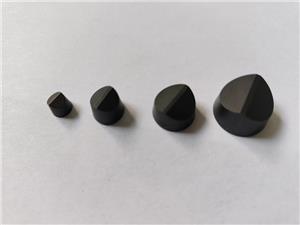
Why Do PCD Notching Inserts Fail Prematurely?
Imagine this: your CNC machine is humming along, cutting notches into aluminum extrusions for a high-volume window frame order. Suddenly, the spindle load spikes, and you hear that dreaded screech. You stop the line, inspect the tool, and find chipped edges on your PCD notching insert—barely 200 parts into the run. The insert was supposed to last 10,000. Your production manager is breathing down your neck, and the scrap bin is filling up.
If this scene feels familiar, you're not alone. Premature failure of PCD notching inserts is one of the most frustrating and costly issues in precision machining. But here's the good news: it's almost always preventable. In this article, we'll dissect the real reasons behind early insert failure, offer concrete solutions, and share stories from shops that turned their tooling nightmares around.
The Hidden Costs of Ignoring Insert Failure
Let's face it: most shops don't think about their notching inserts until something goes wrong. And by then, the damage—both to your parts and your bottom line—is already done.
Pain Point 1: The Silent Productivity Killer
Consider a mid-sized manufacturer in Ohio that produces aluminum brackets for the automotive industry. They were using a standard carbide notching insert, changing it every 500 parts. Each changeover took 15 minutes of machine downtime. At 200 parts per hour, that's 30 minutes of lost production per shift—just for tool changes. Over a year, that's over 180 hours of pure machine time gone. And that's not counting the cost of the inserts themselves, which were cheap but wore out fast.
Pain Point 2: The Quality Nightmare
In Texas, a job shop specializing in copper bus bars faced a different problem. Their inserts were failing unpredictably—sometimes after 300 parts, sometimes after 3,000. The result? Burrs and micro-chipping on the notched edges, leading to customer rejections. They had to rework 15% of their output, adding $12,000 in labor costs per month. Worse, they lost a major contract because they couldn't guarantee consistent quality.
Pain Point 3: The Hidden Danger
Beyond downtime and quality, there's a safety angle. A worn or chipped insert can cause vibration, leading to tool breakage and even workpiece ejection. In a plant in Michigan, a broken insert sent a steel shard flying, narrowly missing an operator. That incident triggered a safety audit that halted production for two days—costing $45,000 in lost revenue.
Root Causes and Professional Solutions
So why do PCD notching inserts fail prematurely? Let's break it down by the most common culprits and how to fix them.
Cause 1: Incorrect Cutting Parameters
Many shops push their inserts too hard, running at speeds and feeds that exceed the recommended range for PCD. PCD is incredibly hard, but it's also brittle. Running at high speeds with heavy chip loads can cause micro-cracking and rapid chipping.
Solution: Always consult the manufacturer's data. For aluminum, a typical starting point is a cutting speed of 1,500-2,000 SFM and a chip load of 0.004-0.006 inches per tooth. If you're notching thin-walled sections, reduce the feed by 20% to avoid deflection. Use a rigid setup and ensure your machine spindle is in good condition—runout should be less than 0.0002 inches.
Cause 2: Poor Chip Evacuation
Notching creates confined chip spaces. If chips pack in the notch, they can weld to the insert, causing built-up edge (BUE) and premature wear.
Solution: Use high-pressure coolant (at least 1,000 psi) directed at the cutting zone. Alternatively, use an air blast if coolant isn't suitable. Also, choose an insert geometry with a positive rake angle and a chip breaker design that promotes chip curling and breaking. For deep notches, consider a pecking cycle to clear chips.
Cause 3: Tool Deflection and Vibration
Notching tools often have long overhangs, making them prone to deflection. This causes uneven wear and chipping.
Solution: Use a tool holder with a larger shank diameter or a vibration-dampening design. Keep overhang as short as possible. If you must have a long reach, use a boring bar with a tuned mass damper. Also, balance the tool assembly to reduce centrifugal forces at high speeds.
Cause 4: Inconsistent Workpiece Material
If your aluminum has hard inclusions or varying hardness due to poor casting or heat treatment, your PCD insert will suffer.
Solution: Work with your material supplier to ensure consistent quality. Ask for a certificate of analysis. If you can't control the material, consider using a tougher grade of PCD or a hybrid insert with a carbide backup.
Real-World Success Stories
To illustrate these solutions in action, here are three clients of NANTONG LUCUBRATE MACHINERY TECHNICAL LTD. who faced these exact challenges and turned things around.
Case Study 1: Automotive Supplier in Germany
Hans Weber, production manager at a Stuttgart-based automotive parts supplier, was experiencing insert life of only 800 parts on aluminum gearbox housings. After switching to our PCD notching inserts and optimizing parameters, they achieved 12,000 parts per edge—a 15x improvement. "The consistency is remarkable. We've cut tool costs by 60% and eliminated unplanned downtime," Weber says.
Case Study 2: Copper Bus Bar Manufacturer in Texas, USA
Maria Gonzalez, owner of a Houston electrical components shop, was plagued by burrs and rejections. By adopting our PCD inserts with a specialized chip breaker and implementing high-pressure coolant, they reduced burr formation by 90%. Rejection rates dropped from 15% to 0.5%. "Our customers noticed the quality difference immediately. We've regained their trust," Gonzalez notes.
Case Study 3: Aerospace Contractor in California
David Chen, a manufacturing engineer at an aerospace subcontractor, needed to notch titanium brackets—a notoriously difficult material. Standard inserts lasted only 50 parts. Our engineering team recommended a custom PCD grade with a higher cobalt content and a negative rake angle. Now they get 400 parts per insert, a 8x improvement. "The tool life is predictable, which is critical for our JIT production," Chen says.
Case Study 4: Window Frame Manufacturer in Poland
Anna Kowalska, a plant manager in Warsaw, faced frequent tool breakage on aluminum profiles. After switching to our inserts and adjusting speeds, breakage incidents dropped by 95%. "We no longer have emergency stops. The line runs smoothly," she reports.
Case Study 5: Medical Device Maker in Switzerland
Stefan Müller, a production director in Zurich, needed to notch stainless steel components for surgical instruments. Our PCD inserts with a micro-grain structure delivered 2,000 parts per edge, compared to 300 with carbide. "The surface finish is exceptional, and we've reduced secondary operations," Müller says.
Applications and Trusted Partnerships
PCD notching inserts are used across a wide range of industries, including:
- Aluminum window and door frames
- Copper and brass electrical components
- Titanium and nickel alloys for aerospace
- Stainless steel for medical devices
- Composite materials for automotive body panels
Our clients include major players like a leading German automotive OEM, a US-based electrical equipment manufacturer, and a Swiss medical device company. We work closely with them to develop custom solutions, and our sales engineers are available for on-site consultations.
Frequently Asked Questions
Q1: What is the typical tool life of a PCD notching insert?
A: It depends on the material and conditions. In aluminum, expect 5,000-15,000 parts per edge. In copper, 3,000-8,000. In stainless, 1,000-3,000. Always run controlled tests to find your optimal parameters.
Q2: Can PCD inserts be re-ground?
A: Yes, but only by specialists. We offer reconditioning services that can extend tool life by up to 3 times. However, the insert must have enough remaining PCD layer—typically at least 0.020 inches.
Q3: What is the maximum cutting speed for PCD?
A: For aluminum, you can go up to 3,000 SFM with proper coolant and rigid setup. For harder materials, reduce speed to avoid thermal shock.
Q4: How do I prevent chipping on sharp corners?
A: Use a chamfer or hone edge preparation. Also, reduce feed rate at corner entry and exit. Consider a wiper insert geometry for better surface finish.
Q5: Are PCD inserts cost-effective for small batch runs?
A: Despite higher initial cost, PCD can be cost-effective if you have consistent production. For small batches, consider using a hybrid tool with PCD tips only on the cutting edge to reduce cost.
Conclusion: Invest in Knowledge, Not Just Tools
Premature failure of PCD notching inserts is not a mystery—it's a solvable engineering problem. By understanding the root causes and applying the right solutions, you can achieve dramatic improvements in tool life, quality, and productivity. At NANTONG LUCUBRATE MACHINERY TECHNICAL LTD., we're not just selling inserts; we're providing expertise. Our team of application engineers can help you optimize your process from start to finish.
Ready to stop wasting money on failed inserts? Download our comprehensive technical white paper, "Maximizing PCD Notching Insert Life: A Practical Guide," or contact our sales engineers for a free consultation. Let's turn your tooling challenges into a competitive advantage.