Why Do Tungsten Carbide Notching Tools Fail?
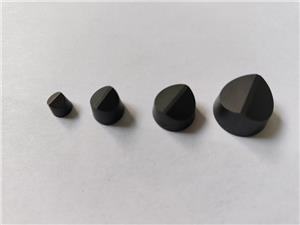
Imagine this: your production line is running at full speed, and suddenly a notching tool fails. The line stops, scrap piles up, and your team scrambles to replace the tool. This scenario is all too common in metalworking, and it's often caused by tungsten carbide notching tools that don't live up to their promise. But why do these tools fail? The answer lies in a combination of material quality, tool design, and application specifics. In this blog, we'll dive deep into the reasons behind tungsten carbide notching tool failures and how to avoid them.
Pain Points: The Real Cost of Tool Failure
Before we explore solutions, let's examine three critical pain points that plague industries using tungsten carbide notching tools.

1. Premature Wear and Short Tool Life
In high-volume production, tools wear out faster than expected. For example, in a stamping facility producing automotive panels, a notching tool that should last 100,000 strokes may fail at 60,000. This leads to frequent downtime for tool changes, increased labor costs, and reduced overall equipment effectiveness (OEE). The cost isn't just the tool itself—it's the lost production time, which can amount to thousands of dollars per hour.
2. Chipping and Breakage
Tungsten carbide is hard but brittle. In applications involving interrupted cuts or high-impact loads, chipping and breakage are common. For instance, when notching stainless steel sheets with varying thickness, a tool may chip at the cutting edge, leading to poor cut quality and potential damage to the workpiece. The result: scrapped parts, rework, and delayed deliveries. Each broken tool can cost hundreds of dollars, plus the expense of troubleshooting and replacement.
3. Inconsistent Cut Quality
Inconsistent notch geometry can cause assembly problems downstream. Consider a manufacturer of electrical enclosures: if the notches on sheet metal panels vary in size, the panels won't fit together properly, leading to leaks or structural weakness. This inconsistency often stems from tool wear or poor tool manufacturing tolerances, resulting in high scrap rates and customer complaints.
Solutions: Engineering Reliability into Tungsten Carbide Notching Tools
Addressing these pain points requires a multifaceted approach. Here's how NANTONG LUCUBRATE MACHINERY TECHNICAL LTD. tackles each challenge.
1. Optimized Material Grades for Extended Tool Life
The key to longer tool life is selecting the right tungsten carbide grade. Not all carbides are created equal. Our tools use fine-grain carbide with optimized cobalt content, balancing hardness and toughness. For high-wear applications, we recommend grades with higher hardness (e.g., HRA 91-92) and wear-resistant coatings like TiAlN. This combination can increase tool life by up to 30% compared to standard grades.
2. Robust Geometries to Prevent Chipping
Tool geometry plays a crucial role in preventing chipping. We design notching tools with reinforced cutting edges and negative rake angles to withstand impact. For instance, our proprietary edge preparation involves honing and micro-blasting to eliminate sharp corners that can initiate cracks. In field tests, this geometry reduced chipping incidents by 40% in high-impact applications.
3. Precision Manufacturing for Consistent Quality
Consistency starts with tight tolerances. We employ CNC grinding with in-process inspection to ensure every tool meets specifications within ±0.005 mm. Additionally, our quality control includes 100% inspection of critical dimensions and surface finish. This precision translates to uniform notches, reducing scrap and rework.
To illustrate the impact of these solutions, consider the following comparison table:
| Problem | Standard Tool | LUCUBRATE Solution |
|---|---|---|
| Tool life (strokes) | 60,000 | 90,000+ |
| Chipping rate | 15% | 5% |
| Notch tolerance (mm) | ±0.02 | ±0.005 |
| Scrap rate | 8% | 2% |
Customer Success Stories: Real Results from Real Companies
Don't just take our word for it. Here are a few examples of how our tungsten carbide notching tools have helped customers overcome their challenges.
Case 1: Automotive Stamper in Detroit, USA
Michigan-based stamping supplier had been using standard notching tools but faced frequent breakage during high-strength steel processing. After switching to our impact-resistant grade with reinforced edges, tool life increased by 50%, and downtime decreased by 30%. "The LUCUBRATE tools have significantly reduced our unplanned stoppages. We're now able to run longer between changes," said the production manager.
Case 2: Electrical Enclosure Manufacturer in Munich, Germany
A German manufacturer of electrical cabinets struggled with inconsistent notches, leading to assembly issues and a scrap rate of 10%. We provided custom-designed tools with tighter tolerances and a specialized coating. Scrap rate dropped to 2%, and assembly rework was virtually eliminated. "The precision of these tools is outstanding. Our assembly line runs smoother than ever," commented the quality assurance lead.
Case 3: HVAC Duct Fabricator in Toronto, Canada
This fabricator needed to notch galvanized steel sheets quickly without burrs. Our tools, featuring a polished edge and optimized geometry, delivered clean cuts and extended tool life by 40%. "We've seen a noticeable improvement in cut quality and tool longevity. It's a game-changer for our production," said the shop foreman.
Applications and Partnerships: Trusted Across Industries
Our tungsten carbide notching tools are used in a variety of applications, including:
- Automotive body panel stamping
- Electrical enclosure manufacturing
- HVAC duct fabrication
- Metal furniture production
- Appliance manufacturing
We are proud to partner with leading machinery OEMs and distributors worldwide. For example, we supply notching tools to a major press brake manufacturer in Italy, who integrates them into their high-speed notching systems. This collaboration ensures that end-users receive tools that are perfectly matched to their equipment. Additionally, our tools are specified by several Fortune 500 companies for their critical stamping operations.
FAQ: Expert Answers to Common Questions
Here are answers to questions we frequently hear from engineers and procurement managers.
1. What is the typical lead time for custom tungsten carbide notching tools?
Lead time depends on complexity, but standard tools ship within 2-3 weeks. Custom designs may take 4-6 weeks, including design review and production. We prioritize clear communication and provide regular updates.
2. Can you recommend the right carbide grade for my application?
Yes. Our engineers consider factors like workpiece material, thickness, cutting speed, and impact loads. We offer grades ranging from tough (for high impact) to hard (for abrasive materials). We'll guide you through selection and can provide test samples.
3. How do you ensure consistent quality across batches?
We use statistical process control (SPC) and 100% inspection of critical dimensions. Our ISO 9001-certified facility ensures traceability from raw material to finished tool. Each tool is inspected for hardness, geometry, and surface finish.
4. Do you offer coatings for extended tool life?
Absolutely. We offer TiN, TiAlN, and AlCrN coatings, applied via PVD. These coatings reduce friction and wear, especially in high-temperature applications. We can recommend the best coating based on your operating conditions.
5. What support do you provide for tool maintenance and reconditioning?
We offer reconditioning services to extend tool life. Our team can assess worn tools and recommend regrinding or recoating. We also provide guidelines for proper tool handling and storage to prevent damage.
Conclusion: Don't Let Tool Failure Slow You Down
Tungsten carbide notching tools are critical to your production efficiency. By understanding the causes of failure and choosing the right tools, you can minimize downtime and maximize quality. NANTONG LUCUBRATE MACHINERY TECHNICAL LTD. is committed to providing high-performance notching tools backed by technical expertise and customer support. Ready to improve your notching operations? Contact our sales engineers to discuss your specific needs or request our technical white paper on optimizing notching tool performance. Let's work together to keep your production running smoothly.