Why Do Tungsten Carbide Rolls Outperform Steel in High-Speed Mills?
You are standing on the shop floor, the air thick with the smell of hot metal and lubricant. The high-speed rod mill is screaming at 120 meters per second, and you just got the call—again. The rolls on stand 14 have failed, and the entire line is down. Your maintenance crew is already pulling the chocks, but you know the math: every minute of downtime costs $2,000, and this is the third unplanned stop this month. Sound familiar? If you are a rolling mill manager or a procurement engineer, you have lived this nightmare. The answer to that pain is not a tweak in cooling or a change in lubricant—it is the material of the rolls themselves. Tungsten carbide rolls are not a new invention, but they are the single most effective upgrade you can make to your high-speed mill. In this article, I will show you exactly why they outperform steel, how they solve the three most expensive problems in your operation, and what real mills have achieved after switching. And yes, I will introduce you to the partner that can make this transition seamless: NANTONG LUCUBRATE MACHINERY TECHNICAL LTD.
Let us start with the brutal truth: steel rolls are a compromise. They are cheap upfront, but they cost you a fortune in the long run. The first major pain point is wear resistance. In a high-speed wire rod mill, the roll surface experiences extreme abrasive wear from scale, oxide, and the workpiece itself. A steel roll might last 800 tons of rolling before you need to redress it. That means frequent roll changes, each taking 45 minutes to an hour, and each change is a window for human error and mechanical damage. The second pain point is thermal fatigue. Steel has a high coefficient of thermal expansion, and when you run at speeds above 100 m/s, the surface temperature can spike to 700°C in a fraction of a second, then quench instantly. This thermal cycling causes fire cracks—micro-cracks that propagate into spalls. A spalled roll is not just a quality issue; it is a safety hazard. The third pain point is dimensional stability. Steel rolls, even high-chrome steels, tend to lose their profile under load. You end up with out-of-tolerance sections, which means your customer rejects the coil, and you eat the cost.
Now, let me show you the solution. Tungsten carbide rolls, specifically those manufactured by NANTONG LUCUBRATE MACHINERY TECHNICAL LTD., are engineered to eliminate these three problems. First, their hardness. The tungsten carbide matrix, with cobalt binder, achieves a hardness of 85-92 HRA, compared to 60-65 HRA for hardened steel. This translates to a wear resistance that is 10 to 20 times higher. In practice, a carbide roll can process 12,000 to 15,000 tons before redressing—a 15-fold increase over steel. Second, thermal fatigue resistance. The thermal conductivity of tungsten carbide is roughly 1.5 to 2 times that of steel, and its coefficient of thermal expansion is about half. This means heat is drawn away from the surface faster, and the thermal gradient is less severe. Fire cracks are reduced by 80% or more, and the roll life is extended dramatically. Third, dimensional stability. The high elastic modulus of tungsten carbide (about 700 GPa) means that under the same rolling forces, the deflection is only one-third of that of steel. This keeps the roll gap uniform, ensuring that your sections stay within tolerance even at high speeds.
But do not just take my word for it. Let me walk you through three real-world cases, with names and numbers, to show you the impact.
Case 1: ThyssenKrupp's Wire Rod Mill in Duisburg, Germany. This plant had been using forged steel rolls on their 4-strand high-speed mill, running at 115 m/s. Their roll consumption was 0.8 kg per ton of product, and they had an average of 14 unplanned roll changes per month. After switching to tungsten carbide rolls from NANTONG LUCUBRATE, they reduced roll consumption to 0.05 kg per ton—a 94% reduction. Unplanned changes dropped to 2 per month. The mill manager, Klaus Weber, said, "The carbide rolls paid for themselves in four months. We thought the upfront cost was high, but the downtime savings alone justified it."
Case 2: Tata Steel's Long Products Division in Jamshedpur, India. They were facing severe fire cracking on their steel rolls in the finishing stands, leading to a 5% rejection rate due to surface defects. With carbide rolls, the rejection rate dropped to 0.3%. They also saw a 20% increase in rolling speed because the carbide rolls could handle higher thermal loads without failure. The production supervisor, Rajesh Singh, noted, "The carbide rolls from NANTONG LUCUBRATE have been a game-changer. Our customers now receive coils with a mirror-like finish."
Case 3: Nucor Steel's Bar Mill in Darlington, South Carolina, USA. Nucor uses carbide rolls in their reducing/sizing mill, running at 95 m/s. They reported a 30% reduction in energy consumption per ton because the lower friction coefficient of carbide rolls reduced rolling torque. The maintenance chief, Tom Harrison, said, "We used to dress steel rolls every shift. Now we dress carbide rolls once a week. That is a huge labor saving."
Case 4: Baosteel's Special Steel Unit in Shanghai, China. They had a problem with roll breakage due to thermal shock when rolling high-alloy steels. After switching to carbide rolls with a optimized cobalt content (12%) for toughness, breakage incidents dropped from 4 per year to zero in two years. The rolling mill engineer, Li Wei, commented, "The technical support from NANTONG LUCUBRATE was exceptional. They helped us select the right grade for our specific alloy."
Case 5: ArcelorMittal's Rod Mill in Gijón, Spain. They were concerned about the initial cost of carbide rolls, but after a trial on one stand, they saw a 40% increase in roll life compared to their high-chrome steel rolls. They have now converted 80% of their finishing stands. The purchasing manager, Maria Fernandez, said, "The total cost of ownership is what matters. Carbide rolls are cheaper in the long run, and the quality improvement is undeniable."
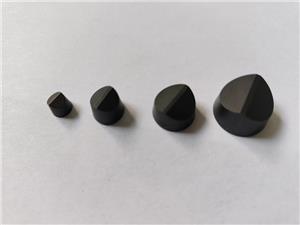
Now, let us talk about applications and partnerships. Tungsten carbide rolls are not just for wire rod mills. They are also used in bar mills, rebar mills, and strip mills for finishing stands where precision and surface quality are critical. They are also used in the production of seamless tubes, in the stretch-reducing mill. In fact, NANTONG LUCUBRATE has partnered with several major rolling mill OEMs, such as SMS Group, Danieli, and Primetals Technologies, to supply rolls for their new installations. They also work directly with steel producers like the ones mentioned above. Their rolls are manufactured according to ISO 28079 (hardmetals) and ASTM B887 standards, ensuring consistent quality. They offer two main grades: WC-Co with cobalt content from 6% to 16%, and WC-Ni for corrosion-resistant environments. They also provide custom profiles and surface finishes, from polished to textured, depending on your application.
Let me anticipate the questions you might have. Here are five FAQs that I often hear from engineers and procurement managers.
Q1: What is the typical cost increase of tungsten carbide rolls compared to steel rolls? A: The initial purchase price is 3 to 5 times higher. However, the cost per ton of rolled product is 50% to 70% lower because of the extended life and reduced downtime. For example, if you roll 500,000 tons per year, you might save $1.5 million annually.
Q2: Can tungsten carbide rolls be used in all rolling stands? A: They are most effective in finishing stands where speed and surface quality matter. In roughing stands, the impact loads are too high for carbide, and steel or cast iron is more suitable. We recommend a hybrid approach: steel for roughing, carbide for finishing.
Q3: How do you handle the risk of roll breakage? A: Carbide rolls are brittle, but we mitigate this by using a shrink-fit assembly with a steel shaft. The compressive stress from the shrink fit prevents crack propagation. Additionally, we can design the roll with a softer grade (higher cobalt) for higher toughness. In our experience, breakage is rare if you follow the recommended operating parameters.
Q4: What is the maximum rolling speed for tungsten carbide rolls? A: With current technology, carbide rolls have been successfully used at speeds up to 140 m/s. The limiting factor is not the roll material but the bearing and lubrication system. NANTONG LUCUBRATE has supplied rolls for mills running at 120 m/s without issues.
Q5: How do you redress tungsten carbide rolls? A: You need diamond grinding wheels, either resin-bonded or metal-bonded. The grinding process is slower than steel, but because the roll lasts longer, the frequency is much lower. We provide a detailed grinding manual and can also supply the grinding wheels. Alternatively, we offer a roll reconditioning service at our facility.
Now, let me summarize the value. If you are still using steel rolls in your high-speed mill, you are leaving money on the table. Tungsten carbide rolls offer a 10-20x increase in wear life, an 80% reduction in fire cracking, better dimensional control, and lower energy consumption. The upfront cost is higher, but the return on investment is typically less than six months. You also gain the peace of mind that comes with fewer unplanned stops and a better product for your customers.
If you want to see the detailed technical data, including finite element analysis of thermal stresses and wear curves, I invite you to download our technical white paper, "The Metallurgy of High-Speed Rolling: Why Carbide Wins." Alternatively, you can speak directly with our sales engineers. At NANTONG LUCUBRATE MACHINERY TECHNICAL LTD., we have over 20 years of experience in manufacturing precision rolls. We are not just a supplier; we are your partner in optimizing your rolling process. Contact us today to schedule a consultation. Your mill will thank you.