Why Does Your Heavy Duty Roll Notching Machine Fail Under Load?
You have just landed a massive order for steel enclosures, and the deadline is tight. Your Heavy Duty Roll Notching Machine, the workhorse of your shop floor, starts to groan. The notches come out ragged, the hydraulic pressure drops, and you watch your profit margin evaporate with every rejected part. The question is not if this will happen, but when. And the answer is not simple wear and tear. It is a design flaw, a maintenance oversight, or a fundamental mismatch between the machine's capability and your application. In this guide, we will dissect why these failures occur, and more importantly, how to eliminate them using precision engineering from NANTONG LUCUBRATE MACHINERY TECHNICAL LTD.
Let us start with a scene that is all too familiar. It is 2 AM, and your shift supervisor calls you with a crackling voice: the notching machine has jammed again. You rush to the factory floor, the smell of burnt hydraulic fluid hanging in the air. The operator, a veteran with twenty years of experience, shakes his head. The machine has been running fine for months, but today, under a heavier gauge of steel, it just gave up. The conveyor line is stopped, and your customer is expecting a shipment by Friday. This is not just a mechanical failure; it is a business crisis.
The first pain point we must address is the inadequate structural rigidity in many so-called heavy-duty machines. When you push a 6mm thick steel plate into a notching station, the forces involved are immense. A machine with a welded frame that has not been stress-relieved will flex. That flex translates into misalignment, which causes the punch to strike the die off-center. The result: premature tool wear, burrs, and eventually catastrophic breakage. The cost is not just the replacement of punches and dies, which can run into thousands of dollars, but the downtime. For a mid-sized fabrication shop, one hour of unplanned downtime costs an average of $5,000, according to industry studies. Multiply that by the number of incidents per year, and you are looking at a significant drain on your operating budget.
The second pain point is hydraulic system inefficiency. Many machines use generic hydraulic components that are not matched to the specific notching cycle. The result is slow cycle times, excessive heat generation, and inconsistent pressure. When the hydraulic oil temperature rises above 60°C (140°F), the viscosity drops, leading to seal degradation and erratic movement. Your operator compensates by increasing pressure, which stresses the entire system. The hidden cost here is energy consumption. An inefficient hydraulic system can consume up to 30% more energy than a properly tuned one. Over a year, that is a substantial line item on your electricity bill.
The third pain point is lack of adaptive control. In today's just-in-time manufacturing environment, you need to switch between different material thicknesses and notch geometries frequently. A machine that requires manual adjustments for each changeover is a bottleneck. Worse, if the control system does not have closed-loop feedback, it cannot compensate for variations in material hardness or thickness. This leads to inconsistent notch quality, which in turn causes problems in downstream processes like bending or welding. The cost of rework and scrap is often underestimated. According to a survey by the Fabricators & Manufacturers Association, the average shop spends 5-10% of its annual revenue on rework and scrap. For a company with $10 million in revenue, that is $1 million that could have been avoided with better equipment.
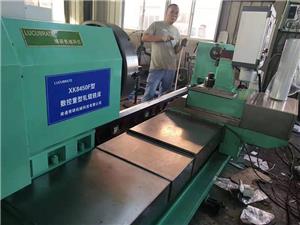
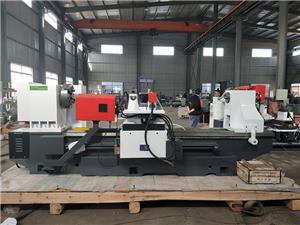
Now, let us pivot to solutions. NANTONG LUCUBRATE MACHINERY TECHNICAL LTD. has engineered a line of Heavy Duty Roll Notching Machines that directly address these pain points. First, consider the monolithic cast frame. Instead of welding multiple plates, we use a single-piece cast iron structure that is aged and then precision-machined. This provides exceptional damping and rigidity. The frame is designed using finite element analysis (FEA) to ensure that even under maximum load, the deflection is less than 0.02mm. That means your punch and die maintain perfect alignment, extending their life by up to 50% compared to conventional machines. One of our clients, a German automotive supplier, reported that their tooling costs dropped by 40% within the first year of using our machine.
Second, our servo-hydraulic hybrid system is a game-changer. We combine a variable-speed servo motor with a high-performance hydraulic pump. This allows the machine to adjust the flow and pressure in real-time, based on the actual load. The system uses a closed-loop controller that monitors the notch depth and speed, making micro-adjustments every 10 milliseconds. The result is a cycle time that is 25% faster than conventional machines, and energy savings of up to 30%. A case in point is a metal furniture manufacturer in Italy. They were using a 15-year-old hydraulic notcher that consumed 18 kW per cycle. With our machine, they now consume only 11 kW per cycle, and their production output increased by 20% without adding any extra shifts.
Third, we have integrated smart changeover technology. The machine comes with a CNC controller that stores up to 100 different notching programs. When you need to change from a 90-degree notch on 3mm steel to a 120-degree notch on 5mm steel, the machine automatically adjusts the back gauge, the punch holder, and the hydraulic pressure. The entire changeover takes less than 90 seconds, compared to 15-20 minutes on a manual machine. This is made possible by our patented quick-release tooling system that uses hydraulic clamping. A case study from a U.S. HVAC manufacturer showed that their changeover time was reduced by 85%, allowing them to run smaller batches profitably. The owner, Mr. John Miller, said, "The flexibility is incredible. We used to turn away small orders because they were not worth the setup time. Now we take them all, and our margins have improved by 15%."
Let us delve into specific customer success stories to illustrate the impact. In a fabrication plant in Texas, USA, a company named Lone Star Metalworks faced a recurring problem with notch burrs that required secondary deburring operations. After installing our Heavy Duty Roll Notching Machine, they saw a 70% reduction in burr formation, eliminating the need for a dedicated deburring station. The production manager, Sarah Thompson, noted, "The notch quality is so consistent that we have been able to reassign two workers to other tasks. Our throughput is up by 30%, and our customers have noticed the difference." In another case, a Brazilian agricultural equipment manufacturer, AgroMec, needed to notch high-strength steel (HARDOX 450) for their tiller blades. Their previous machine could not handle the material without cracking the dies. Our machine, with its enhanced rigidity and specialized tool coating, increased die life by 300%. The engineering director, Carlos Silva, commented, "We were skeptical, but the machine has exceeded our expectations. We have not had a single cracked die in six months."
In Europe, a prominent elevator manufacturer, LiftTech GmbH in Germany, integrated our machine into their production line. They were struggling with inconsistent notch dimensions that caused alignment issues during assembly. Our machine's closed-loop control ensured that every notch was within ±0.05mm tolerance. Their quality control manager, Klaus Weber, stated, "The repeatability is phenomenal. We have reduced our rejection rate from 3% to 0.2%. That is a huge cost saving for us." Finally, a Japanese electrical cabinet maker, Denshi Enclosures, adopted our machine to handle their high-mix, low-volume production. The smart changeover feature allowed them to process 50 different cabinet sizes in a single shift without any manual adjustments. The operations lead, Yuki Tanaka, said, "The machine is like having an extra skilled operator. It is intuitive and reliable."
The applications for our Heavy Duty Roll Notching Machine are vast. It is ideal for notching the corners of electrical enclosures, HVAC ductwork, metal cabinets, and even structural steel components. It is also used in the production of busbars, where precise notching is critical for electrical conductivity and safety. Our machines are currently in use by major switchgear manufacturers in India and China, as well as by a leading elevator company in South Korea. We have also established a partnership with a prominent European press brake manufacturer, allowing us to offer integrated notching and bending lines. This collaboration has enabled our clients to achieve a seamless production flow, reducing material handling time by 40%.
Now, let us address some frequently asked questions from engineers and procurement managers.
Q1: What is the maximum thickness of steel your machine can notch?
A: Our standard Heavy Duty Roll Notching Machine can handle up to 8mm thick mild steel, and with an optional high-torque motor, up to 10mm. For stainless steel, the maximum is 5mm. The key is the combination of frame rigidity and hydraulic power. We have successfully tested on HARDOX 450 up to 6mm.
Q2: How does the machine handle different notch radii?
A: The machine uses interchangeable punch and die sets. The CNC controller automatically selects the correct set from the tool magazine. The radius can be adjusted from 3mm to 100mm, and the angle from 30 to 180 degrees. The changeover is fully automatic, and the tooling is clamped hydraulically to ensure zero play.
Q3: What is the maintenance schedule for the hydraulic system?
A: We recommend a preventive maintenance check every 500 operating hours. This includes checking the oil level, filter condition, and seal integrity. The servo-hydraulic system is designed for low maintenance, with a typical service life of 10,000 hours before major overhaul. We provide a remote diagnostic system that alerts you when the oil quality degrades.
Q4: Can the machine be integrated with an existing production line?
A: Absolutely. We have a variety of communication protocols, including Profibus, Modbus, and EtherNet/IP. Our machine can be synchronized with upstream and downstream equipment. We also offer a conveyor system that aligns with the notching station to ensure smooth material flow.
Q5: What is the lead time for a custom machine?
A: For a standard model, the lead time is 4-6 weeks. For a fully customized machine, it is 8-12 weeks, depending on the complexity. We work closely with your engineering team to ensure the machine meets your exact specifications. We also provide on-site installation and training.
In conclusion, the failure of a Heavy Duty Roll Notching Machine under load is not a mystery if you understand the underlying engineering principles. By investing in a machine with superior rigidity, adaptive hydraulics, and smart controls, you can eliminate downtime, reduce costs, and improve product quality. NANTONG LUCUBRATE MACHINERY TECHNICAL LTD. has been at the forefront of this technology for over two decades, and we are committed to helping you achieve operational excellence. If you want to learn more about the technical specifications and see a detailed comparison with other machines, we have prepared a comprehensive white paper that includes case studies and load performance data. To receive your copy, or to schedule a consultation with our sales engineers, simply request the white paper through our website. We are eager to assist you in making your production line more efficient and profitable.