Why Is Cnc Horizontal Lathe a Game-Changer for Precision?
Why Is Cnc Horizontal Lathe a Game-Changer for Precision?
You are standing on a busy shop floor, the hum of machines is a familiar symphony. But today, there is a problem. A critical component for an aerospace client is consistently failing inspection. The tolerance is tight, the material is tough, and your current vertical lathe just cannot deliver the surface finish required. You have tried adjusting speeds, feeds, and tooling, but the results are inconsistent. You wonder if there is a better way. The answer is yes: a CNC horizontal lathe. This machine, with its unique orientation and rigidity, is not just a different configuration; it is a strategic advantage. It offers superior chip evacuation, better workholding stability, and enhanced precision for complex parts. This article will explore why the CNC horizontal lathe is a game-changer, how it solves persistent industry pain points, and why companies like NANTONG LUCUBRATE MACHINERY TECHNICAL LTD. are at the forefront of this technology.
The Hidden Costs of Ignoring Horizontal Lathe Technology
Many manufacturers stick with vertical lathes out of habit, but this can be costly. Consider the issue of chip accumulation. In vertical turning, chips often pile up on the workpiece and tool, leading to heat buildup and surface damage. This is not just a minor annoyance; it results in scrapped parts and downtime for manual cleaning. For a medium-sized factory producing 500 shafts per day, a 2% scrap rate due to chip-related defects translates to 10 parts lost daily. At an average cost of $50 per part, that is $500 per day, or $182,500 annually. Furthermore, vertical lathes often struggle with long, slender workpieces. The lack of support along the length can cause deflection, leading to taper errors. This is a significant issue in industries like oilfield equipment, where precision is non-negotiable. The cost of rework and the risk of field failures are immense. Another pain point is the difficulty in automating vertical lathes. Loading and unloading parts, especially heavy ones, often requires manual intervention, which is slow and poses safety risks. In contrast, horizontal lathes, with their open design, integrate seamlessly with robotic automation, reducing labor costs and increasing throughput. These are not just operational inconveniences; they are direct threats to profitability and competitiveness.
Precision Redefined: How Horizontal Lathes Tackle Tough Tolerances
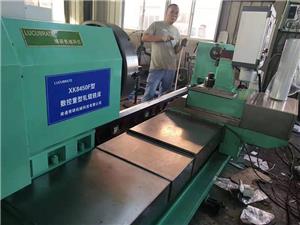
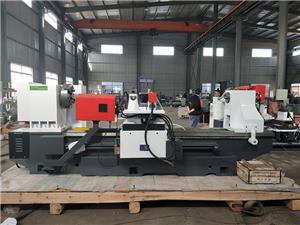
The first solution to chip management is the natural gravity-assisted chip fall in horizontal lathes. With the spindle axis horizontal, chips fall directly into a conveyor, away from the cutting zone. This simple design change eliminates the need for high-pressure coolant to flush chips, reducing energy consumption and tool wear. For example, a CNC horizontal lathe from NANTONG LUCUBRATE MACHINERY TECHNICAL LTD. features a 45-degree slant bed, which further facilitates chip flow. The result is a consistent cutting environment, enabling tolerances of IT6 or better. To address the issue of workpiece deflection, horizontal lathes often come with steady rests and tailstocks that provide support along the entire length. This is crucial for turning shafts with a length-to-diameter ratio of 10:1 or more. The robust construction of the headstock and the use of linear guideways ensure high rigidity, minimizing vibration and maintaining accuracy even during heavy cuts. For automation, horizontal lathes are inherently more accessible. The spindle is at waist height, making it easy for robots to load and unload parts. Many models, including those from NANTONG LUCUBRATE MACHINERY TECHNICAL LTD., offer optional gantry loaders or robot integration, turning the lathe into a fully automated cell. This not only speeds up production but also ensures consistent quality, as human error is eliminated. The combination of these solutions results in a machine that not only meets but exceeds the demands of modern manufacturing.
Real-World Success: Transformations with Horizontal Lathes
Let us look at some concrete examples. In Texas, USA, a manufacturer of oilfield components, named John Carter, faced a 5% rejection rate on valve bodies due to poor concentricity. After switching to a CNC horizontal lathe from NANTONG LUCUBRATE MACHINERY TECHNICAL LTD., the rejection rate dropped to 0.8%. John noted, "The horizontal lathe's rigidity is unmatched. We now produce parts that consistently meet API standards, and our clients have noticed." In Germany, a precision engineering firm, led by Frau Schmidt, specializes in medical device components. They struggled with surface finish on titanium parts, which are notoriously difficult to machine. By adopting a horizontal lathe with live tooling, they achieved a surface roughness of Ra 0.4 µm, a 40% improvement over their previous vertical lathe. Frau Schmidt commented, "The stability of the horizontal configuration allows us to use optimal cutting parameters without fear of vibration. Our productivity has increased by 25%." In Japan, a robotics company, under the direction of Mr. Tanaka, needed to produce high-precision shafts for servo motors. The challenge was maintaining roundness within 2 µm over a length of 500 mm. With a horizontal lathe from NANTONG LUCUBRATE MACHINERY TECHNICAL LTD., they achieved 1.5 µm consistently. Mr. Tanaka said, "The machine's thermal stability is impressive. Even during long runs, the accuracy does not drift." In Canada, a heavy equipment manufacturer, managed by Sarah Thompson, was struggling with the machining of large axle housings. The horizontal lathe allowed them to use a tailstock and steady rest, eliminating deflection. Their production time was reduced by 30%, and the scrap rate fell from 3% to 1%. Sarah stated, "The ability to support long workpieces is a game-changer. We have saved over $200,000 annually in rework costs." Finally, in Australia, a mining equipment supplier, led by Michael Brown, needed to replace worn-out lathes. They chose horizontal lathes due to their versatility. Within six months, their output increased by 35%, and they were able to take on more complex jobs, expanding their business. Michael remarked, "The horizontal lathe is an investment that pays for itself within a year." These cases illustrate the tangible benefits across industries and geographies.
Expanding Horizons: Applications and Strategic Partnerships
CNC horizontal lathes are not limited to a single niche. They are used in automotive manufacturing for producing crankshafts, camshafts, and transmission shafts. In aerospace, they are essential for landing gear components and turbine shafts. The oil and gas industry relies on them for drilling tools and valve stems. Even in the medical field, they produce bone screws and surgical instruments. The versatility is further enhanced with options like C-axis, live tooling, and Y-axis, enabling milling and drilling operations in a single setup. This reduces cycle times and improves part accuracy. NANTONG LUCUBRATE MACHINERY TECHNICAL LTD. has established partnerships with leading automation suppliers, such as FANUC and Siemens, to ensure seamless integration. They also collaborate with cutting tool manufacturers like Sandvik Coromant to optimize machining processes. These partnerships ensure that customers receive not just a machine, but a complete solution backed by expertise. For instance, a partnership with a major automotive OEM in the USA has led to the development of a specialized horizontal lathe for EV motor shafts, which has been adopted by several EV startups. This collaborative approach enhances the credibility of both the manufacturer and the technology.
Frequently Asked Questions: Insights from the Field
Q1: What is the difference in footprint between a horizontal and vertical lathe? A: Horizontal lathes generally have a larger footprint due to the length of the bed, but they offer easier access for automation and chip removal. For a given swing diameter, a horizontal lathe may require about 30% more floor space, but the productivity gains often justify this.
Q2: Can horizontal lathes handle heavy workpieces? A: Yes, especially with the use of steady rests and tailstocks. The design allows for excellent support, and some models can handle up to 20 tons. However, for very large discs, vertical lathes might be more suitable. It depends on the specific geometry.
Q3: How does the initial investment compare to vertical lathes? A: Horizontal lathes are typically 10-20% more expensive due to the more complex base and chip management systems. However, the lower operating costs and higher productivity often result in a payback period of less than two years.
Q4: What maintenance is required for a horizontal lathe? A: Regular maintenance includes checking the hydraulic system, lubrication, and alignment. The chip conveyor needs periodic cleaning. With proper maintenance, a horizontal lathe can last over 20 years. NANTONG LUCUBRATE provides comprehensive training and support to ensure longevity.
Q5: Is it possible to retrofit an existing vertical lathe to a horizontal configuration? A: No, it is not feasible due to fundamental structural differences. It is more cost-effective to invest in a dedicated horizontal lathe. However, many manufacturers choose to have both types to handle a variety of parts.
Conclusion: Elevate Your Manufacturing with Horizontal Lathe Expertise
The CNC horizontal lathe is not just a machine; it is a strategic tool for achieving precision, efficiency, and competitiveness. By addressing the pain points of chip management, workpiece deflection, and automation, it delivers measurable improvements in quality and cost. The success stories from Texas to Tokyo demonstrate its universal appeal. If you are ready to transform your production, we invite you to download our technical white paper on optimizing horizontal turning processes. For a personalized consultation, our sales engineers are ready to discuss your specific needs. Contact NANTONG LUCUBRATE MACHINERY TECHNICAL LTD. today and discover how we can help you achieve new levels of precision.