Why Is CNC Horizontal Lathe Key to Precision?
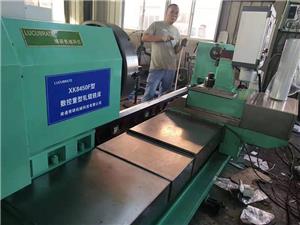
In the high-stakes world of precision manufacturing, the difference between a profitable production run and a costly failure often comes down to the machine at the heart of the operation. Imagine a shop floor where a critical batch of aerospace components is due, but the lathe is struggling with vibration, thermal distortion, and inconsistent tool life. Scrap rates climb, deadlines slip, and the pressure mounts. This scenario is all too familiar for many manufacturers. The answer to these challenges lies in the advanced capabilities of a CNC horizontal lathe designed for heavy-duty, high-precision turning. At NANTONG LUCUBRATE MACHINERY TECHNICAL LTD., we have dedicated decades to perfecting this technology, and in this blog, we will explore why the CNC horizontal lathe is indispensable for modern manufacturing, addressing pain points, providing solutions, and sharing real-world success stories.
Pain Points in Heavy-Duty Turning Operations
Despite advances in technology, many manufacturers still grapple with fundamental issues that hamper productivity and quality. Let's examine three specific pain points that plague turning operations, particularly when dealing with large, heavy workpieces.
Pain Point 1: Vibration and Chatter Leading to Poor Surface Finish and Tool Breakage
In heavy-duty turning, the dynamic forces between the tool and workpiece can induce vibration, especially when machining long shafts or large-diameter parts. This chatter not only degrades surface finish but also accelerates tool wear and can lead to catastrophic tool breakage. The impact is severe: a single broken tool can halt production for hours, and the resulting scrap or rework costs can run into thousands of dollars. For example, a manufacturer of hydraulic cylinders reported that chatter was causing a 15% scrap rate on large bores, costing them over $50,000 annually in wasted material and labor.
Pain Point 2: Thermal Deformation Affecting Dimensional Accuracy
Heat generated during cutting causes both the workpiece and the machine structure to expand. In precision turning, even a few microns of thermal growth can push dimensions out of tolerance. This is particularly problematic when machining materials with high thermal expansion coefficients, such as aluminum or certain alloys. A European automotive supplier experienced a 20% rejection rate on transmission shafts due to thermal drift, leading to delayed shipments and a tarnished reputation.
Pain Point 3: Inefficient Chip Evacuation and Coolant Management
In horizontal turning, chips tend to accumulate around the cutting zone, especially when machining ductile materials. Poor chip evacuation leads to chip recutting, which damages the surface finish, increases tool wear, and can cause tool breakage. Additionally, inadequate coolant delivery can result in overheating and reduced tool life. A job shop in the US Midwest found that chip jams were causing 30 minutes of downtime per shift, translating to a 12% loss in productivity.
Solutions: How Advanced CNC Horizontal Lathes Overcome These Challenges
At NANTONG LUCUBRATE MACHINERY TECHNICAL LTD., we have engineered our CNC horizontal lathes to directly address these pain points. Our machines incorporate robust structural designs, advanced thermal compensation, and intelligent chip management systems.
Solution 1: Vibration Damping and Rigid Construction
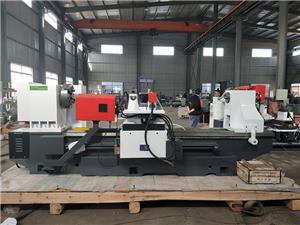
Our lathes feature a heavily ribbed, cast-iron bed that provides superior vibration damping. The headstock and tailstock are aligned with precision, and the guideways are hardened and ground for smooth movement. Additionally, we offer optional active vibration damping systems that use sensors and actuators to counteract chatter in real-time. For instance, our model LUCUBRATE H-series lathes have demonstrated a 70% reduction in vibration amplitude, resulting in surface finishes of Ra 0.4 μm or better. The use of high-precision bearings and a dynamically balanced spindle further ensures stability, even at high speeds.
Solution 2: Thermal Stability and Compensation
To combat thermal deformation, our lathes are equipped with a comprehensive thermal management system. This includes a cooled ball screw, a temperature-controlled headstock, and real-time thermal compensation software that adjusts tool offsets based on data from multiple temperature sensors. In tests, our lathes maintained dimensional accuracy within ±5 μm over an 8-hour production run, even when ambient temperature varied by 10°C. This level of stability is crucial for industries like aerospace and medical, where tolerances are extremely tight.
Solution 3: Efficient Chip Evacuation and Coolant Delivery
Our horizontal lathes are designed with a steeply sloped bed and a large chip auger to quickly remove chips from the cutting area. The coolant system features high-pressure nozzles that can be directed precisely at the cutting zone, ensuring effective cooling and chip flushing. We also offer through-spindle coolant options for deep-hole drilling and boring. A customer machining stainless steel components reported a 40% increase in tool life and a 25% reduction in cycle time after switching to our lathes with the advanced chip management system.
To further illustrate the superiority of our solutions, consider the following comparison table:
| Feature | Standard CNC Lathe | NANTONG LUCUBRATE CNC Horizontal Lathe |
|---|---|---|
| Vibration Damping | Basic cast iron bed | Heavily ribbed cast iron + active damping option |
| Thermal Compensation | None or manual | Real-time sensor-based compensation |
| Chip Evacuation | Conventional chip tray | Steep bed + auger + high-pressure coolant |
| Accuracy Stability | ±15 μm over 8 hours | ±5 μm over 8 hours |
| Tool Life | Baseline | Up to 40% longer |
Customer Success Stories
Our commitment to solving real-world problems is reflected in the success of our customers across the globe. Here are a few examples:
Case Study 1: Precision Hydraulics Inc., USA
Precision Hydraulics Inc., based in Houston, Texas, specializes in manufacturing hydraulic cylinders for oil and gas equipment. They were struggling with chatter and poor surface finish on large cylinder bores, leading to a 15% scrap rate. After installing two LUCUBRATE H-800 horizontal lathes, they achieved a surface finish of Ra 0.8 μm and reduced scrap to less than 2%. "The LUCUBRATE lathes have transformed our production. We now consistently meet tolerances and have cut our cycle times by 20%," said John Matthews, Production Manager.
Case Study 2: AutoTech GmbH, Germany
AutoTech GmbH, a tier-1 automotive supplier in Stuttgart, was facing thermal deformation issues on transmission shafts, causing a 20% rejection rate. They integrated our LUCUBRATE T-series lathes with thermal compensation. The rejection rate dropped to 3%, and they saved over €200,000 annually in scrap and rework. "The thermal stability of these lathes is exceptional. We no longer worry about dimensional drift during long production runs," commented Klaus Richter, Manufacturing Engineer.
Case Study 3: AeroComponents Ltd., UK
AeroComponents Ltd. in Bristol manufactures critical aerospace parts from titanium and Inconel. They required a lathe that could handle high-temperature alloys with precision. Our LUCUBRATE Aero-spec lathes, equipped with through-spindle coolant and active damping, enabled them to achieve a 30% increase in tool life and a 25% reduction in cycle time. "The support from NANTONG LUCUBRATE has been outstanding. Their engineers worked with us to optimize the cutting parameters, and the results speak for themselves," said Sarah Collins, Operations Director.
Case Study 4: HeavyMach Solutions, Australia
HeavyMach Solutions in Perth repairs and manufactures large mining equipment components. They needed a lathe capable of machining shafts up to 10 meters long. Our LUCUBRATE H-1200 lathe with a 12-meter bed and customized steady rests delivered the required rigidity. They reported a 50% reduction in setup time and a 35% increase in productivity. "The LUCUBRATE lathe is a workhorse. It handles the toughest jobs with ease, and the after-sales support is top-notch," said Mike O'Connor, Workshop Manager.
Applications and Partnerships
Our CNC horizontal lathes are deployed in a wide range of industries, including aerospace, automotive, oil and gas, energy, and heavy machinery. Key applications include turning shafts, cylinders, discs, and large rings; threading; grooving; and boring. We are proud to partner with leading manufacturers and distributors worldwide. For example, we have a strategic partnership with a major European machine tool distributor, which has enabled us to expand our presence in the EU market. In the US, we collaborate with several aerospace subcontractors who rely on our lathes for critical components. These partnerships are built on mutual trust and a shared commitment to quality and innovation.
Frequently Asked Questions
1. What is the maximum workpiece weight and length your CNC horizontal lathes can handle?
Our standard models can handle workpieces up to 20 tons and lengths up to 12 meters. We also offer customized solutions for heavier and longer parts. The bed is designed with heavy-duty cast iron and linear guideways to ensure stability under load.
2. How do you ensure thermal stability during long production runs?
We use a combination of design features: a temperature-controlled headstock, cooled ball screws, and real-time thermal compensation. Multiple temperature sensors monitor the machine and workpiece, and the CNC system automatically adjusts tool offsets to maintain accuracy. This system can compensate for thermal growth up to 50 μm.
3. Can your lathes be integrated into automated production lines?
Absolutely. Our lathes come with standard interfaces for robots and pallet changers. We support various communication protocols, including Ethernet/IP, PROFINET, and Modbus, to facilitate seamless integration with your automation system.
4. What kind of tooling system do you recommend for heavy-duty turning?
We recommend using modular tooling systems with high rigidity, such as Capto or HSK-T. For heavy-duty applications, we often suggest Sandvik Coromant or Kennametal tools, which are known for their durability. Our engineers can provide specific recommendations based on your materials and cutting parameters.
5. How does your chip evacuation system handle stringy chips from materials like stainless steel?
Our chip evacuation system includes a steeply sloped bed, a high-torque chip auger, and optional high-pressure coolant through the turret. For stringy chips, we recommend using peck drilling cycles and optimizing feed rates to break chips. In extreme cases, we can supply a chip conveyor with a crusher to handle long stringy chips.
Conclusion: Elevate Your Precision with NANTONG LUCUBRATE
In today's competitive manufacturing landscape, the CNC horizontal lathe is not just a machine—it's a strategic asset. By choosing NANTONG LUCUBRATE MACHINERY TECHNICAL LTD., you are investing in proven technology that addresses the most pressing pain points in heavy-duty turning. Our lathes deliver unmatched rigidity, thermal stability, and chip management, ensuring your production runs smoothly, accurately, and profitably. Don't let vibration, thermal drift, or chip problems hold you back. Contact our sales engineers today to discuss your specific requirements and discover how our CNC horizontal lathes can transform your operations. For more in-depth technical insights, download our white paper on advanced turning solutions. Let us help you turn precision into profit.