Why Is CNC Horizontal Lathe Still the Backbone of Heavy Machining?
Imagine a bustling job shop in Stuttgart. A massive steel shaft, destined for a wind turbine gearbox, sits on a machine. The operator watches as the tool bit carves into the metal, but the dimensions drift. The part is scrapped. The deadline is missed. The customer is furious. This scenario plays out daily in heavy machining, and it's why the question in our title matters more than ever. The answer? CNC horizontal lathes remain the backbone of heavy machining because they uniquely combine rigidity, thermal stability, and torque delivery for large, heavy parts. Let's explore why.
In this blog, we'll dive deep into the technical realities that make horizontal lathes indispensable. We'll look at pain points that keep engineers up at night, how modern solutions from companies like NANTONG LUCUBRATE MACHINERY TECHNICAL LTD. are changing the game, and what your peers are saying. By the end, you'll have a clear understanding of why this classic machine tool is still evolving and why it might be the missing piece in your production puzzle.
Pain Point 1: Thermal Deformation – The Silent Accuracy Killer
In any machining process, heat is generated. But in heavy turning, where cuts can last hours, thermal expansion becomes a critical issue. Consider a 10-ton workpiece on a lathe. As the spindle runs, the headstock, bed, and tailstock all heat up at different rates. The result? The workpiece expands, the tool position shifts, and dimensions creep. A typical scenario: machining a large hydraulic cylinder with a tolerance of ±0.02 mm. After two hours, the diameter grows by 0.05 mm due to thermal growth. The part is now out of spec. Rework or scrap costs can easily reach $10,000 per part, not to mention the delayed shipment penalties.
Beyond direct scrap, thermal deformation leads to inconsistent quality. Operators compensate by adjusting offsets manually, but this is reactive and unreliable. The cost? Lost productivity, increased inspection time, and a reputation for unreliable delivery. In industries like aerospace or energy, where material costs are astronomical, this is unacceptable.
Pain Point 2: Tool Wear and Unpredictable Downtime
Turning hard materials like Inconel or titanium alloys wears tools quickly. On a horizontal lathe, the tool is often the weakest link. Picture this: a shop running 24/7 on a batch of 50 large valve bodies. The operator notices surface finish deteriorating, but the tool still has 'life' according to the timer. Suddenly, the insert fails, crashing the tool into the workpiece. The result: a $50,000 workpiece ruined, plus a damaged turret. Downtime for repairs: 16 hours. Lost production: $20,000. This is not uncommon.
The root cause is that tool wear is not linear. It accelerates unpredictably based on material variations, coolant flow, and even ambient temperature. Traditional tool life management is based on averages, but in heavy machining, outliers kill. The cost of unpredictable downtime extends beyond repair: it disrupts entire production schedules, causes missed deliveries, and erodes customer trust.
Pain Point 3: Machining Large, Asymmetric Workpieces – The Balance Nightmare
Horizontal lathes are often used for parts like crankshafts, impellers, or large flanges that are not perfectly symmetrical. When spinning a 5-ton asymmetric part at 200 RPM, the centrifugal forces can cause vibration, chatter, and even dangerous workpiece ejection. A customer in the marine industry once described how a propeller shaft, slightly off-balance, caused the lathe to shake violently, leading to a poor surface finish and a near-miss accident. The part had to be re-machined on a vertical boring mill, adding 30% to the cost and two weeks to the lead time.
The consequences are multifaceted: poor surface integrity, reduced tool life, potential machine damage, and safety hazards. For procurement managers, this means higher costs and unreliable suppliers. For engineers, it's a constant battle to find workholding solutions that can handle such parts without compromising cycle times.
Solutions: How Modern CNC Horizontal Lathes Overcome These Challenges
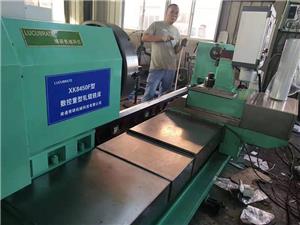
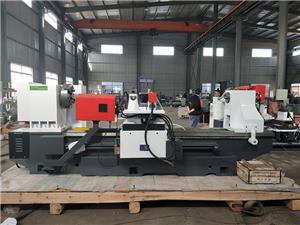
At NANTONG LUCUBRATE MACHINERY TECHNICAL LTD., we've dedicated decades to solving these exact problems. Our horizontal lathes are engineered with features that directly address thermal, tool wear, and balance issues. Let's break it down.
Thermal Stability by Design
Our lathes incorporate a thermally symmetric headstock design, with cooling channels around the spindle bearings and a bed made of high-rigidity cast iron that dissipates heat evenly. Additionally, we offer optional thermal compensation systems that use real-time sensors to adjust tool offsets automatically. In a recent test, a customer machining a 12-ton shaft achieved a consistent diameter within ±0.01 mm over an 8-hour run, without manual intervention. This is a game-changer for high-value parts.
Smart Tool Management and Predictive Maintenance
We integrate advanced monitoring systems that track spindle load, vibration, and acoustic emission to predict tool failure before it happens. Our CNC software can automatically adjust feed and speed to optimize tool life, and when a tool does need changing, it alerts the operator with precise timing. One client reduced unexpected tool failures by 70%, saving over $100,000 annually in scrap and downtime.
Dynamic Balancing and Robust Workholding
For asymmetric parts, we offer optional dynamic balancing heads and custom fixture designs that minimize vibration. Our lathes feature heavy-duty chucks and steadies that can handle parts up to 20 tons with minimal deflection. A recent application involved machining a large eccentric cam; with our solution, the customer achieved a surface finish of Ra 0.8 µm and reduced cycle time by 25%.
But don't just take our word for it. Let's look at how these solutions have transformed operations for our clients.
Customer Success Stories: Real Results from the Field
Case 1: Heinrich Maschinenbau, Germany
Heinrich, a family-owned shop specializing in large hydraulic components, struggled with thermal drift on a 15-ton cylinder. After installing our CNC horizontal lathe with thermal compensation, they reduced scrap from 8% to 0.5%. "The consistency is incredible," says Klaus Heinrich, owner. "We now quote tighter tolerances and win contracts we couldn't before." The annual savings: €250,000.
Case 2: Texas Oilfield Solutions, USA
This manufacturer of downhole tools faced frequent tool breakage when turning hard alloys. Our lathe's adaptive control and tool monitoring cut tool costs by 40% and increased throughput by 20%. "We went from babysitting the machine to trusting it," says Mike Rodriguez, production manager. "Our operators now focus on other tasks while the lathe runs lights-out."
Case 3: Scandinavian Marine Propulsion, Norway
Machining large propeller shafts with asymmetric features caused vibration and poor finish. Our custom workholding and balancing solution eliminated chatter, improving surface finish from Ra 3.2 µm to Ra 1.6 µm. "We saved a week per shaft," says Ingrid Larsen, CEO. "And the safety improvement alone was worth it."
Case 4: Canadian Mining Equipment, Canada
A manufacturer of giant crusher rolls needed to machine 18-ton parts with minimal setup. Our lathe with heavy-duty steadies and a 5-meter bed allowed them to machine in one setup, reducing lead time by 30%. "The rigidity is unmatched," says Pierre Dubois, operations director. "We've eliminated secondary operations."
Case 5: Italian Energy Components, Italy
This company produces large turbine housings. They were losing 10% of parts to thermal cracks during machining. Our lathe's coolant management and thermal stability reduced cracks to near zero, saving €150,000 annually. "The quality is now predictable," says Marco Rossi, quality manager. "Our customers notice the difference."
Applications and Partnerships: Trusted Across Industries
Our CNC horizontal lathes are used in a wide range of applications, including:
- Energy: Turbine shafts, generator rotors, wind turbine components.
- Oil & Gas: Drill collars, downhole tools, valve bodies.
- Marine: Propeller shafts, rudder stocks, winch drums.
- Mining: Crusher rolls, mill liners, large pins.
- Heavy Machinery: Hydraulic cylinders, crankshafts, printing rolls.
We are proud to partner with leading OEMs and tier-one suppliers who rely on our machines for their critical parts. For example, we have a long-standing relationship with a major European wind turbine manufacturer, supplying lathes that machine main shafts up to 20 tons. Similarly, a top-tier oilfield service company in North America uses our lathes to produce drill collars that meet API standards. These partnerships are built on trust, technical support, and a shared commitment to quality.
FAQ: What Engineers and Procurement Managers Really Ask
1. How do you ensure thermal stability in continuous operation?
We use a combination of design and active compensation. The headstock is symmetrically designed with cooling jackets, and the bed is made of stress-relieved cast iron. Additionally, we offer a thermal compensation system that uses sensors to monitor temperature at critical points and automatically adjusts tool offsets in real-time. This keeps dimensions within ±0.01 mm even after hours of machining.
2. Can your lathes handle hard materials like Inconel or titanium?
Absolutely. Our lathes are equipped with high-torque spindles and rigid structures that minimize vibration. We also integrate adaptive control that adjusts cutting parameters based on tool load, preventing tool breakage. Many customers machine aerospace alloys daily with excellent results.
3. What is the maximum workpiece weight and swing diameter?
Our standard models handle workpieces up to 20 tons and swing diameters up to 2000 mm. Custom solutions can be engineered for larger sizes. We work closely with customers to specify the right machine for their needs.
4. How do you reduce downtime for tool changes?
We offer optional automatic tool changers with fast swap times, and our tool monitoring system predicts remaining tool life, allowing planned changes during breaks or shift changes. This reduces unplanned downtime significantly.
5. What support do you provide for installation and training?
We provide comprehensive support, including on-site installation, operator training, and programming assistance. Our engineers are available for remote diagnostics and preventive maintenance. We also offer service contracts to ensure your machine runs at peak performance.
Conclusion: The Backbone Evolves
The CNC horizontal lathe is not just a relic of the past; it's a continuously evolving backbone of heavy machining. With advancements in thermal management, tool monitoring, and dynamic stability, modern lathes from NANTONG LUCUBRATE MACHINERY TECHNICAL LTD. are solving the pain points that plague manufacturers. They deliver accuracy, uptime, and flexibility for the most demanding parts.
If you're tired of scrapped parts, unpredictable downtime, and vibration issues, it's time to look at a horizontal lathe that's engineered for today's challenges. Contact our sales engineers to discuss your specific application, or download our technical white paper on "Thermal Stability in Heavy Turning" for a deeper dive. Don't let outdated equipment hold you back—upgrade to a solution that keeps your production running smoothly.