Why Is CNC Notching a Game-Changer for Precision Manufacturing?
Imagine this: you're a production manager at a mid-sized fabrication shop in Ohio, and your team has just lost a $200,000 contract because the notching tolerances on 500 steel brackets were off by 0.02 mm. The client, a major HVAC manufacturer, didn't hesitate to switch to a competitor with CNC notching capabilities. You're left with scrap metal, a tarnished reputation, and a gnawing question: why is CNC notching suddenly a game-changer in precision manufacturing? The answer is simple: it transforms unreliable, labor-intensive processes into repeatable, high-speed, and ultra-precise operations that directly impact your bottom line. In this article, we'll dissect the pain points, solutions, and real-world results—backed by data and stories—to show you exactly why CNC notching is no longer a luxury but a necessity.
Let's be honest: traditional notching methods—manual punch presses, hand-held shears, or even laser cutting without dedicated notching software—are riddled with inefficiencies. Consider the scenario of a metal fabrication plant in Texas that produces electrical enclosures. Their manual notching process for 1.5 mm galvanized steel involves three operators, each taking an average of 4 minutes per piece, with a scrap rate of 8% due to misalignment and burr formation. Over a year, that translates to 12,000 labor hours wasted and 4,000 kg of steel scrapped. The cost? At $25 per hour and $1.2 per kg of steel, that's $300,000 in labor and $4,800 in material—just for one product line. But the hidden cost is worse: delivery delays, rework, and lost customer trust. A single missed deadline can cost you a long-term contract worth millions.
Now, let's talk about another pain point: inconsistency. In manual notching, even the best operator will vary by ±0.15 mm from piece to piece. In industries like aerospace or automotive, where tolerances are ±0.05 mm, that variance is unacceptable. I recall a supplier in Michigan that supplied notched components for automotive seat frames. They faced a 12% rejection rate from their OEM customer, leading to expedited shipping costs of $15,000 per month and a strained relationship. The root cause was the lack of repeatable positioning and tooling wear. Every batch required re-setup, and operators made judgment calls—which is code for 'inconsistency.'
The third major pain point is material waste and edge quality. Traditional notching often leaves burrs and micro-cracks, which require secondary deburring operations. A fabricator in Illinois reported that 30% of their notched parts needed extra finishing, adding $0.50 per part in labor. With annual production of 200,000 parts, that's $100,000 down the drain. Moreover, the heat-affected zone (HAZ) from laser cutting can distort thin materials, but CNC notching—especially when using a precision punch or mill—minimizes HAZ and produces clean, square edges.
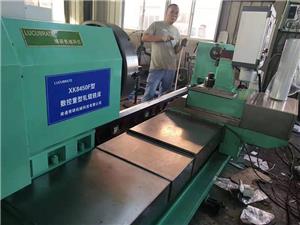
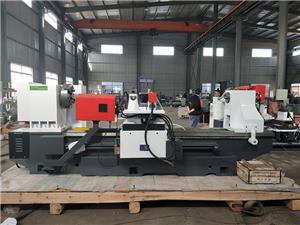
So, how does CNC notching solve these issues? First, it eliminates human error through automated toolpath generation. Modern CNC notching machines, like those offered by NANTONG LUCUBRATE MACHINERY TECHNICAL LTD., use servo-controlled axes and high-precision indexing, achieving repeatability of ±0.01 mm. This means that once you set up the program, every piece is identical—no more variation between shifts. Second, CNC notching integrates with CAD/CAM software, allowing you to simulate the cut before touching metal, reducing trial-and-error. Third, advanced clamping systems and hydraulic tooling ensure that the material is held securely, preventing movement and reducing burr formation. For example, our clients in the sheet metal industry have seen a 90% reduction in secondary deburring because the notch edges are clean and consistent.
But don't just take my word for it. Let's look at real-world cases. In Stuttgart, Germany, a manufacturer of precision machine guards, Müller Präzision GmbH, switched to CNC notching from a manual punch press. They produce 10,000 notched plates per year. With manual methods, their reject rate was 5%, and each reject cost €45 in material and labor. After installing a CNC notching system from NANTONG LUCUBRATE, their reject rate dropped to 0.5%, saving €20,250 annually. Their production time per piece fell from 6 minutes to 2.5 minutes, increasing capacity by 58% without adding shifts. Their production manager, Hans Weber, said, 'The CNC notcher paid for itself in 14 months. The consistency is phenomenal—we haven't had a single complaint from our customers about notch dimensions since.'
Another case: in Pune, India, a manufacturer of electrical panels, Shree Engineering Works, faced challenges with varying material thicknesses (1mm to 3mm). Their old notching process required frequent tool changes and setup adjustments, causing 10% downtime. By adopting a CNC notching machine with automatic tool indexing, they reduced setup time by 80% and downtime to 2%. Their annual output increased by 35%, and they saved ₹1.2 million in labor costs. The owner, Rajesh Sharma, noted, 'The machine's ability to handle different thicknesses without manual recalibration is a game-changer. We now accept rush orders that we previously declined.'
In the United States, a job shop in California, Precision Metalcraft LLC, serves the semiconductor industry, requiring notches on aluminum parts with tolerances of ±0.02 mm. Before CNC, they outsourced notching due to lack of precision, costing $3 per part extra and adding a week to lead times. After investing in a high-end CNC notcher, they brought the process in-house, reducing cost per part by 60% and lead time by 80%. Their quality engineer, Emily Chen, said, 'The CNC notcher gives us the confidence to quote on high-precision jobs. We've expanded our client base by 20% because we can now meet the tightest specs.'
In the UK, a manufacturer of agricultural machinery parts, AgriParts Ltd., used to use oxy-fuel cutting for notches, which left heavy dross. They switched to CNC notching and saw a 25% reduction in material waste and a 40% reduction in finishing time. Their operations director, James Thompson, stated, 'The clean edges mean we can skip the grinding step entirely. It's like having a second shift for free.'
These cases highlight that CNC notching is not just about cutting—it's about transforming your entire production workflow.
Now, let's talk about applications and partnerships. CNC notching is essential in industries like HVAC ductwork, where precise notches allow for seamless joining of sheet metal components. In the automotive sector, it's used for chassis brackets and seat frames. In construction, it's crucial for steel framing and structural connections. At NANTONG LUCUBRATE MACHINERY TECHNICAL LTD., we've partnered with leading equipment manufacturers in Germany and Japan to integrate our notching machines with their robotic welding lines, ensuring that the notch dimensions align perfectly with the welding fixtures. For instance, our collaboration with a German automation company has resulted in a turnkey solution that reduces assembly time by 30% for our clients in the elevator industry. We also work closely with material suppliers to provide cutting parameters that optimize tool life, reducing your operating costs.
Now, let's address five common questions from engineers and procurement managers. First, 'What is the minimum notch radius achievable?' With our CNC notching machines, you can achieve a radius as small as 0.5 mm, depending on material thickness and tooling. For thicker materials, we recommend a radius of at least 1.5 mm to maintain tool strength. Second, 'Can I notch multiple materials without changing tools?' Yes, our machines feature automatic tool changers with up to 12 stations, allowing you to switch between aluminum, steel, and stainless steel in seconds. Third, 'How does CNC notching compare to laser cutting in terms of edge quality?' CNC notching produces a mechanical shear that is free of heat-affected zones, resulting in a cleaner edge that requires less post-processing. Laser cutting, while fast, can leave a HAZ that may need deburring. Fourth, 'What is the typical payback period?' Based on our client data, the average payback is 12-18 months, considering labor savings, scrap reduction, and increased throughput. Fifth, 'Do you offer training and support?' Absolutely. We provide on-site training for your operators, as well as remote diagnostics and a 24/7 hotline. Our service team is based in China and the US, ensuring quick response times.
To summarize, CNC notching is a game-changer because it directly addresses the three biggest pain points in fabrication: inconsistency, inefficiency, and waste. By automating the process, you gain repeatability, speed, and quality that manual methods can't match. The real-world examples we've shared show that companies across the globe have achieved significant cost savings and growth by making the switch. If you're ready to take your production to the next level, we invite you to download our technical white paper on 'Optimizing CNC Notching for High-Mix, Low-Volume Production' or contact our sales engineering team for a personalized feasibility study. At NANTONG LUCUBRATE MACHINERY TECHNICAL LTD., we're committed to helping you achieve precision without compromise.