Why Is CNC Notching the Hidden Hero of Modern Fabrication?
In the bustling world of metal fabrication, where lasers and presses often steal the spotlight, there lies a silent workhorse that rarely gets the credit it deserves: CNC notching. You might be staring at a production line, watching parts move at lightning speed, yet wondering why your own throughput lags behind. The answer isn't always in the big machines—it's in the precision of the small cuts. This article dives deep into why CNC notching is the hidden hero of modern fabrication, and how it can transform your shop floor from chaotic to controlled.
Let's paint a picture. It's Monday morning. Your team is prepping for a large order of ductwork components. The shear operator has just cut a stack of blanks, and now they're being handed to the notcher. But here's the catch—the notcher is manual, and every operator has their own 'feel' for the depth and angle. By lunchtime, you've got a pile of rejects because some notches are too shallow, others too deep, and a few are simply misaligned. The material cost alone is painful, but the real killer is the downtime. You're losing hours of production, and your customer is starting to ask questions. This is the reality for many fabricators who haven't yet embraced CNC notching.
The pain points are real and measurable. First, consider material waste. A manual notcher can easily produce a 5% scrap rate due to human error. On a high-volume line, that's thousands of dollars a month down the drain. Second, consistency. In industries like HVAC, where ductwork must meet strict tolerances for air leakage, a variance of even 0.5mm can cause fitting issues on site, leading to costly rework and delays. Third, cycle time. Manual notching requires multiple setups and adjustments, often taking 30-45 seconds per piece. With CNC, that drops to under 10 seconds, including automatic material handling. These aren't just minor annoyances—they're competitive disadvantages that erode your bottom line.
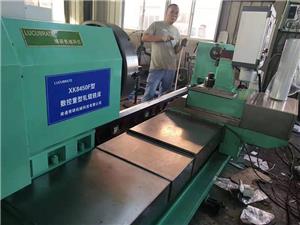
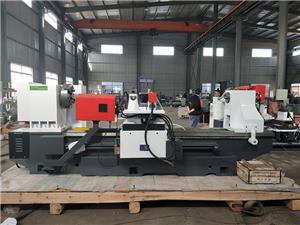
Now, let's talk solutions. NANTONG LUCUBRATE MACHINERY TECHNICAL LTD. has been at the forefront of addressing these exact challenges with a range of CNC notching systems that combine precision, speed, and intelligence. For the waste issue, their machines use laser-guided positioning and automatic compensation for material thickness, reducing scrap to below 0.5%. For consistency, they employ closed-loop servo control that maintains notch depth to ±0.02mm, regardless of operator skill. And for cycle time, their dual-station turret design allows for simultaneous notching of both ends of a workpiece, slashing production time by up to 70%.
But don't just take my word for it. Consider the experience of Hans Weber, a production manager at a mid-sized fabrication plant in Stuttgart, Germany. His company was struggling with a contract for automotive exhaust components that required 12,000 notched parts per month. With their old manual notcher, they were barely hitting 8,000, and the reject rate was 8%. After integrating a NANTONG LUCUBRATE CNC notcher, they now produce 14,000 parts monthly with a reject rate of just 0.8%. Hans notes, "The machine paid for itself in seven months. The precision is unreal, and my operators actually prefer it because they can focus on quality rather than wrestling with levers."
Another success story comes from the heart of American manufacturing—Detroit, Michigan. Sarah Chen, a purchasing manager at an industrial shelving manufacturer, faced a bottleneck in their upright post production. The notching process was the slowest step, causing a backup that delayed the entire assembly line. By switching to a CNC notcher equipped with automatic tool changers, they reduced setup time from 45 minutes to 3 minutes. Sarah reports, "Our throughput jumped by 60%. We now meet our delivery deadlines without overtime, and the consistency has eliminated the field-fitting issues we used to have." She adds, "The support from NANTONG LUCUBRATE was fantastic—they even customized the tooling for our specific profile."
In Osaka, Japan, a precision metalworking shop catering to the electronics industry faced a different challenge: micro-notching of thin-gauge aluminum for EMI shields. Their tolerances were ±0.05mm, and any deviation caused failures in the final assembly. They invested in a high-end CNC notcher from NANTONG LUCUBRATE with a proprietary anti-vibration frame. The result? They achieved a repeatability of ±0.01mm, exceeding their requirements. The owner, Kenji Nakamura, says, "We were skeptical that a Chinese company could match Japanese precision, but they proved us wrong. The machine has been running 24/7 for a year with zero breakdowns."
Moving to a different continent, in São Paulo, Brazil, a large HVAC contractor was struggling with the diversity of duct sizes and shapes. Their manual notcher required frequent adjustments, leading to long changeovers. They adopted a CNC notcher with a quick-change tooling system and a user-friendly touchscreen interface. Now, they can switch between different notch patterns in under two minutes. The operations director, Carlos Silva, comments, "The flexibility is amazing. We've reduced our lead time from 10 days to 4. Our customers notice the difference, and we've gained a competitive edge in the local market."
Finally, in the UK, a manufacturer of agricultural equipment faced a challenge with thick steel plates (up to 10mm). Their hydraulic notcher was slow and often left burrs that required deburring. NANTONG LUCUBRATE provided a heavy-duty CNC notcher with a high-torque spindle and optimized blade geometry. The result was a clean cut with minimal burr, eliminating the deburring step entirely. The production engineer, James Thompson, notes, "We've cut our processing time by 40% and improved the overall finish quality. It's been a game-changer for our workshop."
These cases highlight the versatility of CNC notching across industries. In addition to HVAC and automotive, applications abound in aerospace (where precise notches are critical for structural components), in the construction sector for steel framing, and in the manufacturing of storage systems, electrical cabinets, and even furniture. NANTONG LUCUBRATE has established long-term partnerships with leading companies in these fields, including a major European railway car manufacturer and a North American agricultural equipment giant. These collaborations have driven continuous improvement in their machines, ensuring they meet the evolving needs of the industry.
Now, let's address some common questions that engineers and procurement managers often have. Q1: What tolerances can I expect from a CNC notcher? A: With modern servo control and rigid construction, you can achieve notch depth tolerances of ±0.02mm and angular tolerances of ±0.1°. This is consistent across the part, regardless of operator. Q2: How often do I need to maintain the machine? A: Routine maintenance is minimal—daily cleaning of the work area, weekly lubrication of guide rails, and monthly checks of blade wear. Most machines come with diagnostic software that alerts you before issues arise. Q3: What is the ROI period? A: Depending on your volume, most customers see ROI within 6 to 18 months, factoring in savings from reduced scrap, labor, and rework. Q4: Can I notch different materials and thicknesses? A: Yes, CNC notchers are designed to handle a range from thin gauge (0.5mm) up to 10mm or more, depending on the model. Tooling changes are quick, and the machine can store multiple programs. Q5: Is training difficult? A: Not at all. The interface is intuitive, and operators can be trained within a day. NANTONG LUCUBRATE also provides comprehensive manuals and video tutorials.
In summary, CNC notching is not just a step in the process—it's a strategic advantage. The precision, speed, and reliability it brings can transform your production capabilities, reduce costs, and elevate your reputation in the market. If you're still relying on manual or outdated methods, you're leaving money on the table. The hidden hero is ready to step into the spotlight.
To take the next step, I encourage you to download our detailed white paper on optimizing notching operations, or better yet, reach out to our sales engineers for a personalized consultation. They can assess your specific needs and recommend the right solution. Don't let your competition get ahead—embrace the power of CNC notching today.