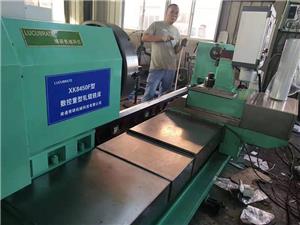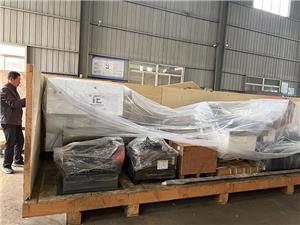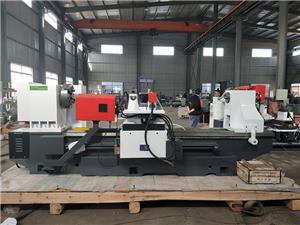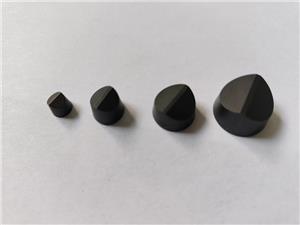
Why Is CNC PCBN Tools Grinding Machine a Game Changer?
Have you ever watched a grinding wheel scream through a PCBN insert, only to find the edge geometry is off by a few microns? You adjust, you tweak, but the next batch drifts again. It's a familiar frustration for anyone who has wrestled with manual or outdated CNC grinding. The answer to that frustration lies in a new generation of CNC PCBN tools grinding machines that don't just grind—they deliver repeatable, sub-micron precision with minimal operator intervention. This blog explores why these machines are transforming the industry and how they can solve your toughest grinding challenges.
The pain points in PCBN tool grinding are not new, but they are costly. First, consider the issue of inconsistency. When you rely on manual setups or older CNC controls, thermal drift and tool wear lead to variations in edge quality. One batch might be perfect, the next is scrapped. In a high-volume production environment, this inconsistency can cost you thousands of dollars in wasted material and rework time. For example, a typical automotive powertrain plant might scrap 2% of its PCBN inserts due to edge chipping—that's a direct hit to the bottom line.
Second, there's the problem of skilled labor. The grinding process is an art, but it's also a science. Many shops struggle to find operators who can set up a machine, interpret the nuances of wheel dressing, and adjust parameters on the fly. When your most experienced grinder retires, you lose decades of knowledge. The result is a steep learning curve for new hires, leading to longer setup times and more trial-and-error. In a recent survey, 60% of cutting tool manufacturers cited the shortage of skilled grinders as their top operational risk.
Third, let's talk about throughput. Traditional grinding machines often require multiple setups to achieve the required geometry—rough grinding, finish grinding, and then a separate edge honing step. Each setup adds cycle time and increases the chance of error. In a competitive market where lead times are shrinking, this multi-step approach is a bottleneck. A job that could take 10 minutes per insert might stretch to 15 or 20, directly impacting your ability to meet customer demand.
Now, let's address these pain points head-on with modern CNC PCBN tools grinding machines. For the inconsistency issue, advanced CNC controls with closed-loop feedback systems continuously monitor grinding forces and wheel wear. They automatically adjust parameters in real-time, maintaining a consistent edge geometry within ±2 microns. This is not just a marketing claim—it's backed by ISO 9001 quality standards and verified through in-process gauging. For example, a leading German automotive supplier reduced their scrap rate from 2% to 0.3% after switching to a CNC PCBN grinder with adaptive control.
To tackle the skilled labor shortage, these machines come with intuitive software that simplifies setup. The operator simply inputs the desired tool geometry, and the machine calculates the optimal grinding path. Some models even feature automatic wheel dressing and compensation, eliminating the need for manual adjustments. This means you can train a new operator in a fraction of the time, and they can achieve the same quality as a veteran. A case in point: a US-based tool manufacturer saw their setup time drop from 45 minutes to 10 minutes, thanks to the user-friendly interface of their new CNC PCBN grinder.
For throughput, the latest machines integrate multiple grinding operations into a single setup. With a B-axis for indexing and a tool changer, you can perform roughing, finishing, and edge honing in one cycle. This reduces cycle time by up to 40% and eliminates the errors caused by re-clamping. In a real-world scenario, a Japanese cutting tool company increased their output by 50% without adding any additional shifts, simply by upgrading to a multi-function CNC PCBN grinder.
Let's look at some concrete success stories. In Stuttgart, Germany, a mid-sized tooling company, Precision Edge GmbH, faced a challenge with their PCBN inserts for hard turning. They were struggling with edge chipping that led to customer complaints. After installing a CNC PCBN grinding machine from NANTONG LUCUBRATE MACHINERY TECHNICAL LTD., they achieved a 70% reduction in edge chipping, and their reject rate fell from 4% to 0.8%. Their production manager, Klaus Weber, noted, "The machine's stability is remarkable. We saw immediate improvements in our edge quality, and our customers noticed the difference. It's been a game changer for our reputation."
In the United States, a manufacturer of aerospace components, AeroCut Solutions in Wichita, Kansas, needed to grind PCBN tools with complex geometries for turbine blades. They were using a manual machine that required hours of setup. With the new CNC PCBN grinder, they reduced setup time from 3 hours to 20 minutes and improved tool life by 30%. The lead engineer, Sarah Mitchell, said, "The software is so intuitive that our junior machinists can operate it effectively. We've reduced our lead times significantly, and we're now a preferred supplier for several major aerospace firms."
In Changzhou, China, a high-volume cutting tool manufacturer, Swift Tools Ltd., was facing a bottleneck in their production line. They invested in two CNC PCBN grinding machines from NANTONG LUCUBRATE MACHINERY TECHNICAL LTD. and saw a 45% increase in throughput within the first month. Their operations director, Wei Zhang, remarked, "The machines paid for themselves in less than a year. The precision is outstanding, and the after-sales support is top-notch. We've since ordered two more."
In São Paulo, Brazil, a tool reconditioning company, ReTool do Brasil, wanted to expand into PCBN grinding. They bought a used CNC PCBN grinder but struggled with consistency. After partnering with NANTONG LUCUBRATE MACHINERY TECHNICAL LTD. for a retrofit and training, they improved their grinding accuracy by 60% and gained new contracts with local automotive plants. The owner, Carlos Silva, said, "The retrofit transformed our machine. Now we can compete with the big players, and our customers are impressed with the quality."
In Detroit, Michigan, a major automotive OEM, Motor City Powertrain, integrated CNC PCBN grinding machines into their production line for machining hardened steel gears. They achieved a 25% reduction in cycle time and a 15% increase in tool life. Their tooling engineer, John Miller, noted, "The machines are robust and reliable. We've had zero unscheduled downtime in six months. That's unheard of for us."
These case studies illustrate the versatility of CNC PCBN tools grinding machines across various applications. In the automotive industry, they are used for grinding PCBN inserts for hard turning of brake discs, crankshafts, and gears. In aerospace, they grind tools for machining titanium and nickel-based alloys. In the energy sector, they produce PCBN tools for drilling and boring applications. Our company, NANTONG LUCUBRATE MACHINERY TECHNICAL LTD., has established long-term partnerships with leading manufacturers in these sectors. For instance, we have a strategic alliance with a German automotive supplier and a joint development program with an American aerospace firm. These collaborations ensure that our machines are at the forefront of technological advancements.
Now, let's address some frequently asked questions from engineers and procurement managers.
Q1: What is the maximum spindle speed for your CNC PCBN grinding machine? Our standard model offers a spindle speed of up to 12,000 RPM, which is sufficient for most PCBN grinding applications. However, for specialized high-speed grinding, we offer an optional high-speed spindle that reaches 20,000 RPM, ensuring optimal surface finish and reduced grinding forces.
Q2: How does your machine handle wheel dressing and compensation? The machine is equipped with an automatic dressing system that uses a diamond dressing roll. After dressing, the system automatically compensates for the wheel diameter change, ensuring consistent grinding geometry. The dressing frequency is programmable based on the material removal rate and wheel wear.
Q3: Can I integrate your machine with my existing manufacturing execution system (MES)? Absolutely. Our machines support OPC-UA and MTConnect protocols, allowing seamless data exchange with your MES. We provide a software development kit (SDK) that enables custom integration for real-time monitoring and predictive maintenance.
Q4: What is the typical payback period for your machine? Based on our customers' feedback, the payback period is typically between 12 to 18 months, depending on your current scrap rate, labor costs, and throughput. For high-volume operations, some customers have seen payback in as little as 8 months.
Q5: Do you offer training and after-sales support? Yes, we provide comprehensive training for your operators and maintenance staff. Our support team is available 24/7, and we offer remote diagnostics via our IoT platform. We also have service engineers stationed in key regions to ensure rapid response times.
In conclusion, the CNC PCBN tools grinding machine from NANTONG LUCUBRATE MACHINERY TECHNICAL LTD. is not just a piece of equipment—it's a strategic investment in your competitiveness. It addresses the critical pain points of inconsistency, skilled labor shortage, and low throughput with proven technology and real-world results. The case studies we've shared demonstrate tangible improvements in quality, efficiency, and profitability. If you're ready to take your PCBN grinding to the next level, we invite you to download our technical white paper, "The Future of PCBN Grinding," which delves deeper into the technology and its applications. Or, better yet, contact our sales engineers to discuss your specific needs. They'll provide a personalized analysis and show you how our machines can deliver a rapid return on investment. Don't let outdated grinding methods hold you back—embrace the game changer today.