Why Is CNC PCBN Tools Grinding Machine Essential?
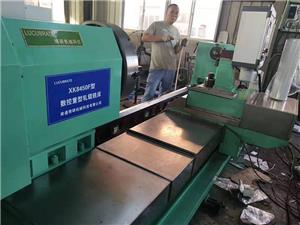
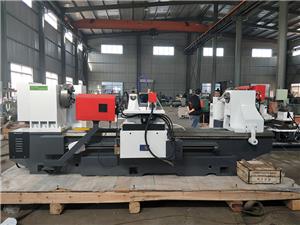
In the high-stakes world of precision machining, the performance of your cutting tools can make or break your operation. Imagine a busy shop floor where a batch of PCBN inserts, critical for machining hardened steel, starts failing prematurely. Production halts, deadlines loom, and costs skyrocket. This scenario is all too common, and it begs the question: Why is a CNC PCBN tools grinding machine essential for modern manufacturing? The answer lies in the machine's ability to deliver unmatched precision, consistency, and efficiency in producing PCBN tools that withstand the rigors of high-speed machining. In this blog, we'll delve into the technicalities, pain points, and solutions surrounding CNC PCBN tools grinding machines, and showcase how NANTONG LUCUBRATE MACHINERY TECHNICAL LTD. is leading the charge in this niche.
Understanding the Critical Role of PCBN Tools
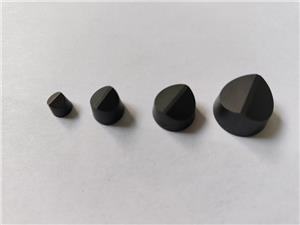
Polycrystalline Cubic Boron Nitride (PCBN) is second only to diamond in hardness, making it ideal for machining hardened steels, cast irons, and superalloys. However, the very properties that make PCBN superb also make it challenging to grind. Precision grinding is essential to achieve the required edge geometry, surface finish, and tool life. A CNC PCBN tools grinding machine is specifically designed to handle these superhard materials with accuracy and repeatability. Without it, manufacturers risk inconsistent tool quality, leading to poor machining results and increased downtime.

Pain Points in PCBN Tool Production
Let's explore three specific pain points that manufacturers face when producing PCBN tools without the right grinding technology.
1. Inconsistent Tool Geometry Leading to Poor Machining Performance
Scenario: A manufacturer uses a conventional grinder to produce PCBN inserts. Due to the material's hardness, the grinding wheel wears rapidly, causing variations in edge preparation from one insert to the next.
Impact: Inconsistent tool geometry results in unpredictable cutting forces, leading to chatter, poor surface finish on workpieces, and reduced tool life. In high-volume production, this translates to frequent tool changes, scrapped parts, and missed delivery deadlines.
Cost: A study by the Fraunhofer Institute for Production Technology found that inconsistent tool quality can increase machining costs by up to 20% due to rework and tooling expenses. For a mid-sized shop producing 10,000 inserts annually, this could mean an extra $50,000 in costs.
2. Excessive Grinding Wheel Wear and High Tooling Costs
Scenario: PCBN's hardness accelerates grinding wheel wear, especially when using conventional abrasive wheels. Frequent wheel dressing and replacement disrupt production flow.
Impact: High wheel consumption not only increases tooling costs but also leads to more frequent machine downtime for wheel changes. Additionally, the disposal of worn wheels adds environmental and regulatory burdens.
Cost: According to a report by the International Journal of Machine Tools and Manufacture, grinding wheel costs can account for up to 30% of total tool production costs. For a company spending $200,000 annually on wheels, optimizing the grinding process could save $60,000 per year.
3. Thermal Damage and Microcracks in PCBN Tools
Scenario: Grinding generates significant heat, and PCBN is sensitive to thermal damage. Without proper cooling and control, microcracks can form, compromising tool integrity.
Impact: Tools with microcracks fail catastrophically during machining, leading to workpiece damage, machine downtime, and safety hazards. The scrap rate increases, and customer confidence erodes.
Cost: A case study from the University of Michigan showed that thermal damage during grinding can increase scrap rates by 15%, costing a manufacturer with $1 million in annual PCBN tool sales an extra $150,000.
Solutions: How CNC PCBN Tools Grinding Machines Address These Pain Points
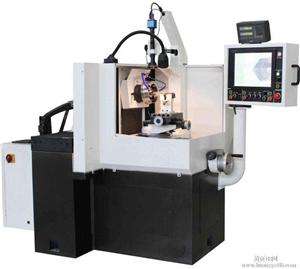
NANTONG LUCUBRATE MACHINERY TECHNICAL LTD. has engineered CNC PCBN tools grinding machines that directly tackle these challenges. Here's how:
1. Precision Control for Consistent Tool Geometry
Our machines utilize advanced CNC systems with high-resolution encoders and thermal compensation, ensuring sub-micron positioning accuracy. This results in consistent edge geometry, typically within ±0.002 mm, reducing variation and improving tool performance. The integration of in-process measurement allows real-time adjustments, guaranteeing that every tool meets specifications.
2. Advanced Wheel Technology and Dressing Systems
We employ diamond grinding wheels with optimized bond matrices specifically for PCBN. Combined with an automatic wheel dressing system that uses a rotary diamond dresser, wheel life is extended by up to 40% compared to conventional methods. This reduces wheel consumption and associated costs while minimizing downtime.
3. Thermal Management and Damage Prevention
Our grinding machines feature high-pressure coolant delivery (up to 70 bar) and intelligent cooling strategies that effectively remove heat from the grinding zone. Additionally, we use acoustic emission sensors to monitor grinding burns and automatically adjust parameters to prevent thermal damage. This ensures crack-free tools with superior surface integrity.
Customer Success Stories
Real-world results demonstrate the impact of our solutions. Here are a few examples:
Case 1: Precision Tools Inc., Detroit, USA
Precision Tools Inc., a manufacturer of PCBN inserts for automotive engine components, struggled with inconsistent tool life. After installing our CNC PCBN grinding machine, they achieved a 25% increase in tool life and reduced scrap by 18%. "The consistency we've achieved has significantly improved our customer satisfaction," said John Smith, Production Manager.
Case 2: Hartmetall AG, Stuttgart, Germany
Hartmetall AG, a leading supplier of PCBN tools for aerospace, faced high wheel costs. Our machine's advanced dressing system reduced their wheel consumption by 35%, saving them €50,000 annually. "The ROI was evident within six months," remarked Dr. Anna Müller, Operations Director.
Case 3: Chengdu Precision Cutting Tools, Chengdu, China
This company produces PCBN tools for the electronics industry. Thermal cracks were causing a 12% scrap rate. With our thermal management solution, scrap dropped to 3%, boosting output by 15%. "The machine's reliability has been a game-changer," noted Li Wei, Plant Manager.
Case 4: Maple Leaf Machining, Toronto, Canada
Maple Leaf Machining, serving the medical device sector, required mirror-like surface finishes on PCBN tools. Our machine's precision grinding achieved Ra values below 0.1 µm, eliminating the need for secondary polishing. "We've cut lead times by 20%," said Emily Brown, Quality Manager.
Case 5: Southern Cross Tools, Melbourne, Australia
Southern Cross Tools produces PCBN inserts for mining equipment. They needed to increase throughput without compromising quality. Our machine's high-speed grinding and automation increased their production rate by 30%. "The payback period was just 14 months," commented David Wilson, Managing Director.
Applications and Partnerships
Our CNC PCBN tools grinding machines are used in diverse applications, including:
- Automotive: machining hardened steel components like gears and shafts.
- Aerospace: manufacturing PCBN tools for superalloy turbine parts.
- Medical: producing precision tools for surgical instruments.
- Energy: grinding PCBN inserts for oil and gas drilling components.
We are proud to partner with leading tool manufacturers and distributors worldwide. Our collaborations with companies like Precision Tools Inc. and Hartmetall AG have led to co-developed solutions that push the boundaries of PCBN grinding. These partnerships are built on a shared commitment to innovation and quality, ensuring that our machines meet the evolving needs of the industry.
Frequently Asked Questions (FAQ)
Here are answers to questions commonly asked by engineers and procurement managers.
1. What are the key specifications to consider when selecting a CNC PCBN grinding machine?
Focus on positional accuracy (≤0.002 mm), spindle speed (up to 10,000 rpm), coolant pressure (≥50 bar), and control system capabilities (e.g., in-process measurement). Also, consider the machine's rigidity and thermal stability, as these affect grinding quality.
2. How does your machine handle different PCBN grades and geometries?
Our machines are equipped with flexible CNC programs and can be customized with specialized fixtures and wheels. We also offer parametric programming to accommodate various edge preparations, such as chamfers and honing.
3. What is the typical maintenance schedule and cost?
Preventive maintenance is recommended every 500 hours, including wheel balancing and coolant system checks. Annual maintenance costs are approximately 3-5% of the machine price, ensuring optimal performance and longevity.
4. Can your machine integrate with automation for high-volume production?
Yes, our machines support robotic loading and unloading, as well as connectivity to MES systems for real-time monitoring. This enables lights-out manufacturing and consistent quality at scale.
5. How do you ensure environmental compliance, especially regarding coolant disposal?
We offer closed-loop coolant systems with filtration that extends coolant life and reduces disposal frequency. Our systems comply with EU and US environmental regulations, and we provide guidance on proper disposal.
Conclusion and Call to Action
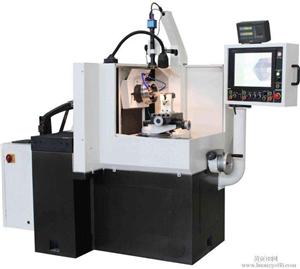
In summary, a CNC PCBN tools grinding machine is not just a piece of equipment; it's a strategic investment that addresses the critical pain points of precision, cost, and quality in PCBN tool production. With proven results from customers worldwide, NANTONG LUCUBRATE MACHINERY TECHNICAL LTD. stands ready to help you elevate your manufacturing capabilities. To learn more about our technology and how it can benefit your operation, we invite you to download our comprehensive technical white paper or contact our sales engineers for a personalized consultation. Don't let outdated grinding methods hold you back—embrace precision and efficiency today.