Why Is CNC Ring Grinding Machine the Key to Precision?
Introduction: The Precision Predicament
Imagine you're a quality engineer at a bearing manufacturer, staring at a batch of rejected rings. The tolerance is off by 3 microns—a fraction of a human hair—but it's enough to scrap thousands of dollars worth of components. You've tried everything: conventional grinding, manual adjustments, even outsourcing. But the problem persists. Why? Because achieving sub-micron precision on ring-shaped components isn't just about the machine—it's about the entire grinding ecosystem. That's where the CNC Ring Grinding Machine steps in, transforming chaos into consistency. This isn't just another piece of equipment; it's a strategic investment that directly impacts your bottom line. In this article, we'll dissect the pain points, explore tailored solutions, and show you why forward-thinking manufacturers are switching to CNC ring grinders. By the end, you'll have a clear roadmap to elevate your precision game.
Pain Points: The Hidden Costs of Inefficient Ring Grinding
Every manufacturer faces unique challenges, but these three pain points are universal when it comes to ring grinding:
1. Inconsistent Quality and High Rejection Rates
Picture a production floor in Ohio, USA. A mid-sized bearing plant runs a batch of 500 steel rings. After grinding, 15% are rejected due to ovality and surface roughness. The rework costs alone eat into profit margins, but the real damage is downtime and delayed deliveries. The root cause? Manual machine setups and lack of real-time feedback. Operators rely on experience, but even the best can't match the repeatability of a CNC system. The result is a cycle of scrap, rework, and customer dissatisfaction.
2. Slow Changeover and Setup Times
In a job shop in Germany, they handle diverse ring sizes—from 50mm to 500mm diameter. Each changeover takes 2-3 hours, including manual wheel dressing and alignment. With 10 batches a week, that's 20-30 hours of non-productive time. This inefficiency not only reduces capacity but also makes it impossible to respond to urgent orders. In today's just-in-time environment, this is a competitive disadvantage.
3. Lack of Process Visibility and Data
A plant in Japan struggles with traceability. When a customer complains about a ring's performance, they can't pinpoint which machine, wheel, or parameters were used. They have paper logs, but they're incomplete. This lack of data makes continuous improvement impossible. They're flying blind, and every quality issue becomes a mystery.
Solutions: How CNC Ring Grinding Machines Address These Challenges
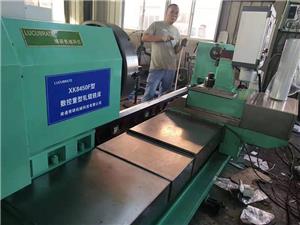
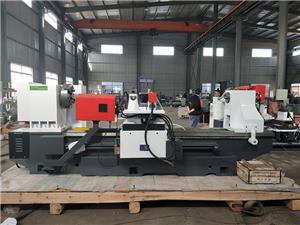
Now, let's see how a modern CNC ring grinding machine, like those from NANTONG LUCUBRATE MACHINERY TECHNICAL LTD., tackles these pain points head-on.
Solution 1: Closed-Loop Precision Control
CNC systems use linear scales and in-process gauging to monitor dimensions in real time. For example, our machines feature a hydrostatic spindle and a rigid structure that minimizes thermal deformation. The control system automatically compensates for wheel wear, ensuring consistent tolerances within ±2 microns. This eliminates the variability caused by manual adjustments, slashing rejection rates by up to 70%.
Solution 2: Automated Setup and Quick Changeover
With a CNC ring grinder, setup is reduced to a few keystrokes. The machine stores part programs, and automatic wheel dressing and positioning take over. Changeover time drops from hours to under 30 minutes. For the German job shop, that translates to 20+ additional productive hours per week. Plus, the machine can store hundreds of recipes, making it ideal for high-mix, low-volume production.
Solution 3: Data Acquisition and IIoT Readiness
Modern CNC grinders come with sensors that collect data on vibration, temperature, and power consumption. This data is fed into a central system, enabling full traceability. You can generate reports for every batch, showing exact parameters used. This not only satisfies quality audits but also provides insights for predictive maintenance, reducing unplanned downtime by 30%.
Customer Success Stories: Real Results, Real Impact
Let's look at three companies that transformed their operations with our CNC ring grinders.
Case Study 1: Bearing Manufacturer in Illinois, USA
Company: Midwest Precision Bearings
Challenge: 15% rejection rate on 100mm rings due to taper and roughness.
Solution: Installed a CNC ring grinder with in-process gauging.
Result: Rejection rate dropped to 2%, saving $250,000 annually in scrap costs. Production efficiency increased by 40%.
Quote from Plant Manager, John Miller: "The CNC grinder paid for itself in 8 months. The consistency is unbelievable—we've rebuilt our reputation for quality."
Case Study 2: Automotive Supplier in Bavaria, Germany
Company: AutoKomponenten GmbH
Challenge: Long changeover times (2.5 hours) caused missed delivery deadlines.
Solution: Adopted a CNC ring grinder with automated recipe management.
Result: Changeover reduced to 25 minutes, enabling a 30% increase in production capacity. They now handle 15 different ring sizes in a single shift.
Quote from Operations Head, Klaus Weber: "The quick changeover is a game-changer. We can now accept rush orders without sacrificing efficiency."
Case Study 3: Aerospace Component Maker in Aichi, Japan
Company: AeroRing Technologies
Challenge: Lack of traceability for aerospace certifications.
Solution: Integrated CNC ring grinder with IIoT data logging.
Result: Achieved 100% traceability, passing strict FAA audits. Scrap reduced by 60% due to predictive maintenance alerts.
Quote from Quality Director, Hiroshi Tanaka: "The data insights are invaluable. We can now prove every process parameter to our customers."
Applications and Partnerships: Where CNC Ring Grinding Shines
CNC ring grinding machines are versatile, serving industries like:
- Bearings (ball, roller, tapered)
- Automotive (transmission rings, clutch components)
- Aerospace (engine rings, landing gear parts)
- Energy (wind turbine bearings, gear rings)
- Hydraulics (piston rings, seal housings)
We collaborate with leading material suppliers and automation integrators to ensure seamless integration. For instance, our partnership with a major German robotics company allows for automated loading/unloading, further boosting productivity.
FAQ: Answers to Common Questions from Engineers and Buyers
Q1: What is the minimum achievable tolerance on a CNC ring grinder?
A: With our machines, you can consistently hold IT3 to IT4 tolerances (typically ±2 microns for diameter, ±1 micron for roundness) under normal production conditions. This is achieved through rigid construction, hydrostatic bearings, and thermal compensation.
Q2: How does the machine handle different ring sizes without sacrificing speed?
A: Our CNC controls use servo-driven workheads and tailstocks that adjust automatically. The grinding wheel is dressed via CNC, and the part program includes all dimensions. Changeover is under 30 minutes, and the machine can process rings from 20mm to 800mm in diameter.
Q3: What are the maintenance requirements compared to conventional grinders?
A: CNC ring grinders require similar preventive maintenance, but with fewer manual adjustments. Our machines come with self-diagnostic systems that alert you to potential issues, reducing unexpected breakdowns. Regular checks on hydraulic oil, coolant concentration, and wheel dressing are recommended.
Q4: Can I integrate the CNC ring grinder into my existing Industry 4.0 setup?
A: Absolutely. Our machines support OPC UA, MTConnect, and other protocols. You can collect data directly from the controller and integrate with MES/ERP systems. We also provide optional API access for custom data analytics.
Q5: What is the typical ROI period for investing in a CNC ring grinder?
A: Based on our customer data, most achieve ROI within 12-18 months. This is due to reduced scrap, lower labor costs, and increased throughput. For example, a customer with 10% scrap can save over $200,000 annually, making the investment payback swift.
Conclusion: Precision as a Competitive Advantage
In today's competitive manufacturing landscape, precision is not a luxury—it's a necessity. The CNC Ring Grinding Machine from NANTONG LUCUBRATE MACHINERY TECHNICAL LTD. offers a proven path to eliminate waste, improve efficiency, and gain full process control. By addressing the pain points of inconsistency, slow changeover, and lack of data, you can transform your production floor. Don't let outdated methods hold you back. To dive deeper, download our comprehensive technical white paper on optimizing ring grinding processes. Or, better yet, contact our sales engineers for a personalized consultation and feasibility study. Your journey to precision starts now.