Why Is CNC Roller Lathe Key for Precision?
Imagine you're an engineer at a busy manufacturing plant, and you've just discovered that a batch of critical components is out of tolerance. The entire production line grinds to a halt, deadlines loom, and costs skyrocket. This scenario is all too familiar in industries that rely on precision machining. The answer to preventing such nightmares often lies in the technology you choose. So, why is a CNC roller lathe key for precision? In short, it's because these machines combine advanced control systems with robust mechanical design to deliver unmatched accuracy, repeatability, and efficiency. In this blog, we'll delve into the technical depths of CNC roller lathes, explore common pain points, and show you how the right machine—like those from NANTONG LUCUBRATE MACHINERY TECHNICAL LTD.—can transform your operations.
Understanding CNC Roller Lathes: The Precision Workhorses
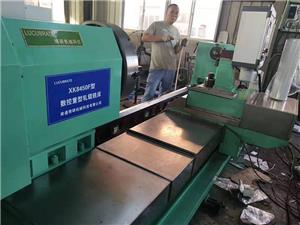
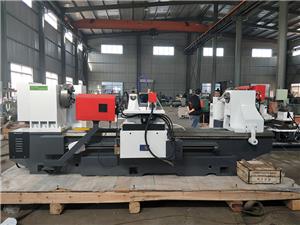
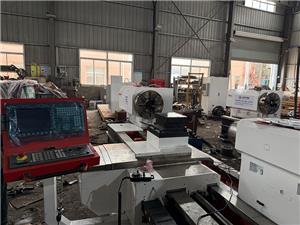
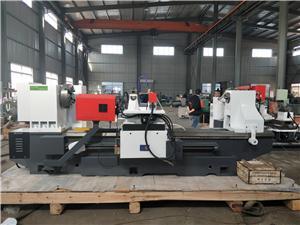
Before we dive into the 'why,' let's clarify what a CNC roller lathe is. A CNC roller lathe is a computer numerically controlled machine tool specifically designed for machining cylindrical parts, often with complex profiles. Unlike conventional lathes, it uses a stationary cutting tool while the workpiece rotates, but the 'roller' aspect refers to the machine's ability to handle large, heavy workpieces with support rollers that minimize deflection. This design is ideal for producing components like rollers for conveyors, printing presses, and industrial machinery. The CNC aspect ensures that every movement is precisely controlled, enabling high repeatability and the ability to machine intricate geometries.
At NANTONG LUCUBRATE MACHINERY TECHNICAL LTD., we've dedicated years to refining this technology. Our CNC roller lathes are engineered to meet the rigorous demands of modern manufacturing, combining rigid construction with intelligent control systems. But why does this matter to you? Let's explore the pain points that plague many workshops.
Pain Point 1: Inconsistent Quality and Tolerance Stack-Up
In precision manufacturing, consistency is king. Yet, many shops struggle with variations in part quality, especially when machining large rollers. Imagine a scenario where you're producing hydraulic cylinders for construction equipment. Each cylinder must fit perfectly with pistons and seals. If the outer diameter varies by even a few microns, assembly becomes a nightmare, leading to leaks, reduced efficiency, and potential safety hazards. The root cause? Manual lathes or older CNC machines lack the rigidity and thermal stability to maintain tight tolerances over long production runs. The consequences are dire: rework, scrap, and delayed shipments can cost tens of thousands of dollars per incident, not to mention the damage to your reputation.
At a plant in Ohio, a manufacturer of oilfield equipment faced exactly this issue. They were using a conventional lathe to machine large rollers for drilling motors, but the tolerance variations were causing frequent field failures. After switching to a CNC roller lathe from NANTONG LUCUBRATE, they achieved a consistent tolerance of ±0.01mm, reducing scrap by 30% and eliminating field failures. As their production manager put it, 'The precision of the CNC roller lathe has been a game-changer for our quality control.'
Pain Point 2: Low Productivity and Long Cycle Times
Time is money, especially in high-mix, low-volume production environments. Consider a job shop that machines rollers for printing presses. Each roller requires multiple operations: turning, grooving, and threading. With a manual lathe, each operation requires manual tool changes and measurements, leading to cycle times that can stretch into hours. Moreover, the skilled operator shortage means finding someone who can consistently produce quality parts is increasingly difficult. The impact? You're limited in capacity, unable to take on more work, and your profitability suffers. A single delayed order can result in penalties and lost future business.
Enter the CNC roller lathe. With automatic tool changers, high-speed spindles, and advanced software, these machines drastically reduce cycle times. For instance, a customer in Germany, producing rollers for the automotive industry, was able to cut cycle time by 40% after integrating a CNC roller lathe from NANTONG LUCUBRATE. Their lead engineer remarked, 'The efficiency gains were immediate; we can now handle twice the workload with the same team.'
Pain Point 3: Difficulty Machining Large or Complex Workpieces
Large rollers, such as those used in paper mills or steel processing, are challenging to machine due to their size and weight. Workpiece deflection is a major issue: as the tool presses against the rotating part, the part bends, leading to inaccurate cuts and poor surface finish. Additionally, complex profiles, like grooving or threading, require multiple setups, increasing the chance of errors. A paper mill in Sweden was struggling with this exact problem. They needed to machine large dryer rollers with intricate grooves, but their existing lathe couldn't handle the weight, and the deflection caused frequent tool breakage. The cost of downtime and tooling was eating into their profits.
Our solution? A CNC roller lathe equipped with steady rests and hydraulic tailstocks that support the workpiece along its length, minimizing deflection. The machine also features a powerful CNC system that can interpolate complex profiles in a single setup. After installation, the Swedish mill reported a 50% reduction in machining time and a 60% decrease in tooling costs. Their maintenance supervisor said, 'The stability of the machine is remarkable; we no longer worry about deflection or tool breakage.'
Customer Success Stories: Real Results from Real Manufacturers
Let's look at more examples of how NANTONG LUCUBRATE's CNC roller lathes have helped businesses across the globe.
- Case 1: Precision Hydraulics in Texas, USA - A manufacturer of hydraulic cylinders for agriculture needed to improve surface finish and reduce cycle time. After implementing our CNC roller lathe, they achieved a surface roughness of Ra 0.8μm and reduced cycle time by 25%. The production manager commented, 'The machine's rigidity and accuracy have significantly improved our product quality.'
- Case 2: Roller Manufacturer in Milan, Italy - This company produces rollers for the textile industry. They struggled with chatter and vibration when machining thin-walled rollers. Our CNC roller lathe with anti-vibration technology eliminated the issue, resulting in a 20% increase in production rate. The owner said, 'We've never seen such smooth finishes on our rollers.'
- Case 3: Aerospace Components in Montreal, Canada - A supplier of aerospace components needed to machine titanium rollers with tight tolerances. Our CNC roller lathe's thermal compensation system ensured consistent accuracy throughout the day. They reported a 15% reduction in scrap and a 30% increase in throughput. Their quality manager noted, 'The repeatability is outstanding, even with difficult materials.'
- Case 4: Steel Mill in Pohang, South Korea - This steel mill required large backup rollers with complex profiles. Our heavy-duty CNC roller lathe handled the 10-ton workpieces with ease, reducing machining time by 35%. The plant engineer stated, 'The machine's power and stability are unmatched.'
Applications and Partnerships: Where CNC Roller Lathes Shine
CNC roller lathes are versatile and find applications in numerous industries. Here are some key areas:
- Oil and Gas: Machining of drill collars, stabilizers, and other downhole tools.
- Paper and Printing: Production of dryer rollers, calendar rolls, and printing press rollers.
- Steel and Metal Processing: Machining of work rolls, backup rolls, and leveler rolls.
- Automotive: Manufacturing of camshafts, crankshafts, and transmission shafts.
- Aerospace: Precision machining of landing gear components and engine shafts.
We're proud to partner with leading companies worldwide. For example, we supply CNC roller lathes to a major European OEM that manufactures printing presses. Their procurement manager shared, 'We've been working with NANTONG LUCUBRATE for over five years, and their machines have consistently met our stringent requirements. The collaboration has been seamless.' Such partnerships drive innovation and ensure that our machines evolve to meet industry needs.
Frequently Asked Questions (FAQ)
Here are answers to some common questions from engineers and procurement managers.
1. What are the key factors to consider when selecting a CNC roller lathe for machining large rollers?
When selecting a CNC roller lathe for large rollers, consider the maximum swing and distance between centers to accommodate the workpiece size. The machine's rigidity is critical—look for a heavily ribbed cast iron bed and large diameter spindle bearings. Also, ensure the machine has adequate steady rests and tailstock thrust to minimize deflection. The CNC system should support complex interpolation and have sufficient memory for large programs. At NANTONG LUCUBRATE, we offer customized configurations to match your specific workpiece dimensions and materials.
2. How does the CNC roller lathe handle thermal distortion during long machining cycles?
Thermal distortion is a common issue in precision machining. Our CNC roller lathes incorporate thermal compensation systems that monitor temperature changes in real-time and adjust tool offsets accordingly. Additionally, the machine's design includes symmetrical headstock and isolated heat sources to minimize thermal gradients. For extreme precision, we can integrate a coolant chiller to maintain stable temperatures. This ensures consistent accuracy even after hours of continuous operation.
3. Can a CNC roller lathe machine both hard and soft materials?
Yes, with the appropriate tooling and cutting parameters, a CNC roller lathe can machine a wide range of materials, from aluminum and brass to hardened steel and titanium. The machine's spindle motor must have sufficient torque and speed range to handle different materials. Our lathes are equipped with high-torque spindle motors and rigid tooling systems that allow efficient machining of both soft and hard materials. For hard turning, we recommend using CBN or ceramic inserts and ensuring the machine has vibration damping features.
4. What maintenance is required to keep a CNC roller lathe running at peak performance?
Regular maintenance is essential. Daily tasks include checking lubrication levels and cleaning chips. Weekly, inspect the chuck and steady rests for wear. Monthly, check the alignment of the tailstock and the condition of the ball screws. Annually, a thorough calibration of the CNC system and geometric accuracy check is recommended. NANTONG LUCUBRATE provides detailed maintenance schedules and offers remote diagnostics to minimize downtime. We also recommend using original spare parts to ensure reliability.
5. How does the cost of a CNC roller lathe compare to conventional lathes in terms of total cost of ownership?
While the initial investment for a CNC roller lathe is higher, the total cost of ownership is often lower due to reduced labor costs, higher productivity, and less scrap. For example, a CNC roller lathe can reduce cycle times by 30-50%, and the consistency eliminates rework. Additionally, the machine's durability and precision reduce tooling costs. Over a five-year period, many customers find that the CNC roller lathe pays for itself through operational savings. We can provide a detailed ROI analysis based on your production requirements.
Conclusion: Embrace Precision with CNC Roller Lathes
In today's competitive manufacturing landscape, precision and efficiency are non-negotiable. A CNC roller lathe is not just a machine; it's a strategic investment that addresses the core pain points of quality, productivity, and complexity. With real-world success stories and a commitment to innovation, NANTONG LUCUBRATE MACHINERY TECHNICAL LTD. stands ready to help you elevate your machining capabilities.
Are you ready to transform your production? Contact our sales engineers to discuss your specific needs or request our technical white paper on advanced CNC roller lathe technology. Let us help you achieve the precision your customers demand.