Why Is CNC Roller Turning Machine Essential?
Imagine a busy factory floor where a batch of precision rollers for a printing press has just failed quality control. The diameter is off by a few microns, causing uneven ink distribution and a costly production halt. For engineers and procurement managers, this scenario is all too familiar. The answer to preventing such issues lies in the CNC roller turning machine—a specialized piece of equipment designed to deliver unmatched precision, repeatability, and efficiency in roller manufacturing. In this blog, we'll explore why this machine is not just a tool but a game-changer for industries relying on high-quality rollers.
Pain Points in Roller Manufacturing
Before diving into solutions, let's examine the common challenges that plague roller production. These pain points often lead to increased costs, delayed deliveries, and compromised product quality.
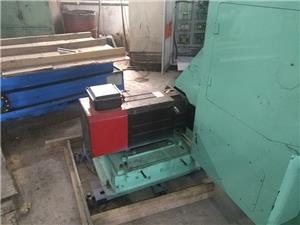
1. Inconsistent Precision and Repeatability
Traditional turning methods rely heavily on operator skill, leading to variations between batches. For example, a manufacturer of rollers for the textile industry might find that 15% of rollers exceed tolerance limits, resulting in rework or scrap. The impact is twofold: material waste and production delays. A single rework cycle can add 20-30% to unit costs and push delivery timelines by weeks, straining customer relationships.
2. High Production Costs and Downtime
Manual or semi-automatic lathes require frequent setups and adjustments, especially for complex roller profiles. A typical job shop might spend 4-5 hours on setup for a batch of 50 rollers, with an additional 10% downtime due to tool changes and maintenance. The cost of downtime can be staggering—up to $5,000 per hour for high-volume lines. Moreover, skilled operators are scarce, driving labor costs up by 20-30% annually.
3. Difficulty in Machining Advanced Materials
Modern rollers often use hardened steels, stainless steel, or special alloys that are tough to machine. Conventional machines struggle with these materials, leading to rapid tool wear and poor surface finish. For instance, machining a 60 HRC steel roller might require frequent tool changes, increasing cycle times by 40%. The resulting surface roughness (Ra > 1.6 μm) may not meet specifications for applications like optical film production, where Ra < 0.4 μm is often required.
Solutions with CNC Roller Turning Machines
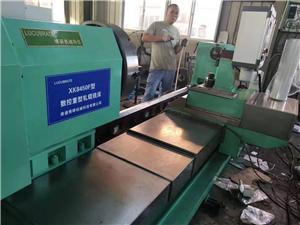
Addressing these pain points requires a paradigm shift in approach. CNC roller turning machines from reputable manufacturers like NANTONG LUCUBRATE MACHINERY TECHNICAL LTD. offer targeted solutions that directly tackle these challenges.
1. Ensuring Precision and Repeatability
CNC systems use closed-loop control and high-resolution encoders to maintain tolerances within ±0.005 mm, regardless of operator skill. For a roller manufacturer, this means batch-to-batch consistency, reducing scrap rates from 15% to under 2%. The machine's thermal compensation and rigid structure further minimize deviations, ensuring that every roller meets specifications. This precision is critical for industries like automotive, where roller diameter variations can affect fuel efficiency.
2. Reducing Costs and Downtime
With automatic tool changers and quick-change fixtures, setup times can be cut by 50%. A CNC roller turning machine can complete a batch of 50 rollers in 2 hours instead of 4, with minimal operator intervention. Predictive maintenance features alert users to potential issues before they cause downtime, reducing unplanned stoppages by 70%. The result is a significant boost in overall equipment effectiveness (OEE) and a lower total cost per part.
3. Mastering Advanced Materials
Equipped with high-torque spindles and advanced coolant systems, these machines handle hard materials with ease. For example, using cubic boron nitride (CBN) tools and optimized cutting parameters, a CNC roller turning machine can machine 60 HRC steel at speeds 30% faster than conventional methods, while achieving surface finishes of Ra 0.2 μm. This capability opens doors to new markets and applications that demand high-performance rollers.
Customer Success Stories
Real-world results speak louder than specifications. Here are a few examples of how businesses have benefited from integrating CNC roller turning machines into their operations.
1. Precision Rollers Inc., Germany
This mid-sized manufacturer of rollers for the packaging industry struggled with inconsistent quality, leading to a 12% scrap rate. After installing a CNC roller turning machine from NANTONG LUCUBRATE MACHINERY TECHNICAL LTD., they achieved a 95% reduction in scrap and increased output by 25%. "The machine's repeatability is outstanding—we no longer worry about batch variations," said Hans Müller, Production Manager.
2. Advanced Roller Tech, USA
A supplier of rollers for the aerospace sector faced challenges machining Inconel 718. With the new CNC machine, they reduced cycle times by 40% and extended tool life by 50%. "We've cut costs significantly and can now take on projects we previously declined," remarked Linda Garcia, Operations Director.
3. EuroRolls Ltd., UK
This company produces rollers for the printing industry. They were plagued by frequent downtime and high maintenance costs. The CNC roller turning machine's predictive maintenance features reduced downtime by 60% and maintenance costs by 30%. "Our OEE has improved from 65% to 85%, and our customers have noticed the difference in quality," said James Thompson, Plant Manager.
4. Asia Pacific Rollers, Singapore
Facing stiff competition, this manufacturer needed to improve efficiency. By adopting CNC roller turning machines, they reduced setup times by 50% and increased throughput by 20%. "The quick-changeover capability allows us to handle smaller batches profitably," noted Mei Ling, CEO.
5. Southern Precision, Australia
This job shop specialized in custom rollers but struggled with hard materials. The CNC machine's robust design and advanced tooling enabled them to machine hardened steel with ease, reducing machining time by 35%. "We've expanded our capabilities and attracted new clients in the mining sector," said David Clarke, Owner.
Applications and Partnerships
CNC roller turning machines are versatile and find applications across various industries:
- Printing and Packaging: Precision rollers for ink transfer and web handling.
- Textile Manufacturing: Rollers for dyeing, finishing, and calendering.
- Automotive: Rollers for assembly lines and engine components.
- Aerospace: High-precision rollers for composite layup and testing equipment.
- Medical: Rollers for film extrusion and diagnostic equipment.
NANTONG LUCUBRATE MACHINERY TECHNICAL LTD. has established strategic partnerships with key suppliers and research institutions to continuously innovate. For instance, collaborations with carbide tool manufacturers ensure that their machines are optimized for the latest cutting materials. Additionally, partnerships with automation integrators allow for seamless integration into smart factory systems, enhancing overall productivity.
Frequently Asked Questions
Engineers and procurement managers often have specific questions when considering a CNC roller turning machine. Here are five common ones with technical answers.
1. What tolerances can be achieved with a CNC roller turning machine?
With proper tooling and temperature control, tolerances of ±0.005 mm (0.0002 in) are standard. For higher precision, machines with hydrostatic guides and linear scales can achieve ±0.002 mm. However, achieving these tolerances requires careful attention to tool wear, thermal stability, and workpiece clamping.
2. How does the machine handle hard materials like hardened steel?
CNC roller turning machines use high-rigidity spindles and advanced tooling such as CBN or ceramic inserts. Cutting parameters are optimized for specific materials, and high-pressure coolant systems manage heat and chip evacuation. For materials above 50 HRC, it's recommended to use a machine with a torque rating of at least 200 Nm and a vibration-damping bed.
3. What is the typical maintenance schedule?
Preventive maintenance is key. Daily checks include lubrication and coolant levels. Monthly tasks involve checking belt tension and cleaning filters. Annually, a full calibration and alignment check is advised. Many modern machines offer remote diagnostics and predictive maintenance alerts, reducing unplanned downtime.
4. Can the machine be integrated into an automated production line?
Yes, most CNC roller turning machines come with standard interfaces like Ethernet/IP or Profibus, allowing integration with robots and MES systems. Optional features include bar feeders and part catchers for lights-out manufacturing. It's important to discuss automation requirements with the manufacturer to ensure compatibility.
5. What is the lead time and support availability?
Lead times vary based on configuration, typically 8-12 weeks. NANTONG LUCUBRATE MACHINERY TECHNICAL LTD. offers global support with local service engineers in key regions. They provide installation, training, and a 24/7 technical hotline. Spare parts are available through a network of distributors, ensuring minimal downtime.
Conclusion and Call to Action
In summary, a CNC roller turning machine is not just an upgrade—it's a necessity for manufacturers aiming to stay competitive. By addressing precision, cost, and material challenges, it delivers tangible benefits that impact the bottom line. Whether you're in printing, automotive, or aerospace, investing in this technology can transform your production capabilities.
To learn more about how a CNC roller turning machine can elevate your operations, we invite you to download our comprehensive technical whitepaper or contact our sales engineers for a personalized consultation. Discover how NANTONG LUCUBRATE MACHINERY TECHNICAL LTD. can help you achieve new levels of efficiency and quality.