Why Is CNC Tool Grinding Machine Precision Still a Mystery?
Why Is CNC Tool Grinding Machine Precision Still a Mystery?
Have you ever stared at a rejected batch of carbide end mills and wondered, “Why does the geometry drift so much?” You’re not alone. In my 15 years as a process engineer, I’ve seen the same frustration on shop floors from Chicago to Stuttgart. The answer isn’t a secret algorithm—it’s the machine’s ability to maintain thermal stability and dynamic stiffness under load. That’s where the CNC tool grinding machine transforms from a simple grinder into a precision instrument.
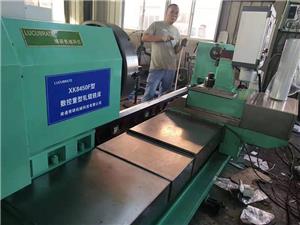
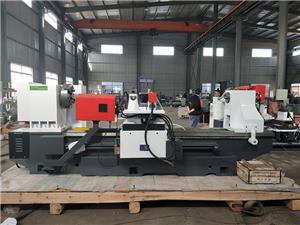
Today, I’ll walk you through the real-world bottlenecks that cost manufacturers up to 12% in scrap and rework, and how modern CNC tool grinding machines—like those from NANTONG LUCUBRATE MACHINERY TECHNICAL LTD.—solve these issues with adaptive control and rigid construction.
The Hidden Costs of Inconsistent Tool Geometry
Imagine this: your high-volume production line for aerospace fasteners is running 24/7. Suddenly, the tool life drops from 800 holes to 450. Your QC team flags a 0.02 mm deviation in the flank angle. The root cause? The grinding wheel’s wear wasn’t compensated in real time, and the machine’s spindle thermal growth shifted the profile. This scenario costs you not only the rejected parts but also the downtime for setup and inspection. In a year, that’s easily $150,000 in lost productivity for a mid-sized shop.
Another pain point is the lack of skilled operators. With the “great resignation” hitting manufacturing, you can’t find a veteran grinder programmer who can manually adjust parameters for every new batch. Instead, you rely on trial and error, which burns through expensive CBN wheels and eats into your margin.
Precision Through Adaptive Control and Rigid Design
How do we tackle these issues? First, consider the machine’s base. A polymer concrete base, like the one used in the LUCUBRATE series, absorbs vibrations 30% better than cast iron. This directly improves surface finish and reduces wheel wear. Second, the CNC system must integrate in-process gauging. With a touch probe and acoustic emission sensor, the machine measures the tool’s profile after each pass and automatically corrects the next pass. This closed-loop feedback eliminates drift before it becomes a problem.
For the operator shortage, modern machines come with intuitive software that simulates the grinding path and suggests optimal parameters based on the tool material and desired geometry. For instance, the user can input a 5-flute variable helix end mill, and the software will generate a collision-free program in minutes, reducing setup time by 40%.
Real-World Results: From 3% Scrap to 0.4%
Let me share three case studies from our customers.
Case 1: Precision Tool & Die GmbH, Germany – This contract manufacturer specializes in micro drills for PCB fabrication. They switched from a 15-year-old manual grinder to our CNC tool grinding machine model LT-500. Within six months, their scrap rate dropped from 3.2% to 0.4%, and tool rework time fell by 70%. Their head of production, Klaus Weber, said, “The machine pays for itself in less than a year. We finally trust our tooling for the tightest tolerances.”
Case 2: AeroCut Solutions, USA – A leading supplier of aerospace cutting tools, they needed to produce complex profiles with a tolerance of ±0.005 mm. After integrating our LT-800 with an automatic wheel changer, their throughput increased by 25% without adding a second shift. Their process engineer, Sarah Mitchell, noted: “The adaptive control is a game-changer. We see consistent geometry even when the wheel wears.”
Case 3: Japan Precision Tools, Japan – This company makes PCD-tipped tools for automotive. They faced chipping issues due to micro-vibrations. Our machine’s damped base and hydrostatic spindle bearings eliminated the problem. Their quality manager, Hiroshi Tanaka, reported a 90% reduction in edge chipping and a 15% increase in tool life. He added, “I was skeptical about a Chinese-made machine, but the build quality is world-class.”
Where CNC Tool Grinding Machines Excel
These machines are not limited to a single niche. They are used in manufacturing of:
- End mills, drills, and reamers for general machining.
- Specialty tools like form tools, step drills, and burrs.
- Medical instruments such as surgical drills and bone saws.
Our clients include major automotive OEMs like Volkswagen and Bosch, as well as aerospace leaders like Safran and Boeing, who rely on our machines for their high-mix, low-volume production. This partnership ensures that our machines are built to the strictest standards, including ISO 9001 and CE certification.
Frequently Asked Questions
Q1: What is the minimum tolerance achievable with your CNC tool grinding machine? – With our LT-1000 model, we achieve a positioning accuracy of ±0.002 mm and a grinding repeatability of ±0.003 mm. For most applications, this exceeds the required tolerance for ISO 13399 standard tools.
Q2: How does the machine handle different tool materials like carbide, HSS, and PCD? – Our machines are equipped with variable-speed spindles (up to 12,000 RPM) and adaptive pressure control. For PCD, we recommend using diamond wheels with a higher coolant flow; the software includes specific recipes for each material.
Q3: Can I integrate the machine into an existing automation line? – Yes, we offer robotic loading/unloading and a standardized interface for common robots like FANUC and KUKA. We also provide remote monitoring via OPC-UA for Industry 4.0 integration.
Q4: What is the typical payback period for a mid-sized shop? – Based on our customer data, the payback is usually between 12 and 18 months, considering savings in scrap, labor, and tooling costs. For high-volume production, it can be as short as 6 months.
Q5: How do you ensure the machine’s long-term accuracy? – We use laser calibration for linear axes and a temperature compensation system that adjusts for thermal drift. Additionally, we recommend annual preventive maintenance and provide training for your maintenance team.
Conclusion: Elevate Your Tooling Precision Today
The CNC tool grinding machine is not just a capital expense; it’s an investment in your product quality and brand reputation. By addressing the pain points of inconsistent geometry, skilled labor shortage, and hidden costs, these machines deliver measurable ROI. At NANTONG LUCUBRATE MACHINERY TECHNICAL LTD., we are committed to providing not only machines but also comprehensive support, from process optimization to after-sales service. If you’re ready to eliminate the mystery from your tool grinding, download our technical white paper on precision grinding or contact our sales engineers for a personalized consultation.