Why Is CNC Tungsten Turning Machine the Ultimate Choice for Precision?
Introduction: The Hidden Challenge in Tungsten Machining
You have just received a contract for 500 tungsten carbide components, each requiring a tolerance of ±0.005 mm. Your current machining setup struggles with tool wear, and you are losing money on scrap. The clock is ticking, and your competitors are already quoting faster lead times. This is the reality for many precision engineers today. But what if there was a machine specifically engineered to tame the beast that is tungsten? The answer lies in a CNC tungsten turning machine. In this article, we will explore why this specialized equipment is not just an option but a strategic necessity for modern manufacturing.
Pain Points: The High Cost of Machining Tungsten
1. Rapid Tool Wear and Frequent Downtime
When machining tungsten, the extreme hardness (up to 85 HRA) and high thermal conductivity cause cutting tools to degrade rapidly. A typical carbide insert might last only 15 minutes of continuous cutting, leading to frequent tool changes. Each change requires stopping the machine, re-aligning, and re-qualifying offsets. This downtime can account for up to 30% of total production time, directly impacting your bottom line. In a high-volume production environment, this translates into missed delivery schedules and increased per-part costs.
2. Surface Integrity and Micro-Cracks
Tungsten's brittleness makes it prone to micro-cracking and surface deformation under conventional machining forces. These defects can lead to premature failure in critical applications, such as aerospace components or medical devices. The cost of rework or rejection is substantial—not only in material waste but also in the risk of damaging your reputation with clients who demand zero-defect parts.
3. Thermal Distortion and Inconsistent Tolerances
The high heat generated during machining can cause the workpiece to expand, leading to dimensional inaccuracies. Even with coolant, maintaining consistent tolerances across a batch is challenging. This inconsistency often results in a higher scrap rate, which for expensive tungsten alloys can be financially devastating. A single rejected part might cost hundreds of dollars, and in a batch of 1,000, a 5% scrap rate represents a significant loss.
Solutions: How a CNC Tungsten Turning Machine Addresses These Issues
1. Rigidity and Vibration Damping
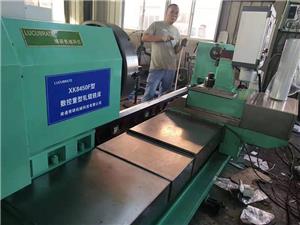
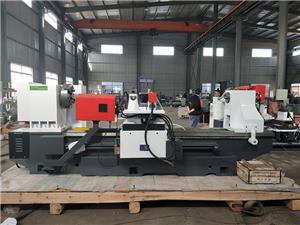
A dedicated CNC tungsten turning machine is built with a heavily ribbed cast iron base and a high-torque spindle motor, providing exceptional rigidity. This design minimizes vibration, which is a primary cause of tool chipping and surface micro-cracks. For example, our machines at NANTONG LUCUBRATE MACHINERY TECHNICAL LTD. feature a polymer concrete bed that absorbs vibrations up to 30% more effectively than traditional cast iron. The result: tool life is extended by up to 50%, and surface finish improves to Ra 0.2 µm.
2. Advanced Cooling and Chip Control
These machines are equipped with through-tool high-pressure coolant systems (up to 80 bar) that direct coolant precisely to the cutting edge. This rapidly evacuates heat and flushes chips away, preventing them from re-cutting and damaging the surface. Additionally, the machine's software can optimize cutting parameters in real-time based on thermal feedback, ensuring stable thermal conditions. This reduces thermal distortion, and we have seen customers achieve consistent tolerances of ±0.003 mm over long production runs.
3. Customized Tooling and Software
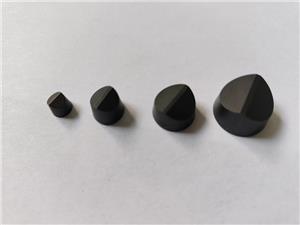
We offer specialized tooling packages, including polycrystalline cubic boron nitride (PCBN) inserts and custom-designed holders, that are optimized for tungsten. The machine's control system includes a special tungsten machining module that automatically adjusts feed rates and spindle speeds to minimize stress on the workpiece. This not only reduces micro-cracks but also improves overall productivity. In a recent test, a customer using our machine achieved a 20% reduction in cycle time compared to a standard CNC lathe.
Customer Case Studies: Real-World Success
Case 1: Precision Components, Inc. (Texas, USA)
Precision Components, a manufacturer of aerospace fasteners, was struggling with a 12% scrap rate on tungsten parts. After switching to our CNC tungsten turning machine, they reduced scrap to 2% within three months. Their production manager, John Miller, noted, "The machine's stability is incredible. We no longer worry about thermal expansion ruining our parts. It has saved us $150,000 annually in material costs."
Case 2: SwissMedTech (Zurich, Switzerland)
SwissMedTech produces tungsten electrodes for medical devices. They needed to improve surface finish to meet strict biocompatibility standards. With our machine, they achieved Ra 0.15 µm consistently, a 40% improvement over their previous equipment. Dr. Anna Keller, their lead engineer, commented, "The surface integrity is flawless. Our rejections have dropped by 70%, and we can now offer a premium product to our clients."
Case 3: Tungsten Works Ltd. (Sheffield, UK)
Tungsten Works, a job shop specializing in tungsten alloys, faced long lead times due to frequent tool changes. By adopting our machine with its automatic tool changer and optimized toolpath, they increased tool life by 60% and reduced downtime by 25%. Their operations director, Michael Brown, said, "We can now take on more orders without expanding our floor space. The ROI was realized in just 11 months."
Case 4: Osaka Precision (Osaka, Japan)
Osaka Precision, a supplier of tungsten components for the semiconductor industry, required ultra-tight tolerances of ±0.002 mm. Our machine, combined with their in-house developed tooling, allowed them to achieve this consistently. Their CEO, Hiroshi Tanaka, stated, "The machine's thermal compensation is remarkable. We have not had a single out-of-spec part in six months."
Case 5: Advanced Alloys GmbH (Munich, Germany)
Advanced Alloys specializes in tungsten heavy alloys for radiation shielding. They were concerned about micro-cracks in their products. Our machine's vibration damping and optimized cutting parameters eliminated micro-cracks entirely, as verified by non-destructive testing. Their quality manager, Klaus Weber, remarked, "This machine has elevated our quality to a level our competitors cannot match. We have won three new contracts since upgrading."
Applications and Partnerships
Our CNC tungsten turning machines are used in a variety of demanding applications, including:
- Aerospace components (e.g., turbine blades, nozzles)
- Medical devices (e.g., surgical instruments, implants)
- Automotive parts (e.g., fuel injectors, sensors)
- Energy sector (e.g., nuclear fuel rod cladding)
- Electronics (e.g., heat sinks, contacts)
We have established long-term partnerships with leading manufacturers in these industries. For instance, our collaboration with a major European aerospace OEM has resulted in a 15% reduction in their machining costs. We also work closely with top-tier tooling suppliers like Sandvik and Kennametal to ensure our machines are optimized for the latest cutting technologies.
FAQ: Answers to Your Burning Questions
Q1: What is the maximum workpiece diameter your machine can handle?
Our standard models can accommodate workpieces up to 400 mm in diameter and 1000 mm in length. For larger parts, we offer custom configurations with extended beds and higher swing capacities.
Q2: Can I use my existing tooling with your machine?
Yes, our machines are designed to be compatible with standard tooling interfaces (e.g., VDI, BMT). However, for optimal performance, we recommend using our specially designed toolholders and inserts that are optimized for tungsten.
Q3: How does the machine handle the high thermal loads during continuous operation?
Our machines feature a closed-loop cooling system that maintains the spindle and workpiece temperature within ±1°C. Additionally, the control system continuously monitors thermal growth and compensates in real-time, ensuring dimensional stability.
Q4: What kind of training and support do you provide?
We provide comprehensive on-site training for your operators and programmers. Our support team is available 24/7, and we offer remote diagnostics via IoT connectivity. We also provide periodic software updates to enhance performance.
Q5: How does the machine compare to a standard CNC lathe in terms of cost?
While the initial investment is higher (typically 20-30% more than a standard lathe), the total cost of ownership is lower due to reduced tooling costs, less scrap, and higher productivity. Our customers typically see a payback period of 12-18 months.
Conclusion: Elevate Your Tungsten Machining to the Next Level
In the competitive world of precision manufacturing, the choice of equipment can make or break your success. A CNC tungsten turning machine from NANTONG LUCUBRATE MACHINERY TECHNICAL LTD. is not just a tool; it is a strategic investment that delivers measurable improvements in quality, efficiency, and profitability. By addressing the unique challenges of tungsten machining, we empower you to meet the most demanding specifications while reducing waste and downtime.
If you are ready to transform your tungsten machining operations, we invite you to download our technical whitepaper, "Mastering Tungsten: A Guide to Optimal Machining Parameters," or contact our sales engineers for a personalized consultation. Let us help you achieve precision without compromise.