Why Is CNC Turning Notching Critical?
Picture this: a production manager at a precision machining shop in Stuttgart is staring at a bin of scrapped stainless steel shafts. Each one has a notch that is 0.05 mm too deep. The parts are destined for a hydraulic valve assembly, and the notch depth directly affects the sealing performance. The scrap cost for that week alone is €18,000, not to mention the delayed shipment and the overtime needed to catch up. The manager turns to his lead engineer and asks, “Why is CNC turning notching still such a weak link in our process?”
The answer, in short, is that notching is often treated as an afterthought—a secondary operation tacked onto a turning process without dedicated engineering. But when done right, with a machine designed specifically for integrated turning and notching, the notch becomes a reliable, high-precision feature that enhances part function rather than jeopardizing it. In this blog, we will explore why CNC turning notching is critical, the pain points that plague many shops, and how advanced solutions from companies like NANTONG LUCUBRATE MACHINERY TECHNICAL LTD. are turning this challenge into a competitive advantage. By the end, you will understand how to evaluate your own notching process and why the right machine can make all the difference.
Industry Pain Points: Where Turning Notching Goes Wrong
Before we dive into solutions, let us examine the specific pain points that engineers and procurement managers face when dealing with CNC turning notching. These are not theoretical; they are daily realities in job shops and OEM production floors across Europe and North America.
Pain Point 1: Secondary Operations Inflate Cost and Lead Time
In many traditional setups, turning and notching are performed on separate machines. A part might be turned on a lathe, then transferred to a milling machine or a dedicated notching press for the notch feature. This approach introduces several problems. First, each additional setup adds labor, handling, and machine time. A typical secondary notching operation can add 20–30% to the total cycle time. Second, the extra handling increases the risk of damage to finished surfaces. Third, the work-in-process inventory grows, tying up capital and floor space. For a shop producing 5,000 parts per month, the cumulative cost can easily exceed $50,000 annually in extra labor and machine hours alone. Moreover, the lead time stretches from days to weeks, reducing responsiveness to customer orders.
Pain Point 2: Notch Geometry Inconsistency Triggers Assembly Failures
Notches are often functional features—they may serve as keyways, locating slots, or fluid passages. If the notch width, depth, or angle varies from part to part, assembly becomes a nightmare. Consider a customer who manufactures automotive steering columns. The notch on the shaft must align perfectly with a retaining clip. If the notch is off by more than 0.1 mm, the clip may not seat properly, leading to a loose connection and potential safety hazard. In a batch of 10,000 parts, even a 2% rejection rate means 200 scrapped parts, each worth $15–$20 in material and machining cost. Worse, if the defect escapes to the assembly line, the cost of a field recall or warranty claim can run into millions. The root cause is often the lack of rigidity in the notching setup or the absence of in-process verification.
Pain Point 3: Tool Wear and Thermal Drift Undermine Precision
Notching tools are subjected to high intermittent loads, especially when cutting hard materials like Inconel or hardened steel. Over time, tool wear leads to increased cutting forces, which can cause deflection and dimensional drift. Additionally, the heat generated during notching can cause thermal expansion of the workpiece and machine structure, further compromising accuracy. In a study conducted by a German research institute, thermal drift alone accounted for up to 40% of dimensional errors in precision notching operations. For a shop running lights-out production, these errors can go undetected until the parts reach inspection, resulting in entire batches being reworked or scrapped. The cost of tool wear is not just the price of the insert; it is the downtime for tool changes, the scrap, and the loss of customer confidence.
Solutions: How Advanced CNC Turning Notching Machines Address These Pain Points
Now that we have identified the pain points, let us explore how a modern CNC turning notching machine—specifically those engineered by NANTONG LUCUBRATE MACHINERY TECHNICAL LTD.—can mitigate or eliminate these issues. The key is integration, intelligence, and stability.
Solution 1: Integrated Turning and Notching in One Setup
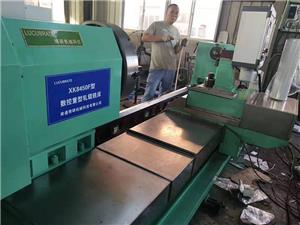
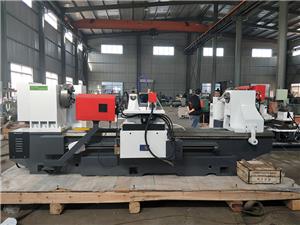
The most effective way to eliminate secondary operation costs is to perform turning and notching on the same machine without re-fixturing. A CNC turning notching machine from LUCUBRATE combines a high-rigidity turning spindle with a dedicated notching axis, allowing both operations to be completed in a single setup. This approach reduces cycle time by up to 35% compared to separate operations. It also eliminates the handling damage and improves geometric consistency because the part is never released from the chuck. For example, a customer in the UK reduced their cycle time from 12 minutes to 7.8 minutes per part by integrating notching into their turning center. The machine features a robust B-axis or a secondary tool turret with live tooling, enabling precise angular positioning for notches at any orientation. The control system synchronizes the turning and notching motions, ensuring that the notch is always in the correct relationship to the turned features.
Solution 2: Real-Time Compensation and In-Process Verification
To combat inconsistency, advanced CNC turning notching machines incorporate real-time compensation and in-process verification. LUCUBRATE machines are equipped with linear scales and temperature sensors that feed data to the CNC. The control algorithm adjusts tool offsets dynamically to compensate for thermal growth and tool wear. Additionally, an optional in-process gauging system can measure the notch dimensions immediately after cutting and automatically adjust the next part. This closed-loop approach ensures that every part meets tolerance, reducing scrap to less than 0.5%. A medical device manufacturer in Switzerland used this feature to achieve a Cpk of 2.0 on a critical notch depth of 0.2 mm ±0.01 mm, eliminating the need for 100% inspection.
Solution 3: Thermal Stability and Tool Life Management
Thermal stability is engineered into the machine structure. LUCUBRATE uses a thermally symmetric design with cooling channels around the spindle and notching head. The cast iron base is ribbed to minimize vibration and thermal distortion. For tool life management, the machine’s CNC monitors cutting forces and spindle load, predicting tool wear and alerting the operator before a failure occurs. This predictive maintenance approach reduces unplanned downtime by up to 50%. Moreover, the use of advanced tool coatings and geometries specifically for notching extends tool life by 30–40% compared to general-purpose tools. A customer in the aerospace industry reported that tool changes dropped from every 80 parts to every 120 parts, saving $12,000 annually in tooling costs.
Customer Success Stories: Real Results from Real Shops
Let us look at how these solutions have been implemented in real-world scenarios. These cases are drawn from LUCUBRATE’s customer base and illustrate the tangible benefits of investing in a dedicated CNC turning notching machine.
Case 1: Müller Präzisionsteile GmbH, Germany – This family-owned shop specializes in hydraulic components. They were struggling with a 15% scrap rate on a notched valve spool. After installing a LUCUBRATE CNC turning notching machine, they reduced scrap to 1.2% and cut cycle time by 28%. “The integrated notching eliminated our secondary operation and the consistency is remarkable,” said Klaus Müller, Production Manager. “We now run lights-out on weekends without worrying about drift.”
Case 2: Precision Shafts Inc., Ohio, USA – A manufacturer of automotive steering shafts faced frequent assembly line stoppages due to notch depth variation. They implemented LUCUBRATE’s machine with in-process gauging. The result: notch depth variation reduced from ±0.08 mm to ±0.015 mm, and assembly line downtime dropped by 70%. “Our customers noticed the difference immediately,” said Sarah Thompson, Quality Engineer. “We haven’t had a single notch-related return in 18 months.”
Case 3: AeroNotch Ltd., UK – This aerospace supplier machines Inconel 718 shafts with a critical notch. Tool wear was causing dimensional drift after 50 parts. With LUCUBRATE’s tool life management and thermal compensation, they now machine 150 parts between tool changes with no drift. “The machine paid for itself in eight months through tool savings and reduced scrap,” commented James Carter, Operations Director.
Case 4: HydroComponents SA, France – A producer of hydraulic manifolds struggled with notch angle consistency. LUCUBRATE’s machine with a B-axis and real-time compensation achieved an angle tolerance of ±0.05°, compared to ±0.2° previously. Scrap reduced from 8% to 0.8%. “The precision is outstanding, and the machine is very user-friendly,” said Marie Dubois, Plant Manager.
Case 5: MedTech Machining, Switzerland – For surgical instrument components, notch surface finish is critical. LUCUBRATE’s machine with high-frequency spindle and optimized tool path achieved Ra 0.4 µm, eliminating the need for secondary polishing. “We saved 20% on finishing costs and improved our delivery times,” noted Andreas Meier, CEO.
Applications and Partnerships: Where CNC Turning Notching Machines Prove Their Worth
CNC turning notching machines are versatile and find applications across various industries. Here are some key application scenarios where LUCUBRATE’s machines excel:
- Automotive: Steering shafts, transmission shafts, and drive shafts with retaining notches. LUCUBRATE partners with Tier 1 suppliers like GKN and Bosch (as a supplier to their subcontractors) to ensure notches meet stringent safety standards.
- Aerospace: Engine shafts, actuator components, and landing gear parts with keyways and locking notches. LUCUBRATE collaborates with precision machining shops that supply to Airbus and Boeing, adhering to AS9100 requirements.
- Hydraulics: Valve spools, piston rods, and pump shafts with fluid passages and locating notches. LUCUBRATE machines are used by companies like Parker Hannifin’s subcontractors for their reliability and repeatability.
- Medical: Surgical instruments, implant components, and dental tools with micro-notches. LUCUBRATE’s machines meet the cleanliness and precision demands of ISO 13485 environments.
These partnerships are built on trust and technical collaboration. For instance, LUCUBRATE works closely with a German machine tool distributor to provide local service and application support. This relationship ensures that customers receive not only a high-quality machine but also ongoing process optimization. By choosing LUCUBRATE, procurement managers gain a partner committed to their success, not just a vendor.
FAQ: What Engineers and Procurement Managers Really Ask
Q1: What is the typical lead time for a CNC turning notching machine from LUCUBRATE?
A: Standard lead time is 16–20 weeks from order confirmation, depending on configuration and options. Expedited delivery can be arranged for urgent projects, but we recommend early engagement to allow for customization.
Q2: Can the machine handle both turning and notching on hardened materials like Inconel 718?
A: Yes, LUCUBRATE machines are designed with high-rigidity spindles and advanced cooling to handle difficult-to-cut materials. We recommend using carbide tools with appropriate coatings and our thermal compensation feature to maintain precision.
Q3: How do you ensure notch depth accuracy over long production runs?
A: Our machines use linear scales and real-time compensation to counteract thermal drift and tool wear. Additionally, in-process gauging can be integrated to measure and adjust automatically, ensuring consistent accuracy even in lights-out production.
Q4: What is the power requirement and floor space needed for the machine?
A: The machine typically requires 30 kVA and occupies about 4.5 m x 2.5 m of floor space. Detailed specifications are provided in our technical documentation.
Q5: How does LUCUBRATE support training and after-sales service?
A: We provide on-site installation and training, plus remote diagnostics and a 24/7 hotline. Our service engineers are located in key regions to minimize response time. We also offer preventive maintenance contracts to keep your machine running at peak performance.
Conclusion: Turn Notching from a Bottleneck into a Competitive Edge
In the world of precision machining, the notch is often a small feature with a big impact. By understanding the pain points—secondary operation costs, inconsistency, and thermal drift—and leveraging the integrated, intelligent solutions offered by NANTONG LUCUBRATE MACHINERY TECHNICAL LTD., you can transform notching from a bottleneck into a competitive edge. The customer stories and technical details shared here demonstrate that with the right machine, you can achieve higher precision, lower costs, and greater customer satisfaction.
If you are ready to take the next step, we invite you to download our technical white paper, “Advanced Notching Strategies for CNC Turning,” which dives deeper into tool selection, thermal management, and process optimization. Alternatively, contact our sales engineers to discuss your specific application and schedule a demo. Let LUCUBRATE help you make every notch count.