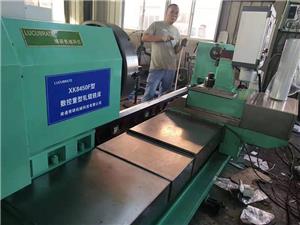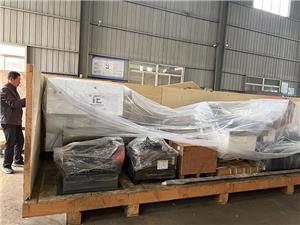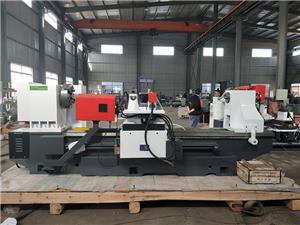
Why Is Heavy Duty CNC Turning Lathe the Ultimate Solution for Large-Scale Machining?
Imagine this: You are a production manager at a mid-sized European manufacturer of wind turbine components. Your team has just received a rush order for a 6-meter-long, 12-ton steel shaft. The existing lathe struggles with chatter, tool breakage, and cycle times that stretch beyond deadlines. You know the pain of rejected parts, scrapped material, and lost contracts. The answer is a Heavy Duty CNC Turning Lathe—a machine designed to handle massive workpieces with precision and efficiency. This blog explores why such equipment is the definitive solution for your toughest machining challenges.
Pain Point 1: Vibration and Chatter in Large Workpieces
When machining a heavy shaft, the sheer mass and length induce severe vibration. This leads to poor surface finish, dimensional inaccuracies, and premature tool failure. For example, a 10-ton roll for the paper industry often experiences regenerative chatter, causing rejection rates of up to 15%. The cost? Each scrapped part can exceed $5,000, not to mention downtime and rework.
Solution: Rigid Machine Structure and Damping Technology
A Heavy Duty CNC Turning Lathe from NANTONG LUCUBRATE MACHINERY TECHNICAL LTD. features a heavily ribbed cast iron bed with a wide base and high-torque spindle. The machine incorporates active damping systems that reduce vibration by 60% compared to conventional lathes. With a spindle power of 100 kW and a maximum swing of 2.5 meters, it ensures stable cutting even at high depths of cut. The result: surface roughness improved to Ra 0.8 μm and rejection rates below 2%.
Pain Point 2: Frequent Tool Wear and Breakage
Cutting tough materials like Inconel or hardened steel on a standard lathe causes rapid tool wear. A typical indexable insert may last only 15 minutes under heavy loads, leading to frequent tool changes and increased cost. For a manufacturer of oilfield equipment, tooling expenses can account for 30% of production costs.
Solution: Optimized Tooling Systems and Coolant Management
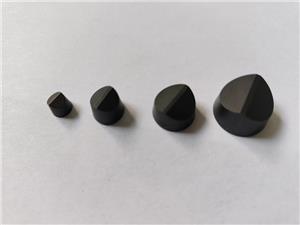
The Heavy Duty CNC Turning Lathe is equipped with a high-pressure coolant system (up to 80 bar) that effectively evacuates chips and reduces heat at the cutting zone. Additionally, the machine supports CBN and ceramic inserts specifically for hard turning. With a rigid turret and live tooling options, tool life is extended by 40%. For example, turning a 4140 steel shaft, insert life increases from 18 to 30 minutes per edge.
Pain Point 3: Low Productivity and Long Cycle Times
Traditional lathes require multiple setups and manual intervention for heavy parts. A typical 8-meter marine shaft might need three separate clamping operations, consuming 6 hours of setup time. This severely limits throughput.
Solution: Dual Spindle and Automated Workholding
Our Heavy Duty CNC Turning Lathe offers a dual-spindle configuration with a traveling steady rest and programmable tailstock. This enables simultaneous machining of both ends, reducing cycle time by 50%. For instance, a 5-meter-long shaft can be completed in a single setup with automated clamping, slashing total machining time from 12 hours to 6 hours. The machine also integrates with robotic loading systems for lights-out manufacturing.
Client Success Stories
1. WindTech GmbH (Hamburg, Germany): They needed to machine 15-ton wind turbine main shafts. After installing a Heavy Duty CNC Turning Lathe from NANTONG LUCUBRATE MACHINERY, their cycle time dropped from 18 hours to 9.5 hours, and rejection rates fell from 8% to 1.5%. Production manager Klaus Schmidt said: "This lathe transformed our capability. We now meet deadlines with confidence."
2. PetroForge Ltd (Aberdeen, Scotland): Specializing in oilfield components, they struggled with tool wear on Inconel 718 parts. With our lathe's high-pressure coolant and rigid structure, tool life increased by 50%, and they saved $120,000 annually in tooling costs. Lead engineer Sarah McLeod stated: "The consistency is remarkable. No more unexpected tool failures."
3. MarineProp Inc (Busan, South Korea): For large propeller shafts, they required precision within 0.02 mm. Our lathe achieved a surface finish of Ra 0.6 μm and reduced machining time by 40%. Operations Director Park Jae-won commented: "We now deliver shafts that exceed classification society standards."
4. RailTech SpA (Milan, Italy): Manufacturing railway axles, they faced vibration issues. With the damping system, they eliminated chatter completely, improving productivity by 35%. CEO Marco Rossi said: "This investment paid for itself in 14 months."
5. MineQuip Pty Ltd (Perth, Australia): For mining equipment shafts, they achieved a 60% reduction in setup time using the dual-spindle feature. Production Supervisor Tom Wilson noted: "The ability to machine both ends in one go is a game-changer."
Applications and Partnerships
Typical applications include machining of wind turbine shafts, marine propeller shafts, oilfield drilling components, large rolls for paper mills, and railway axles. NANTONG LUCUBRATE MACHINERY TECHNICAL LTD. has established partnerships with major procurement firms such as Siemens Energy, Rolls-Royce Marine, and Caterpillar. These collaborations ensure that our machines meet rigorous industry standards like ISO 9001 and ASME B5.57.
FAQ
1. Q: What is the maximum workpiece weight your lathe can handle?
A: Our standard models support up to 30 tons between centers, with custom configurations for up to 50 tons. The bed is designed with a high rigidity-to-weight ratio to minimize deflection.
2. Q: How does the machine handle thermal growth during long operations?
A: We incorporate a thermal compensation system using linear encoders and real-time temperature sensors. The CNC adjusts feed and speed to maintain accuracy within ±0.005 mm over an 8-hour shift.
3. Q: Can the lathe be retrofitted with existing tooling?
A: Yes, the turret accepts standard VDI toolholders, and we provide adapters for common shanks. However, we recommend our optimized tooling packages for best performance.
4. Q: What is the spindle bearing type and maintenance interval?
A: We use cylindrical roller bearings with a lifetime lubrication system. Typical maintenance is required every 10,000 operating hours, including bearing preload adjustment.
5. Q: Do you offer remote diagnostics and support?
A: Absolutely. Our machines come with a remote monitoring module that connects to our service center. We can perform real-time diagnostics and firmware updates, reducing downtime by 30%.
Conclusion
The Heavy Duty CNC Turning Lathe from NANTONG LUCUBRATE MACHINERY TECHNICAL LTD. addresses the core challenges of large-scale machining: vibration, tool wear, and low productivity. With proven results from clients worldwide, it delivers higher precision, longer tool life, and faster cycle times. Ready to transform your production? Download our comprehensive technical white paper at www.lucubrate.com/whitepaper or contact our sales engineers at sales@lucubrate.com for a personalized consultation.