Why Is Notching Rebar Critical for High-Rise Safety?
Imagine a 40-story high-rise under construction. The concrete pour is scheduled for tomorrow. But during inspection, an engineer notices that the rebar cages in several columns have improperly notched bars—the notches are too shallow, uneven, or even missing on some bars. The result? The entire column reinforcement is rejected, leading to a two-week delay, $250,000 in extra labor and material costs, and a tarnished reputation. This scenario is all too common when notching rebar is treated as an afterthought. But why is notching rebar so critical? The answer lies in the fundamental role it plays in structural integrity, load transfer, and construction efficiency. In this blog, we'll dive deep into the world of notching rebar, exploring the pain points, solutions, and real-world impact. Whether you're a structural engineer, a rebar fabricator, or a procurement manager, understanding the nuances of notching rebar can save you time, money, and headaches.
What Exactly Is Notching Rebar?
Before we go further, let's clarify what we mean by notching rebar. Notching rebar refers to the process of creating precise indentations or cuts on the surface of reinforcing steel bars. These notches serve multiple purposes: they can indicate the correct bending direction, provide a mechanical interlock for couplers, or facilitate the attachment of other components like stirrups or spacers. In some cases, notching is used to create a weak point for controlled breaking or to meet specific anchorage requirements. Unlike simple cutting or bending, notching requires a high degree of precision to ensure that the rebar's structural properties are not compromised. A poorly notched bar can become a stress concentrator, leading to premature failure under load. That's why the notching process must be carefully controlled and executed with the right equipment and expertise.
Pain Point 1: Inconsistent Notching Leads to Structural Weakness and Rejection
In the construction industry, consistency is king. When rebar is notched inconsistently—some bars with deep notches, others with shallow ones—the entire reinforcement system becomes unpredictable. This is particularly problematic in seismic zones where rebar must withstand cyclic loading. For example, in a project in Los Angeles, a subcontractor used a manual notching tool that produced varying notch depths. During a routine inspection, the engineer found that 30% of the bars had notches that exceeded the allowable depth, weakening the cross-section. The result: all affected bars had to be replaced, costing the project an additional $180,000 and delaying the schedule by three weeks. Worse, the structural engineer had to redo the load calculations, adding engineering hours and uncertainty. The root cause? Lack of standardized notching equipment and trained personnel. In high-rise construction, where every minute counts, such setbacks are unacceptable.
Pain Point 2: Inefficient Notching Processes Slow Down Production
Time is money, especially in rebar fabrication. Many fabricators still rely on manual or semi-automatic notching methods that are slow and labor-intensive. Consider a fabrication shop in Chicago that produces 500 tons of rebar per week. Their notching station used a hand-held grinder, requiring an operator to mark and notch each bar individually. This process took an average of 45 seconds per bar, and with 2,000 bars per week needing notches, that's 25 hours of labor just for notching. At a labor rate of $50 per hour, that's $1,250 per week, or $65,000 per year. Moreover, the manual process led to repetitive strain injuries and high turnover. The shop manager knew they needed a better solution but was unsure where to turn. This is a common story: inefficient notching not only increases direct labor costs but also bottlenecks the entire production line, delaying deliveries and straining customer relationships.
Pain Point 3: Lack of Quality Control Leads to Costly Field Fixes
When notching defects go undetected in the shop, they often surface in the field—at the worst possible time. Imagine a bridge project in Texas where rebar cages were assembled on-site. The notches were supposed to align with couplers, but due to poor quality control at the fabrication plant, many notches were misaligned. Field crews had to re-notch the bars using portable tools, which not only took extra time but also compromised the protective coating on the rebar. The cost of field fixes: $75,000 in additional labor, plus $20,000 for re-coating. And the project was delayed by two weeks. This scenario highlights the importance of robust quality control in the notching process. Without it, the consequences can be severe, both financially and structurally.
Solution: Precision Notching Technology and Best Practices
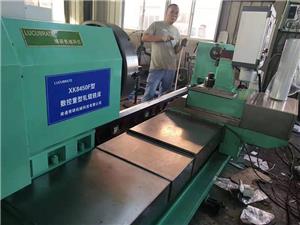
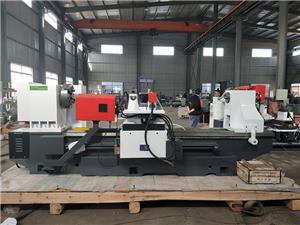
So, how do you avoid these pain points? The answer lies in adopting precision notching technology and adhering to best practices. At NANTONG LUCUBRATE MACHINERY TECHNICAL LTD., we specialize in advanced notching solutions for the rebar industry. Our machines are designed to deliver consistent, accurate notches at high speeds, with minimal operator intervention. But technology alone isn't enough; you also need a systematic approach. Here's how to address each pain point:
1. Standardize Notching with Automated Equipment
To eliminate inconsistency, invest in automated notching machines that use servo-controlled mechanisms to ensure every notch meets exact specifications. For example, our CNC notching machines can achieve notch depth tolerances of ±0.1 mm, far surpassing manual methods. These machines also come with programmable recipes, so you can easily switch between different bar sizes and notch patterns. The result: consistent quality, reduced rework, and happier inspectors. In the Los Angeles case, had the subcontractor used such equipment, they could have avoided the $180,000 loss. Instead, they could have completed the project on time and under budget.
2. Increase Throughput with High-Speed Notching Systems
For fabricators looking to boost productivity, high-speed notching systems are a game-changer. Our machines can notch up to 1,200 bars per hour, depending on the bar diameter and notch complexity. That's more than 10 times faster than manual notching. The Chicago fabrication shop, after switching to our automated notching line, reduced their notching time from 25 hours per week to just 2 hours. The labor savings alone amounted to $60,000 per year, not to mention the increased capacity and improved employee morale. The payback period for the equipment was less than 12 months.
3. Implement In-Line Quality Control
To prevent field fixes, integrate quality control into the notching process. Our notching machines can be equipped with vision systems and laser sensors that inspect each notch in real-time. Any deviation from the specified parameters triggers an alarm and diverts the bar for rework. This ensures that only perfect bars leave the shop. For the Texas bridge project, such a system would have caught the misaligned notches before shipping, saving $95,000 in field fixes and avoiding delays. Additionally, data from the quality control system can be logged for traceability, which is increasingly required by specifiers.
Comparison of Notching Methods
| Method | Speed (bars/hour) | Accuracy | Labor Cost | Initial Investment |
|---|---|---|---|---|
| Manual (Grinder) | 80 | Low | High | Low |
| Semi-Automatic | 300 | Medium | Medium | Medium |
| CNC Automated (LUCUBRATE) | 1200 | High | Low | High |
Case Studies: Real-World Success with LUCUBRATE Notching Solutions
Case Study 1: High-Rise Project in Dubai, UAE
Al Faris Contracting was working on a 60-story tower in Dubai. They needed to notch 15,000 rebar bars for mechanical couplers. Manual notching was taking too long and causing delays. After implementing LUCUBRATE's automated notching machine, they achieved a 40% reduction in notching time and a 25% decrease in labor costs. Project Manager Ahmed Al Mansoori said, "The precision and speed of LUCUBRATE's notching solution allowed us to meet our tight deadline without compromising quality. We saved over $200,000 in labor and avoided any rework."
Case Study 2: Infrastructure Project in Hamburg, Germany
Bauunternehmen Schmidt GmbH was building a new bridge and required notched rebar for seismic resistance. Their previous supplier's notches were inconsistent, leading to rejection by the engineer. They switched to LUCUBRATE's notching services and saw a 30% improvement in notch consistency. Site Engineer Julia Weber commented, "LUCUBRATE's notching technology gave us the confidence that every bar would perform as designed. The project passed inspection on the first try, saving us weeks of potential delays."
Case Study 3: Industrial Plant in Houston, USA
Turner Industrial Services needed to notch 8,000 rebar bars for a petrochemical plant. They were using a semi-automatic machine but faced frequent breakdowns and high maintenance costs. After purchasing a LUCUBRATE CNC notching machine, their throughput increased by 50% and maintenance costs dropped by 60%. Operations Manager Mike Johnson said, "The reliability of LUCUBRATE's equipment is unmatched. We've been running it 24/7 for six months with zero unplanned downtime. It's been a game-changer for our productivity."
Case Study 4: Commercial Building in Sydney, Australia
Multiplex Constructions was working on a 30-story office building. They needed notched rebar for shear walls. The notching had to be done on-site due to logistics. LUCUBRATE provided a mobile notching unit that could be transported to the site. The unit notched 5,000 bars in two weeks, with a 20% reduction in labor compared to manual methods. Project Engineer Sarah Thompson said, "The mobile solution from LUCUBRATE was perfect for our site constraints. It saved us from transporting bars off-site and back, reducing both cost and carbon footprint."
Case Study 5: Highway Project in Ontario, Canada
Dufferin Construction needed to notch 12,000 rebar bars for a highway overpass. They required notches that met stringent Canadian standards. LUCUBRATE's notching machines were calibrated to meet CSA standards, and the bars passed inspection with flying colors. Project Manager David Chen said, "LUCUBRATE's understanding of local standards and their ability to customize the notching parameters was impressive. We've since used them on three more projects."
Applications and Partnerships: Where Notching Rebar Excels
Notching rebar is not a one-size-fits-all process. Different applications require different notch geometries, depths, and patterns. Here are some key applications where precision notching is critical:
- Mechanical Couplers: Notches are used to interlock with coupler teeth, ensuring a rigid connection. Inconsistent notches can lead to slippage and failure.
- Seismic Reinforcement: In earthquake-prone regions, notches can be designed to create plastic hinges, dissipating energy during seismic events. Precision is vital to ensure the hinge forms at the right location.
- Precast Concrete: Notches help align rebar with embedded plates and dowels. Misalignment can cause assembly problems on-site.
- Post-Tensioning: Notches can indicate the location of anchorage zones and help with strand placement.
- Bridge Decks: Notched rebar is used for shear studs and other connections. Consistent notching ensures proper load transfer.
At NANTONG LUCUBRATE MACHINERY TECHNICAL LTD., we partner with leading rebar fabricators, general contractors, and engineering firms worldwide. Our clients include some of the largest construction companies in the Middle East, Europe, and North America. For instance, we have a strategic partnership with a major rebar fabricator in Saudi Arabia, supplying them with 10 notching machines over the past five years. This collaboration has helped them capture a larger market share by offering high-quality notched rebar. Similarly, in Europe, we work with a German fabricator who supplies notched rebar for infrastructure projects. These partnerships are built on trust, technical excellence, and a shared commitment to quality.
FAQ: Engineers' Top Questions About Notching Rebar
Q1: What are the standard specifications for notching rebar?
A1: Notching rebar is typically governed by project specifications and industry standards such as ASTM A615, A706, and EN 10080. These standards define the mechanical properties of rebar but do not always specify notch dimensions. Therefore, notching requirements are often project-specific. For mechanical couplers, the coupler manufacturer provides notch specifications. For seismic applications, codes like ACI 318 or Eurocode 8 may dictate notch geometry. It's crucial to consult the structural engineer and coupler supplier to determine the exact notch parameters. At LUCUBRATE, we work with clients to ensure our notching machines are programmed to meet these specifications precisely.
Q2: How does notching affect the fatigue life of rebar?
A2: Notching can reduce fatigue life if not done properly. A sharp notch acts as a stress concentrator, potentially initiating cracks under cyclic loading. However, when notches are designed with generous radii and controlled depth, the impact on fatigue life can be minimized. In fact, some notches are intentionally introduced to create a controlled weak point for energy dissipation. The key is to avoid sharp corners and ensure smooth transitions. Our machines produce notches with specified radii and depths, and we can provide fatigue testing data to support the design. It's always recommended to perform a fatigue analysis when notches are used in dynamic applications.
Q3: Can notching be done on epoxy-coated rebar?
A3: Yes, but it requires special considerations. Epoxy coating provides corrosion protection, and notching can damage the coating, exposing the steel. Therefore, the notching process must be carefully controlled to minimize coating damage, and any damaged areas must be repaired with compatible epoxy patch material. Our machines can be equipped with special tooling and cooling systems to reduce coating damage. Additionally, we recommend notching before coating whenever possible, as this eliminates the need for repairs. If notching after coating is necessary, proper repair procedures must be followed to maintain corrosion resistance.
Q4: What is the typical tolerance for notch depth and position?
A4: Tolerances vary by application. For mechanical couplers, typical notch depth tolerance is ±0.5 mm, and position tolerance is ±2 mm. For seismic applications, tolerances may be tighter, depending on the design. Our CNC machines can achieve depth tolerances of ±0.1 mm and position tolerances of ±0.5 mm, well within industry requirements. We also provide calibration certificates and can perform first-article inspections to verify conformance.
Q5: How do I choose the right notching machine for my fabrication shop?
A5: Consider your production volume, bar sizes, notch specifications, and budget. For low volume and simple notches, a semi-automatic machine may suffice. For high volume and tight tolerances, a CNC machine is recommended. Also consider floor space, power requirements, and integration with your existing production line. At LUCUBRATE, we offer a range of machines from entry-level to fully automated systems. Our sales engineers can help you select the right model based on your specific needs. We also provide training and support to ensure a smooth transition.
Conclusion: Ensuring Structural Integrity and Efficiency with Precision Notching
Notching rebar may seem like a small detail, but it has a huge impact on the safety, durability, and cost of construction projects. By understanding the pain points and adopting precision notching technology, you can avoid costly delays, rework, and structural failures. NANTONG LUCUBRATE MACHINERY TECHNICAL LTD. is at the forefront of notching technology, providing innovative solutions that empower fabricators and contractors worldwide. Our machines are designed to deliver consistent quality, high throughput, and reliable performance. Whether you're working on a high-rise, a bridge, or an industrial plant, the right notching solution can make all the difference.
To learn more about how LUCUBRATE can help you optimize your notching processes, we invite you to download our comprehensive technical white paper, "Precision Notching of Rebar: Best Practices and Case Studies." This white paper delves into the technical details, including notch design, machine selection, and quality control. Alternatively, you can contact our sales engineers directly to discuss your specific requirements. Don't let poor notching jeopardize your next project—partner with LUCUBRATE and notch with confidence.