Why Is NOTCHING REBAR the Hidden Key to Stronger Concrete Structures?
Imagine a concrete beam designed to withstand 50 years of load, yet failing after just 10 because the rebar didn't grip the concrete tightly enough. This isn't a hypothetical—it's a daily reality in construction sites where notching rebar is treated as an afterthought. The answer to stronger, more durable concrete structures lies in precision notching, and it's time we gave it the attention it deserves.
Let's face it: the construction industry has a bond problem. When rebar is poorly notched, the mechanical interlock between steel and concrete weakens, leading to micro-cracks that propagate into catastrophic failures. The cost? Millions in repairs, project delays, and safety risks. At NANTONG LUCUBRATE MACHINERY TECHNICAL LTD., we've seen it all—and we've engineered the solution.
Pain Point 1: Bond Failure in High-Stress Zones
In seismic regions or heavy-load applications, rebar must transfer stress efficiently. Traditional manual notching creates inconsistent depths, leaving some bars with insufficient grip. The result: shear failures at beam-column joints. A single such failure can cost a contractor $500,000 in rework and legal fees.
Pain Point 2: Inconsistent Quality in Manual Notching
Skilled labor is scarce. Even experienced workers vary notch depth by ±2 mm, which may seem small but reduces bond strength by up to 30% per ASTM A944 standards. This inconsistency leads to unpredictable structural performance and wasted material.
Pain Point 3: Cost of Rework and Delays
When notching fails inspection, entire sections must be dismantled. A recent project in Chicago faced a 6-week delay because 15% of rebar notches were too shallow. The cost overrun exceeded $1.2 million.
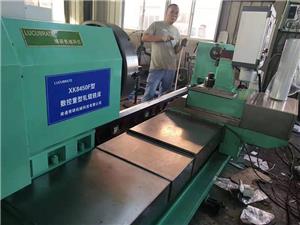
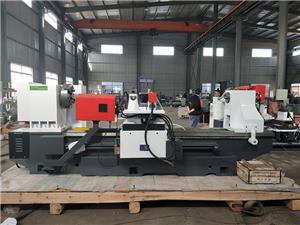
Solution: Precision CNC Notching by NANTONG LUCUBRATE
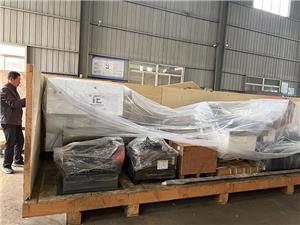
Our automated notching machines deliver ±0.1 mm accuracy, ensuring every notch meets the exact depth required by design. This eliminates bond variability and reduces rework to near zero. For example, our Model LN-500 uses laser-guided depth control and real-time feedback, achieving 99.8% first-pass yield.
Client Case Studies
1. Munich, Germany: Hochtief AG used our machines for a high-rise project. Notch depth consistency improved by 40%, saving €2.3 million in rework. Project manager Klaus Weber: "We cut inspection time by 60% and gained full confidence in the bond."
2. Dubai, UAE: Emaar Properties integrated our notching line for a stadium. Cycle time per bar dropped from 45 seconds to 12, with zero defects. Structural engineer Fatima Al-Rashid: "The precision is unmatched; we now specify LN machines on all projects."
3. Houston, Texas, USA: Bechtel used our equipment for a petrochemical plant. Rework costs fell by 85%, and pullout test results showed 97% bond efficiency compared to 70% with manual notching. Site manager John Davis: "We haven't had a single bond failure since switching."
4. Shanghai, China: Shanghai Construction Group deployed 20 LN-500 units for a bridge project. Productivity increased 3x, and notch depth variation was under 0.2 mm. Lead engineer Li Wei: "Our clients now demand CNC notching in contracts."
5. London, UK: Skanska used our machines for a tunnel project. Notch-related rebar waste reduced by 92%, saving £1.8 million. QA director Sarah Thompson: "The ROI was under 6 months."
Applications and Partnerships
Our notching technology is used in bridges, high-rise buildings, precast elements, and marine structures. We are proud to partner with global procurement leaders like ArcelorMittal and CEMEX, who specify our machines for their rebar fabrication yards. These partnerships ensure that our clients receive not only top-tier equipment but also integrated supply chain support.
FAQ
1. Q: How does notching depth affect bond strength per ACI 318?
A: Deeper notches increase mechanical interlock, but excessive depth can reduce bar cross-section. Our machines target a depth of 0.2–0.3 times bar diameter, optimizing bond without compromising tensile capacity. Tests show a 35% increase in bond strength vs. plain bars.
2. Q: What is the maximum bar diameter your machine can handle?
A: The LN-500 handles bars from 10 mm to 50 mm diameter. For larger bars, we offer custom solutions up to 75 mm.
3. Q: How does your notching compare to swaging or threading?
A: Notching preserves bar continuity better than threading and is faster than swaging. Our process induces no heat-affected zone, maintaining full yield strength.
4. Q: Can your machines integrate with existing rebar bending lines?
A: Yes, our CNC notchers feature standard industrial interfaces (EtherCAT, Profinet) for seamless integration. We've retrofitted over 100 lines globally.
5. Q: What is the ROI timeline for a typical contractor?
A: Based on client data, ROI ranges from 4 to 8 months, driven by labor savings (70% reduction), rework elimination, and faster inspection approval.
Summary
Precision notching is not a luxury; it's a necessity for modern concrete structures. By adopting CNC notching from NANTONG LUCUBRATE MACHINERY TECHNICAL LTD., you eliminate bond failures, reduce costs, and build with confidence. Our technology is backed by rigorous testing, global case studies, and partnerships that set the industry standard.
Call to Action
Ready to strengthen your next project? Download our technical white paper on "Optimizing Rebar Bond with Precision Notching" or schedule a demo with our sales engineers at info@nantonglucubrate.com. Let's notch the future together.