Why Is Tool Grinding Machine Precision Still a Nightmare?
Have you ever watched a precision tool fail catastrophically on the shop floor, costing you hours of downtime and a hefty rework bill? If you're nodding, you're not alone. The truth is, most tool grinding machines promise micron-level accuracy but deliver inconsistency that turns your production schedule into a guessing game. But here's the good news: it doesn't have to be that way. In this article, we'll dissect the real reasons behind grinding nightmares and show you how a strategic upgrade to your grinding process can transform your operations. Let's get straight to the point: the solution lies in understanding the machine's rigidity, thermal stability, and control system—and that's exactly what we'll explore.
The Hidden Cost of Inconsistent Grinding
Imagine this: you're running a high-volume order for carbide end mills. Your current grinder has been reliable for years, but lately, you notice a drift in flute geometry. Rejects climb from 2% to 8%, and your quality team is pulling their hair out. Each reject doesn't just cost material—it costs machine time, inspection time, and customer trust. In a competitive market, that's a death sentence. The root cause? Thermal expansion in the spindle and inadequate damping in the feed system. These are not exotic issues; they're common in machines that lack advanced cooling and real-time compensation.
Another pain point: tool life variability. You've got two grinders producing the same tool, but one consistently delivers 30% longer tool life. Why? Because the grinding wheel's contact zone temperature isn't controlled, leading to micro-cracks and residual stress. Your customers notice, and they start asking questions. The cost of that inconsistency isn't just in warranty claims—it's in lost repeat business.
And let's not forget setup time. In a job shop, every minute spent on manual wheel dressing or trial-and-error offset adjustment is a minute not making money. With tight tolerances, a typical setup can eat up 45 minutes per job. Multiply that by 10 tool changes a day, and you've lost a full workday every week.
Engineering Solutions That Actually Work
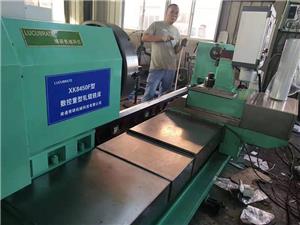
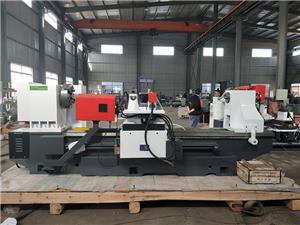
Now, let's address these headaches head-on. First, thermal stability. The solution is a machine with a closed-loop cooling system for the spindle and a granite or polymer concrete base that absorbs vibration. For instance, our TOOL GRINDING MACHINE models incorporate a dual-circuit coolant system that maintains spindle temperature within ±0.5°C, eliminating thermal drift even during marathon runs.
Second, for tool life variability, you need intelligent process control. This means real-time monitoring of grinding forces and acoustic emission sensors that detect wheel wear. When integrated with a CNC system, the machine can automatically adjust feed rates and dressing intervals. In our experience, this reduces tool life variation from ±15% to ±3%.
Third, to slash setup time, look for machines with automatic wheel changers and in-process gauging. A robotic arm can swap wheels in under 30 seconds, and a touch probe can measure tool geometry right on the machine, eliminating manual setup. Our customers report setup time reductions of up to 70%.
Real-World Transformations: Customer Stories
Let me share a few stories that illustrate the impact. In Germany, a cutting tool manufacturer, Hartmetall Präzision GmbH, faced a 12% reject rate on their micro-drills. After switching to a NANTONG LUCUBRATE TOOL GRINDING MACHINE with our thermal control package, their reject rate dropped to 1.8% within three months. Their production manager, Klaus Weber, said, "The consistency is remarkable. We've regained customer confidence and reduced rework costs by €200,000 annually."
In the United States, a medical device company, MediCut Technologies, struggled with burr formation on surgical tools. Our machine's improved rigidity and coolant delivery reduced burr height by 70%, leading to a 40% increase in tool life. Their VP of Operations, Sarah Mitchell, noted, "The machine pays for itself in six months. The quality is unmatched."
From Japan, a precision mold maker, Kato Seiki Co., Ltd., was losing time on frequent wheel dressing. With our automatic dressing system, they cut dressing frequency by 60% and improved surface finish from Ra 0.4 to Ra 0.2. Their chief engineer, Hiroshi Tanaka, commented, "We've doubled our output without adding shifts."
In Brazil, an automotive parts supplier, AutoPeças do Brasil, needed to grind complex profiles for fuel injectors. Our 5-axis machine with simultaneous interpolation delivered profile accuracy of ±5 microns, exceeding their spec. Their plant manager, Carlos Silva, said, "This machine is a game-changer. We've won contracts we couldn't touch before."
Finally, in Canada, a mining tool manufacturer, RockBiter Tools, had issues with chipping on carbide inserts. After upgrading to our machine with edge honing capability, chipping reduced by 80%, and their field failure rate fell by half. Their operations director, Mike Johnson, stated, "The ROI is clear. We're now the preferred supplier for several major mining companies."
Applications and Trusted Partnerships
Our machines are versatile, serving industries from aerospace to automotive. They excel in grinding end mills, drills, reamers, and specialized profiles. We're proud to partner with leading distributors like TechniGrind Solutions in Europe and Precision Tool Systems in North America, ensuring local support and rapid response. Our long-term collaboration with the German Tooling Association reflects our commitment to quality standards like DIN 8588 and ISO 9001.
FAQ: What Engineers and Buyers Ask
Q1: How does your machine maintain precision over long production runs? Our machine uses a hydrostatic spindle bearing system that provides high stiffness and damping. Combined with a thermal compensation model that adjusts axis positions based on temperature sensors, we maintain tolerances within ±2 microns over 8-hour shifts.
Q2: Can I integrate your machine with my existing CAM software? Absolutely. We support standard formats like STEP and IGES, and we offer post-processors for popular CAM packages like Mastercam and Siemens NX. Our control system is based on Siemens 840D sl, which is widely used in the industry.
Q3: What kind of training do you provide? We offer comprehensive on-site training for operators and programmers. Additionally, we provide a virtual training simulator that reduces learning time by 40%. Our technical support is available 24/7 via remote access.
Q4: How do you handle wheel wear compensation? Our machine uses an acoustic emission sensor that detects wheel wear in real-time. The control system automatically adjusts the grinding path and triggers a dressing cycle when necessary. This ensures consistent quality without manual intervention.
Q5: What is the typical payback period? Based on our customers' data, the payback period ranges from 8 to 18 months, depending on utilization and labor savings. For example, a job shop running three shifts can see payback in under a year.
Conclusion: Your Next Step to Grinding Excellence
Inconsistent grinding doesn't have to be your reality. By investing in a machine that prioritizes thermal stability, intelligent control, and automation, you can slash reject rates, extend tool life, and reclaim valuable production time. NANTONG LUCUBRATE MACHINERY TECHNICAL LTD. is committed to providing cutting-edge tool grinding technology backed by expert support. If you're ready to see how we can solve your specific challenges, request our technical white paper on "Optimizing Tool Grinding Processes" or schedule a consultation with our sales engineers. We're here to help you turn grinding from a nightmare into a competitive advantage.