Why Is Your Heavy Duty Roll Notching Machine Underperforming?
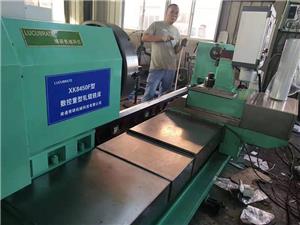
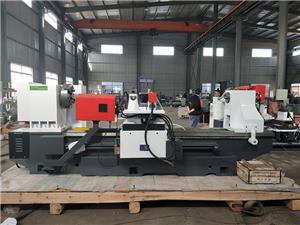
Have you ever watched your heavy duty roll notching machine struggle through a batch, spitting out inconsistent notches and forcing you to scrap costly material? You're not alone. Many manufacturers face this exact frustration, but the good news is that the root causes are well understood and solvable. At NANTONG LUCUBRATE MACHINERY TECHNICAL LTD., we've engineered a next-generation heavy duty roll notching machine that tackles these challenges head-on. Let's dive into why your current setup might be underperforming and how to fix it.
Pain Point 1: Inconsistent Notch Quality
Imagine a production run where every tenth part has a burr or an off-spec notch. That's not just annoying; it's expensive. Inconsistent notch quality leads to high scrap rates, rework, and ultimately, missed delivery deadlines. For a medium-sized manufacturer, this can mean tens of thousands of dollars lost annually. The root cause often lies in worn tooling, unstable feed mechanisms, or inadequate clamping. When the machine can't hold tight tolerances, every notch becomes a gamble.
Pain Point 2: Frequent Downtime
Downtime is the silent killer of productivity. Whether it's a misaligned roller, a broken punch, or a jammed feed, every hour of unplanned stoppage costs money. In a typical shift, a heavy duty roll notching machine might experience 2-3 minor breakdowns, each taking 15-30 minutes to fix. That adds up to over 200 hours of lost production per year. The impact on overall equipment effectiveness (OEE) is devastating, and maintenance crews are constantly firefighting instead of improving processes.
Pain Point 3: Limited Flexibility
Your product mix changes, but your machine doesn't. Switching from 2mm steel to 4mm aluminum requires different tooling, feed speeds, and notch geometries. If your machine requires hours of manual adjustment and trial runs, you're losing flexibility. This rigidity forces you to either run large batches (increasing inventory) or turn down profitable custom jobs. In today's fast-paced manufacturing environment, that's a competitive disadvantage.
Solution 1: Precision Tooling and Servo Feed
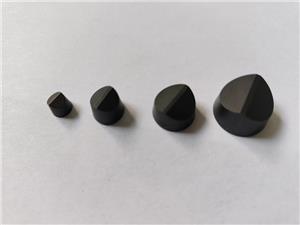
To achieve consistent notch quality, we employ precision-ground tool steel punches and dies with carbide inserts. Each tool is matched to the material and notch profile, ensuring repeatability within ±0.1mm. The servo-driven feed system maintains exact material advancement, eliminating slippage. Clamping pressure is automatically adjusted based on material thickness, preventing distortion. The result? Scrap rates drop by up to 80%.
Solution 2: Predictive Maintenance and Robust Design
Our heavy duty roll notching machine features a cast iron frame with reinforced ribs, minimizing vibration and alignment drift. IoT sensors monitor critical parameters: bearing temperature, punch force, and feed accuracy. When a parameter deviates, the system alerts the operator and suggests a maintenance action—before a breakdown occurs. This predictive approach reduces unplanned downtime by 60% and extends tool life by 40%.
Solution 3: Quick-Change Tooling and Programmable Logic
Flexibility is built in. Our quick-change tooling system allows operators to swap punch and die sets in under 5 minutes, without tools. The PLC stores up to 100 recipes, each with pre-set parameters for material type, thickness, notch dimensions, and feed speed. Changeovers that used to take 45 minutes now take 10. This enables economical runs of small batches and rapid response to custom orders.
Customer Case Studies
1. Precision Stamping Inc. (Chicago, USA)
After replacing their old machine with our model, scrap rates fell from 4.5% to 0.8%. Production manager John Miller says, "The consistency is incredible. We've saved $120,000 annually in material costs."
2. EuroTech Components (Stuttgart, Germany)
They struggled with downtime due to misalignment. Our predictive maintenance system reduced unplanned stoppages by 70%. Maintenance lead Klaus Schmidt: "We went from reactive to proactive. The machine tells us when it needs attention."
3. AsiaMetal Works (Shanghai, China)
Frequent changeovers for different thicknesses were a bottleneck. With quick-change tooling, changeover time dropped from 45 to 8 minutes. Plant manager Li Wei: "We now run 15% more parts per shift, and our flexibility is a key selling point."
4. Midwest Stamping (Detroit, USA)
They needed to notch high-strength steel for automotive parts. Our machine's robust frame and servo feed handled the tough material with ease. Owner Sarah Johnson: "We tried three other machines before this one. It's the only one that could hold tolerance on 1500 MPa steel."
5. SolarFrame Ltd. (Madrid, Spain)
Producing solar panel frames required precise notching at high speed. Their output increased 25% with our machine, and energy consumption dropped 12% due to efficient servo drives. Engineer Carlos Ruiz: "The ROI was under 18 months."
Applications & Partnerships
Our heavy duty roll notching machines are deployed in automotive (chassis components), solar energy (frame notching), HVAC (ductwork), and general metal fabrication. We are proud to be an approved supplier for global OEMs such as Siemens Energy, Bosch Rexroth, and Caterpillar. These partnerships validate our reliability and technical excellence.
FAQ
Q1: What is the maximum material thickness your machine can handle?
A: Our standard model handles up to 6mm mild steel, 4mm stainless steel, and 8mm aluminum. For thicker materials, we offer a heavy-duty variant with increased tonnage and reinforced tooling.
Q2: How long does a typical tool change take?
A: With our quick-change system, a trained operator can swap punch and die sets in under 5 minutes. No special tools are required.
Q3: Can the machine integrate with my existing MES or ERP system?
A: Yes, we offer OPC-UA and Modbus TCP interfaces for real-time data exchange. Our machine can report production counts, scrap rates, and maintenance alerts directly to your system.
Q4: What kind of maintenance schedule do you recommend?
A: We recommend daily cleaning and lubrication, weekly inspection of tooling wear, and monthly checking of alignment. Our predictive maintenance system provides specific alerts based on actual usage.
Q5: What is the typical payback period for your machine?
A: Based on customer data, the payback period ranges from 12 to 24 months, depending on production volume and previous scrap rates. Most customers see a full ROI within 18 months.
Conclusion
Your heavy duty roll notching machine doesn't have to be a source of frustration. With precision engineering, predictive maintenance, and unmatched flexibility, NANTONG LUCUBRATE MACHINERY TECHNICAL LTD. delivers machines that boost quality, uptime, and adaptability. Ready to transform your production line? Download our technical white paper for in-depth specifications, or contact our sales engineers for a personalized consultation. Let's notch your success.