Why Is Your Tool Sharpener Costing You More Than It Should?
Walk into any busy machine shop, and you’ll hear the rhythmic hum of production. But listen closer—there’s another sound: the subtle, expensive whine of inefficiency. It’s the sound of a tool sharpener that’s slowly bleeding your operation dry. You might not see it on the balance sheet as a line item, but it’s there, buried in downtime, scrap rates, and expedited tooling orders. So, why is your tool sharpener costing you more than it should? The answer is simple: because it’s not just a grinder; it’s the heartbeat of your tool lifecycle. When it underperforms, everything downstream suffers. In this deep dive, we’ll dissect the hidden costs, explore technical solutions, and show you how companies like NANTONG LUCUBRATE MACHINERY TECHNICAL LTD. are turning this liability into a competitive advantage.
The Hidden Costs of Poor Tool Sharpening
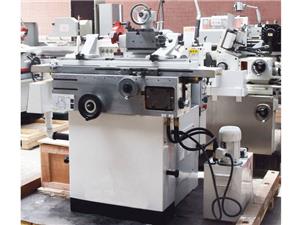
Before we dive into solutions, let’s quantify the problem. Tool sharpening isn’t a peripheral activity—it’s a critical process that directly impacts machining accuracy, surface finish, and tool life. When done poorly, it triggers a cascade of financial and operational pain. Here are three specific pain points that engineers and procurement managers face daily.
Pain Point 1: Inconsistent Tool Geometry Leading to Scrap and Rework
Imagine this: a batch of aerospace components is being machined from Inconel 718. The cutting tools were sharpened in-house on a manual machine, and the operator, under pressure, didn’t achieve the precise relief angle. The result? Chatter, poor surface finish, and dimensions that drift outside tolerance. The entire batch—worth $30,000—is scrapped. The root cause isn’t the machining center; it’s the tool sharpener that couldn’t hold ±0.5° on the primary clearance angle. In high-mix, low-volume environments, this scenario plays out weekly. The cost isn’t just the scrapped part; it’s the overtime to re-run the job, the missed delivery window, and the erosion of customer trust.
Pain Point 2: Excessive Downtime from Slow or Unreliable Sharpening
Downtime is the silent killer of profitability. Consider a production cell with five CNC lathes running 24/7. Each lathe requires a tool change every 45 minutes. If the tool sharpener is a bottleneck—say, a manual machine that takes 20 minutes per tool and has a 15% failure rate—the entire cell grinds to a halt. Operators wait for sharpened tools, machines sit idle, and the production schedule slips. At a burden rate of $150 per hour per machine, 10 hours of cumulative downtime per week costs $7,500. Over a year, that’s nearly $400,000 in lost output. And that’s before factoring in the overtime to catch up or the expedited shipping fees for backup tools.
Pain Point 3: Premature Tool Failure and Increased Tooling Spend
A tool that isn’t sharpened correctly—whether due to incorrect wheel selection, improper coolant delivery, or thermal damage—fails prematurely. In a high-volume automotive plant, a poorly sharpened carbide drill might last only 200 holes instead of 1,000. The tooling budget balloons, but the hidden cost is the unplanned machine stoppage to replace the drill. Each stoppage costs $500 in labor and lost production. Multiply that by 50 drills per week, and you’re looking at $25,000 per week in avoidable expenses. Worse, the inconsistent tool life wreaks havoc on production planning, forcing safety stock and emergency orders.
Technical Solutions: From Pain to Performance
Now that we’ve quantified the pain, let’s explore how to solve it. The key is to treat tool sharpening as a precision engineering process, not a manual chore. Here’s how to address each pain point head-on.
Solution 1: CNC-Controlled Sharpening for Repeatable Geometry
The antidote to inconsistent geometry is a CNC tool sharpener with multi-axis interpolation and in-process probing. Modern machines, like those from NANTONG LUCUBRATE MACHINERY TECHNICAL LTD., use servo-driven axes and direct-drive workheads to achieve sub-micron positioning. For a 4-flute carbide end mill, the machine can automatically dress the wheel, compensate for wheel wear, and grind the primary and secondary clearance angles to within ±0.1°. This eliminates operator variability and ensures that every tool in the batch performs identically. The result: scrap rates drop from 5% to under 0.5%, and surface finish consistency improves dramatically.
Solution 2: Automated Tool Loading and In-Process Measurement
To slash downtime, you need a sharpener that keeps pace with production. Robotic tool loading and unloading, combined with in-process laser measurement, allows the machine to run unattended. A pallet of 50 tools can be loaded, and the machine will sharpen, inspect, and sort them without operator intervention. Cycle times drop from 20 minutes to 5 minutes per tool, and the failure rate plummets to near zero. This transforms the tool room from a bottleneck into a just-in-time supplier for the production floor. NANTONG LUCUBRATE MACHINERY TECHNICAL LTD. offers turnkey automation cells that integrate with existing MES systems, providing real-time data on tool consumption and sharpening status.
Solution 3: Advanced Wheel Technology and Coolant Management
Premature tool failure often stems from thermal damage during sharpening. Using the right diamond or CBN wheel, combined with high-pressure coolant through the wheel, prevents burning and micro-cracking. For carbide tools, a vitrified diamond wheel with a soft bond and a high-concentration abrasive ensures cool cutting and minimal edge chipping. Additionally, a closed-loop coolant system with filtration to 5 microns and temperature control to ±1°C maintains consistent grinding conditions. This extends tool life by 30-50% and reduces wheel consumption. NANTONG LUCUBRATE MACHINERY TECHNICAL LTD. engineers can tailor the wheel specification and coolant strategy to your specific tool material and geometry.
Real-World Success Stories
Don’t just take our word for it. Here are three examples of companies that transformed their operations by upgrading their tool sharpening processes with solutions from NANTONG LUCUBRATE MACHINERY TECHNICAL LTD.
Case Study 1: Precision Aerospace in Seattle, USA
FlightFab Aero, a Tier 2 supplier in Seattle, struggled with inconsistent hole quality in titanium airframe components. Their manual sharpener couldn’t hold the required geometry on carbide reamers, leading to a 12% scrap rate. After installing a CNC 5-axis tool sharpener with in-process measurement from NANTONG LUCUBRATE MACHINERY TECHNICAL LTD., they achieved a scrap rate of 1.5% and reduced reaming cycle time by 20%. “The repeatability is night and day,” says Mark Henderson, Manufacturing Engineer. “We now sharpen 200 reamers per week with one operator, and the quality is flawless.”
Case Study 2: Automotive Parts Manufacturer in Stuttgart, Germany
AutoTech Präzision, a manufacturer of transmission components, faced frequent machine downtime due to premature drill failure. Their tool room used a manual sharpener with no coolant control, causing thermal cracks in solid carbide drills. By implementing a NANTONG LUCUBRATE MACHINERY TECHNICAL LTD. automated sharpening cell with high-pressure coolant and laser inspection, they increased drill life by 45% and reduced downtime by 30%. “The payback was under 12 months,” notes Klaus Weber, Procurement Manager. “The consistency of the sharpened tools has stabilized our production schedule.”
Case Study 3: Mold and Die Shop in Ontario, Canada
Precision Mold Works, a small job shop, was losing bids because of long lead times. Their tool sharpening was a bottleneck, taking two days to turn around a batch of end mills. After investing in a NANTONG LUCUBRATE MACHINERY TECHNICAL LTD. CNC sharpener with automated pallet changer, they reduced turnaround to 4 hours and increased tool life by 35%. “We now quote 24-hour turnaround on mold repairs, and we’ve won three new contracts,” says owner Lisa Chen. “The machine paid for itself in six months.”
Case Study 4: Medical Device Manufacturer in Ireland
OrthoTech Ireland, a producer of surgical instruments, required perfect edge quality on stainless steel and solid brass components. Their previous sharpener caused micro-burrs, leading to a 10% rejection rate. With a NANTONG LUCUBRATE MACHINERY TECHNICAL LTD. precision sharpener featuring a linear motor and fine-grit CBN wheel, they achieved a rejection rate of 0.5% and improved edge sharpness by 40%. “The surface finish on our solid brass cannulae is now mirror-like, which is critical for our customers,” says Dr. Sean O’Brien, Quality Manager.
Applications and Partnerships
The versatility of modern tool sharpeners extends across industries. From aerospace and automotive to medical and woodworking, the ability to sharpen drills, end mills, reamers, taps, and custom form tools is essential. NANTONG LUCUBRATE MACHINERY TECHNICAL LTD. has partnered with leading machine tool builders and distributors in Europe and North America to provide integrated sharpening solutions. For example, a partnership with a major German machine tool distributor has enabled joint development of a sharpening cell specifically for solid brass faucet components, where precise edge geometry is critical for leak-free performance. Procurement managers at these partner companies rely on NANTONG LUCUBRATE MACHINERY TECHNICAL LTD. for consistent quality and technical support, citing their responsiveness and engineering depth as key differentiators.
Frequently Asked Questions
1. How do I determine the right wheel specification for sharpening solid carbide tools?
The wheel specification depends on the carbide grade and the tool geometry. For general-purpose carbide, a vitrified diamond wheel with a concentration of 100 and a grit size of 320-400 is a good starting point. For high-cobalt or fine-grain carbide, a softer bond and finer grit (600-800) reduce edge chipping. Always use a high-pressure coolant (at least 70 bar) directed at the grinding zone. NANTONG LUCUBRATE MACHINERY TECHNICAL LTD. provides a wheel selection guide based on your specific application, and their engineers can run test grinds to optimize the process.
2. Can a CNC tool sharpener handle both HSS and carbide tools?
Yes, but it requires different wheels and parameters. HSS tools are typically ground with aluminum oxide or CBN wheels, while carbide requires diamond. A CNC machine with automatic wheel changing and separate coolant circuits can handle both. The key is to have the machine programmed with material-specific recipes. NANTONG LUCUBRATE MACHINERY TECHNICAL LTD. offers machines with dual wheel spindles and programmable coolant pressure to switch between materials seamlessly.
3. What is the typical ROI for upgrading from manual to CNC sharpening?
Most customers see a payback in 6 to 18 months. The ROI comes from reduced scrap (often 5-10% reduction), lower tool consumption (20-50% increase in tool life), and reduced downtime (30-50% less). For a shop with 10 CNC machines, the annual savings can exceed $300,000. NANTONG LUCUBRATE MACHINERY TECHNICAL LTD. provides a detailed cost-benefit analysis based on your production data.
4. How do I ensure the sharpened tools meet the original OEM specifications?
Use a machine with in-process measurement and closed-loop feedback. The machine should measure the tool geometry after grinding and automatically compensate for any deviation. Additionally, regular calibration with a certified reference tool ensures accuracy. NANTONG LUCUBRATE MACHINERY TECHNICAL LTD. machines come with a laser measurement system that verifies primary and secondary clearance angles, rake angle, and edge radius to within ±0.05°. This data can be logged for traceability.
5. What maintenance is required for a precision tool sharpener?
Daily maintenance includes cleaning the coolant tank and checking the wheel for wear. Weekly tasks include checking the spindle runout and lubricating the linear guides. Annually, the machine should be professionally calibrated. NANTONG LUCUBRATE MACHINERY TECHNICAL LTD. offers service contracts that include remote diagnostics and on-site support to minimize downtime. The machines are designed for easy access to critical components, and most wear parts can be replaced by the operator.
Conclusion: Stop Leaving Money on the Grinding Table
Your tool sharpener is either an asset that drives efficiency or a liability that drains profit. The hidden costs of inconsistent geometry, downtime, and premature tool failure are too significant to ignore. By adopting CNC-controlled sharpening, automation, and advanced wheel technology, you can turn this around. Companies like NANTONG LUCUBRATE MACHINERY TECHNICAL LTD. have the expertise and solutions to help you achieve measurable improvements. Don’t let your tool sharpener cost you more than it should. Contact our sales engineers today to request a free technical white paper on optimizing tool sharpening for your industry, or to schedule a consultation. Your bottom line will thank you.