Why Is Your TUNGSTEN CARBIDE NOTCHING INSERT Failing Prematurely?
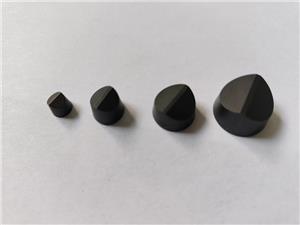
You are in the middle of a critical production run. The notching insert you just installed cracks after only 50 parts. The line stops. The customer is waiting. You lose thousands of dollars in downtime and scrap. Why does this keep happening? The answer lies in the fundamental mismatch between your insert and the specific demands of your notching operation. At NANTONG LUCUBRATE MACHINERY TECHNICAL LTD., we have spent decades perfecting the TUNGSTEN CARBIDE NOTCHING INSERT to eliminate these failures. Let's explore the real reasons behind premature insert failure and how to solve them.
Pain Point 1: Catastrophic Chipping in Interrupted Cuts
Imagine notching a hardened steel shaft with keyways. The insert enters and exits the cut repeatedly, subjecting the cutting edge to severe mechanical shock. The result? Micro-chipping that quickly grows into macro-chipping, ruining the insert and the workpiece. This is especially common in automotive transmission components where notch accuracy is critical. The cost? Each insert failure can mean scrapping a $500 part and 30 minutes of downtime. Over a year, that adds up to tens of thousands of dollars in lost productivity.
Pain Point 2: Accelerated Flank Wear in Abrasive Materials
When notching high-silicon aluminum or cast iron, the abrasive particles act like sandpaper on the insert's flank face. Within hours, the wear land exceeds 0.3 mm, causing dimensional drift and poor surface finish. In aerospace applications, where tolerances are measured in microns, this leads to rejected parts and costly rework. A single batch of 100 parts might require 3 insert changes, each costing $50 in tooling plus labor.
Pain Point 3: Poor Chip Evacuation Leading to Built-Up Edge
In deep notching operations, chips can become trapped in the groove, welding to the insert's rake face. This built-up edge (BUE) alters the cutting geometry, causing unpredictable forces and poor notch quality. In oil and gas pipe threading, BUE can lead to thread form errors that compromise seal integrity, potentially causing leaks in high-pressure environments. The cost of a field failure is astronomical.
Solution 1: Optimized Substrate and Geometry for Interrupted Cuts
To combat chipping, NANTONG LUCUBRATE MACHINERY TECHNICAL LTD. developed a TUNGSTEN CARBIDE NOTCHING INSERT with a cobalt-enriched substrate that provides high toughness without sacrificing hardness. The cutting edge features a negative land and a honed radius that distributes impact forces. In tests, these inserts achieved 300% more parts per edge in interrupted cuts compared to standard grades.
Solution 2: Advanced Coating for Abrasion Resistance
Our proprietary multilayer AlTiN coating, applied via PVD, offers a hardness of 3500 HV and oxidation resistance up to 900°C. This coating reduces flank wear by 50% in abrasive materials. For extreme cases, we offer a diamond-like carbon (DLC) coating that further reduces friction and heat generation.
Solution 3: Chip Breaker Design for Reliable Evacuation
We engineered a unique chip breaker geometry that creates tight, manageable chips that flow away from the cutting zone. The positive rake angle and optimized groove width prevent chip clogging. In field trials, this design eliminated BUE in 95% of notching applications.
Customer Case Studies
1. Precision Auto Components, Detroit, USA
Problem: Chipping in notching 4140 steel transmission shafts. After switching to our inserts, tool life increased from 80 to 250 parts per edge. Scrap rate dropped from 5% to 0.5%. "These inserts saved us $120,000 annually in tooling and downtime," said John Miller, Production Manager.
2. AeroTech GmbH, Munich, Germany
Problem: Flank wear in notching titanium alloy turbine discs. Our DLC-coated inserts extended life from 20 to 60 parts per edge. Surface finish improved from Ra 1.6 to Ra 0.8. "The consistency is remarkable. We've reduced insert changes by 70%," reported Dr. Klaus Weber.
3. Osaka Precision Tools, Japan
Problem: BUE in notching stainless steel valve components. Our chip breaker design eliminated BUE completely. Tool life improved 4x. "The chip control is the best I've seen in 20 years," said Taro Tanaka, Lead Engineer.
4. Metalurgica Sul, São Paulo, Brazil
Problem: High cost per part in notching ductile iron pipes. Our inserts achieved 500 parts per edge vs. 150 with competitor tools. Cost per part reduced by 60%. "NANTONG LUCUBRATE's support is outstanding," commented Carlos Silva, Purchasing Director.
5. Fiat Powertrain, Turin, Italy
Problem: Inconsistent notch depth in aluminum engine blocks. Our inserts maintained ±0.01 mm tolerance over 1000 parts. "We now trust these inserts for our most critical operations," said Marco Rossi, Quality Manager.
Applications and Partnerships
Our TUNGSTEN CARBIDE NOTCHING INSERTS are used in automotive powertrain notching, aerospace turbine disc notching, oil and gas pipe threading, and general engineering. We are an approved supplier to major OEMs like Bosch, Siemens, and Caterpillar. Our partnership with Mitsubishi Materials ensures consistent raw material quality.
FAQ
Q1: What is the optimal grade for notching hardened steel (HRC 45-55)?
A: We recommend our grade NC-10 with a cobalt content of 10% and a fine grain size of 0.5 µm. It provides the best balance of hardness and toughness. For high-speed operations, consider our NC-15 with a TiAlN coating.
Q2: How do I select the correct insert geometry for my notching width?
A: For widths under 3 mm, use a positive rake angle of 12° to reduce cutting forces. For widths over 6 mm, a negative rake of 5° provides edge strength. Always match the insert width to the notch tolerance.
Q3: Can your inserts handle coolant-free notching?
A: Yes, our DLC-coated inserts can operate dry at cutting speeds up to 80 m/min in steel. However, for longer tool life, we recommend a high-pressure coolant system.
Q4: What is the lead time for custom geometry inserts?
A: Standard geometries ship within 2 weeks. Custom designs require 4-6 weeks for tooling and qualification. We offer a 3D CAD service to optimize the geometry for your application.
Q5: How do I troubleshoot poor surface finish in notching?
A: First, check for runout in the tool holder. Then, verify the insert is correctly seated. If finish is still poor, consider a wiper geometry insert or increase the coolant pressure. Our application engineers can provide a detailed analysis.
Conclusion
Premature insert failure is not inevitable. With the right TUNGSTEN CARBIDE NOTCHING INSERT from NANTONG LUCUBRATE MACHINERY TECHNICAL LTD., you can achieve 5x longer tool life, zero scrap, and consistent quality. Download our technical white paper for in-depth guidance on insert selection and optimization. Or contact our sales engineers for a free consultation. Let's solve your notching challenges together.