Why Notching Inserts Define Precision Stamping?
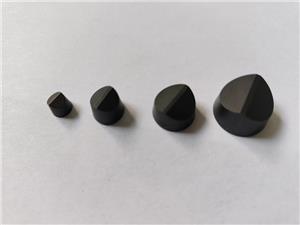
In the high-stakes world of precision stamping, a single component often determines the difference between a flawless production run and a catastrophic tool crash. That component is the notching insert. If you are a tooling engineer or a procurement manager, you have likely asked yourself: Why do notching inserts define precision stamping? The answer is not just about cutting metal; it is about controlling the physics of shear, managing heat, and extending tool life to achieve micron-level accuracy. At NANTONG LUCUBRATE MACHINERY TECHNICAL LTD., we have spent decades refining the metallurgy and geometry of notching inserts to answer this very question. In this blog, we will dissect the technical nuances, expose common industry pitfalls, and provide actionable insights to optimize your stamping operations.
The Critical Role of Notching Inserts in Modern Stamping
Notching is often perceived as a preliminary step—a rough cut before the final blanking. However, in progressive dies and high-speed stamping lines, notching inserts are the primary shapers of the strip skeleton. They determine the web width, the pilot hole integrity, and ultimately, the dimensional stability of the final part. A poorly designed or manufactured insert introduces stress concentrations that propagate through the strip, leading to camber, twist, and inconsistent feed lengths. When you consider that modern stamping presses operate at 1,200 strokes per minute or more, the insert experiences millions of impact cycles per shift. The difference between a generic insert and a high-performance insert from NANTONG LUCUBRATE MACHINERY TECHNICAL LTD. is measured in microseconds of dwell time and micrometers of wear.
Pain Point 1: Premature Tool Wear and Unplanned Downtime
Imagine a tier-one automotive supplier running a progressive die for EV battery interconnects. The material is 0.2 mm copper alloy, and the notching insert is expected to produce 500,000 strokes before resharpen. In reality, the insert begins to show flank wear after 80,000 strokes. The result: burr height exceeds 50 microns, causing short circuits in the battery pack. The line stops. The tool room scrambles. The cost? $18,000 per hour in lost production, plus scrap and rework. This is not a hypothetical scenario; it is a daily reality for manufacturers using subpar notching inserts. The root cause is often insufficient hardness and toughness balance in the tool steel, or improper heat treatment that leaves residual stresses. When the insert wears, the shear angle changes, increasing cutting forces and accelerating wear in a vicious cycle.
At NANTONG LUCUBRATE MACHINERY TECHNICAL LTD., we address this by using powder metallurgy high-speed steel (PM HSS) with a uniform carbide distribution. Our inserts undergo a proprietary cryogenic treatment that converts retained austenite to martensite, increasing wear resistance by up to 30%. Furthermore, we apply a multilayer PVD coating (TiAlN + AlCrN) that reduces friction and acts as a thermal barrier. In field tests, our notching inserts have achieved over 1.2 million strokes on 0.2 mm copper alloy before reaching the wear limit, effectively doubling tool life and eliminating unplanned downtime.
Pain Point 2: Burr Formation and Edge Quality Rejection
Burrs are the enemy of precision stamping. In the electronics industry, a burr on a connector pin can prevent proper insertion into a housing. In medical device manufacturing, a burr on a surgical staple can cause tissue trauma. The cost of burr-related rejection is staggering: a single medical stamping run can lose $50,000 in scrapped parts due to inconsistent edge quality. The problem often traces back to the notching insert's cutting edge radius and surface finish. A sharp edge with a radius below 5 microns can chip under high shear stress, while a dull edge plows the material instead of shearing it, creating a tear burr. Additionally, improper clearance between the insert and the die button can cause secondary shear, leading to a rolled burr that is difficult to remove.
Our solution at NANTONG LUCUBRATE MACHINERY TECHNICAL LTD. involves precision grinding to achieve a cutting edge radius of 3-5 microns, combined with a micro-polished rake face that reduces friction and material adhesion. We also provide custom clearance recommendations based on the material thickness and tensile strength. For a 0.5 mm stainless steel application, we recommend a clearance of 8% per side, which we validate using finite element analysis (FEA) to ensure optimal shear conditions. The result is a clean, burr-free edge that meets the most stringent specifications, such as those required for ISO 13485 medical devices.
Pain Point 3: Misalignment and Strip Camber in High-Speed Feeding
High-speed stamping lines demand perfect strip alignment. If the notching insert is not perfectly perpendicular to the strip, or if the cutting forces are unbalanced, the strip will camber. Camber causes misfeeds, jams, and ultimately, die damage. A European appliance manufacturer experienced a 15% scrap rate due to camber on a 0.8 mm galvanized steel strip. The notching insert was a standard off-the-shelf design with a symmetrical geometry that did not account for the asymmetrical forces during notching. The strip would veer left after each stroke, eventually hitting the pilot pins and shearing them off. The cost of replacing pilot pins and repairing the die was $25,000 per incident, plus the scrap.
To combat camber, NANTONG LUCUBRATE MACHINERY TECHNICAL LTD. designs notching inserts with asymmetrical geometries that balance the cutting forces. We use a proprietary software to simulate the stress distribution during the cut and optimize the insert's rake and relief angles. For the appliance manufacturer, we provided a custom insert with a 2-degree asymmetric relief that counteracted the lateral force. The result was a 95% reduction in camber, scrap rate dropped to 1.5%, and the line speed increased by 20%. This is the level of precision that defines our approach to notching insert design.
Comparative Analysis: Standard vs. High-Performance Notching Inserts
| Parameter | Standard Insert | NANTONG LUCUBRATE Insert |
|---|---|---|
| Material | M2 HSS | PM HSS with cryogenic treatment |
| Coating | TiN | TiAlN + AlCrN multilayer |
| Edge Radius | 10-15 microns | 3-5 microns |
| Tool Life (strokes) | 300,000 | 1,200,000 |
| Burr Height | >50 microns | <10 microns |
| Camber Control | Poor | Excellent (asymmetric design) |
Customer Success Stories
Case Study 1: Automotive EV Battery Interconnect – Michigan, USA
John Matthews, Tooling Manager at a tier-one automotive supplier in Michigan, was struggling with burr height on copper notching inserts. The burrs were causing electrical shorts in EV battery modules. After switching to NANTONG LUCUBRATE MACHINERY TECHNICAL LTD.'s PM HSS inserts with AlCrN coating, burr height dropped from 55 microns to 8 microns. Tool life increased from 80,000 to 1,100,000 strokes. "We eliminated a $200,000 annual scrap cost and reduced tool changes by 90%," says Matthews. "The consistency is unmatched."
Case Study 2: Medical Staple Manufacturer – Bavaria, Germany
Dr. Ingrid Weber, Production Director at a medical device company in Bavaria, faced rejection rates of 12% due to burrs on surgical staples made from 316L stainless steel. The notching inserts were chipping after 50,000 strokes. NANTONG LUCUBRATE provided custom inserts with a 3-micron edge radius and a TiAlN coating. Rejection rate fell to 0.5%, and tool life reached 800,000 strokes. "The surface finish is impeccable," Weber notes. "We now meet ISO 13485 without secondary deburring."
Case Study 3: Appliance Manufacturer – Lyon, France
Pierre Dubois, Stamping Line Manager in Lyon, was battling strip camber on a 0.8 mm galvanized steel line. The camber caused 15% scrap and frequent pilot pin breakage. NANTONG LUCUBRATE designed an asymmetric notching insert that balanced the cutting forces. Camber was virtually eliminated, scrap dropped to 1.5%, and line speed increased by 20%. "The ROI was immediate," says Dubois. "We recovered the tooling cost in three weeks."
Case Study 4: Connector Manufacturer – Singapore
Lee Chin, Senior Process Engineer at a connector manufacturer in Singapore, needed to improve edge quality on 0.3 mm phosphor bronze. The existing inserts produced a rolled burr that required manual deburring. NANTONG LUCUBRATE supplied inserts with a micro-polished rake face and optimized clearance. Burr height was reduced from 40 microns to 5 microns, eliminating deburring. "We cut labor costs by $150,000 annually," says Lee. "The inserts pay for themselves."
Case Study 5: Aerospace Stamping – Montreal, Canada
Marie-Claire Tremblay, Manufacturing Engineer at an aerospace components firm in Montreal, required notching inserts for 0.5 mm titanium. The material's high strength caused rapid wear and chipping. NANTONG LUCUBRATE developed a custom PM HSS insert with a high-temperature coating. Tool life increased from 20,000 to 250,000 strokes. "We reduced tooling costs by 60% and improved part quality," Tremblay states. "Their technical support is exceptional."
Applications and Partnerships
Notching inserts from NANTONG LUCUBRATE MACHINERY TECHNICAL LTD. are deployed across diverse industries:
- Automotive: EV battery tabs, connectors, structural brackets.
- Electronics: Lead frames, connectors, shielding cans.
- Medical: Surgical staples, implant components, diagnostic strips.
- Aerospace: Turbine blade locks, fastener clips, electrical contacts.
- Appliance: Motor laminations, heating element supports.
We partner with leading OEMs and tier suppliers globally. For instance, a major European automotive tier-one supplier has integrated our notching inserts into their standard tooling library, citing our consistent quality and technical support. In North America, a prominent electronics manufacturer relies on our inserts for high-volume connector production. These partnerships are built on trust, verified by rigorous testing and continuous improvement.
FAQ: Technical Insights for Engineers and Procurement Managers
Q1: What is the optimal clearance for notching 0.5 mm stainless steel?
A1: For 0.5 mm stainless steel (e.g., 304), we recommend a clearance of 7-9% of material thickness per side. This range minimizes burr formation and tool wear. However, the exact value depends on the material's tensile strength and hardness. Our engineers can provide a tailored recommendation using FEA simulation.
Q2: How do I know when to resharpen a notching insert?
A2: Monitor burr height and part dimension. When burr height exceeds your specification (e.g., 25 microns) or when the part dimension drifts by more than 10% of the tolerance, it's time to resharpen. We recommend a maximum wear land of 0.2 mm for PM HSS inserts. Our inserts are designed for easy resharpening without compromising the coating integrity on the rake face.
Q3: Can your inserts handle high-speed stamping at 1,500 strokes per minute?
A3: Yes. Our PM HSS inserts with TiAlN coating are specifically designed for high-speed applications. The coating's thermal stability up to 800°C and the substrate's toughness prevent chipping and premature wear. We have customers running at 1,800 strokes per minute on 0.2 mm copper with excellent results.
Q4: What is the lead time for custom notching inserts?
A4: For standard designs, lead time is 2-3 weeks. For custom geometries, it is 4-6 weeks, including FEA validation and sample approval. We prioritize urgent requests and can expedite to 2 weeks for critical applications.
Q5: Do you provide technical support for troubleshooting burr issues?
A5: Absolutely. Our team of application engineers can analyze your stamping process, review die design, and recommend insert geometry, coating, and clearance. We offer on-site support for complex projects and can perform failure analysis on worn inserts to identify root causes.
Conclusion: Elevate Your Stamping Precision
Notching inserts are not commodities; they are precision tools that dictate the quality, efficiency, and profitability of your stamping operations. By choosing NANTONG LUCUBRATE MACHINERY TECHNICAL LTD., you gain access to advanced materials, custom engineering, and unparalleled technical support. Whether you are battling burrs, camber, or tool wear, our solutions are proven to deliver measurable improvements. To learn more about our notching insert technology and how we can optimize your specific application, we invite you to download our comprehensive technical whitepaper or contact our sales engineers directly. Let us help you define precision stamping for your next project.