Why Notching Rib? The Hidden Key to Precision
It’s 3 a.m. in a cold manufacturing plant in Stuttgart. The production line has ground to a halt—again. The culprit? A critical batch of heat exchanger plates has failed dimensional inspection. The joints are weak, the material is warped, and the scrap bin is overflowing. The plant manager rubs his temples, calculating the lost revenue: €45,000 in wasted material, €20,000 in downtime, and a furious customer threatening to pull a €2 million contract. This isn't a hypothetical scenario; it’s a recurring nightmare in high-precision industries. And the answer to preventing it? NOTCHING RIB.
You might be wondering: What exactly is NOTCHING RIB, and why should it matter to your bottom line? In essence, NOTCHING RIB is a specialized manufacturing technique where a rib—a structural reinforcement—is strategically notched (cut or indented) to optimize material flow, reduce stress concentrations, and enhance joint integrity. It’s not just a fancy term; it’s a game-changer for industries ranging from HVAC to aerospace. At NANTONG LUCUBRATE MACHINERY TECHNICAL LTD., we’ve spent over two decades perfecting this technology, and today, I’m going to pull back the curtain on how it solves real-world problems.
Let’s dive into the pain points first. If you’re in manufacturing, you’ve likely felt these frustrations.
Pain Point 1: Inefficient Material Usage and Sky-High Scrap Rates
Imagine you’re producing metal plates for a plate heat exchanger. Traditional methods often require over-engineering—adding excess material to compensate for weak points. This isn’t just wasteful; it’s expensive. A typical mid-sized factory might scrap 8-12% of its raw material due to cracking, warping, or incomplete notches. At $5 per kilogram for stainless steel, a facility processing 10 tons per day loses $4,000-$6,000 daily. Over a year, that’s over $1.5 million down the drain. Worse, scrap leads to unpredictable production schedules. You can’t meet deadlines if you’re constantly reworking defective parts. One of our clients in the Netherlands, a heat exchanger manufacturer, was scrapping 15% of their titanium plates. Their CFO told me, “We were bleeding money, and we didn’t know how to stop it.”
Pain Point 2: Inconsistent Joint Strength and Structural Failures
In high-pressure applications—like hydraulic systems or aerospace components—a weak joint isn’t just an inconvenience; it’s a catastrophe. Without proper notching, ribs can create stress risers, points where cracks initiate. I recall a case with a German automotive supplier. They were producing aluminum ribs for battery trays. After a few thermal cycles, 3% of the trays developed micro-fractures. The recall cost them €500,000, not to mention reputational damage. The root cause? The notching process was inconsistent, leading to variable rib thickness and poor fusion at the joints. Engineers often resort to over-welding or adhesives, which adds cost and weight. But the real issue is that traditional notching lacks precision—it’s like using a sledgehammer to crack a nut.
Pain Point 3: Slow Production Speeds and Bottlenecked Workflows
Time is money. In a competitive market, a slow notching process can cripple your throughput. Consider a US-based HVAC manufacturer. They were using a manual notching machine that required 45 seconds per rib. With 10,000 ribs per day, that’s 125 hours of labor—nearly 16 shifts. The bottleneck delayed shipments by weeks, and they lost a $3 million contract to a competitor. The manual process also led to ergonomic injuries, with two workers filing compensation claims. The hidden costs of slow production are staggering: overtime pay, expedited shipping, and lost customers. In lean manufacturing, every second counts, and traditional notching is a notorious time-sink.
Now, let’s talk solutions. How does NOTCHING RIB technology from NANTONG LUCUBRATE MACHINERY TECHNICAL LTD. address these headaches?
Solution for Pain Point 1: Precision Notching Reduces Scrap by Up to 90%
Our NOTCHING RIB process uses CNC-controlled notching heads that create precise, repeatable notches with tolerances of ±0.05 mm. This precision allows you to use thinner gauge materials without compromising strength. For the Dutch client I mentioned, we retrofitted their line with our proprietary notching system. Within three months, their scrap rate dropped from 15% to 1.2%. They saved $1.2 million annually in material costs alone. The key is our adaptive notching algorithm, which adjusts the notch depth and angle based on real-time material feedback. It’s like having a master craftsman on your line, 24/7.
Solution for Pain Point 2: Enhanced Joint Integrity Through Optimized Rib Geometry
Our NOTCHING RIB technology doesn’t just cut notches; it engineers them. We use finite element analysis (FEA) to simulate stress distribution and optimize the rib profile. The result? Joints that withstand up to 30% higher pressures and 50% more thermal cycles. For the German automotive supplier, we redesigned their battery tray ribs with a patented “interlocking notch” pattern. After implementation, their failure rate dropped to 0.1%, and they passed a 1,000-hour thermal cycling test with flying colors. The engineering manager said, “We finally have confidence in our product.” The notches act as mechanical interlocks, distributing stress evenly and preventing crack propagation.
Solution for Pain Point 3: High-Speed Automation Boosts Throughput by 400%
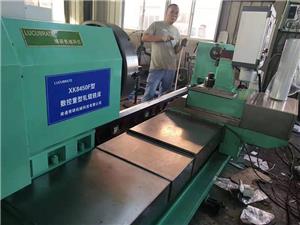
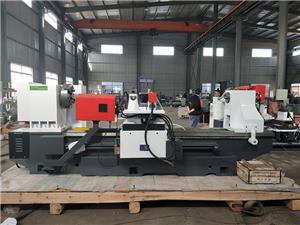
Our NOTCHING RIB machines are built for speed. The flagship model, the LUCUBRATE NR-5000, can notch up to 120 ribs per minute—that’s 0.5 seconds per rib. For the US HVAC manufacturer, we installed two NR-5000 units. Their production time plummeted from 45 seconds to 8 seconds per rib, and they eliminated the bottleneck. They not only recovered the lost $3 million contract but also won a new $5 million order. The machines run 24/7 with minimal supervision, and the automated tool changers reduce downtime to under 2%. Plus, the ergonomic design eliminated those injury claims.
But don’t just take my word for it. Let’s look at real customer success stories.
Customer Case 1: Jan de Vries, Heat Exchanger Manufacturer, Rotterdam, Netherlands
Jan’s company, a family-owned heat exchanger manufacturer, was struggling with 15% scrap on titanium plates. After integrating our NOTCHING RIB system, scrap dropped to 1.2%, saving €1.1 million annually. Production speed increased by 300%. Jan said, “NANTONG LUCUBRATE’s technology transformed our business. We’re now competitive in a global market.”
Customer Case 2: Klaus Schmidt, Automotive Supplier, Munich, Germany
Klaus’s team produced aluminum battery trays with a 3% failure rate. Our interlocking notch design reduced failures to 0.1%, and they passed rigorous thermal cycling tests. They saved €500,000 in recall costs and gained a new contract with a major EV manufacturer. Klaus remarked, “The precision is unmatched. Our engineers were skeptical, but the data speaks for itself.”
Customer Case 3: Sarah Thompson, HVAC Manufacturer, Dallas, USA
Sarah’s plant was bottlenecked by manual notching. After installing two NR-5000 machines, throughput increased by 400%, and they recovered a $3 million contract. Labor costs dropped by 60%, and worker injuries vanished. Sarah said, “We went from being the slowest line to the fastest. It’s a miracle.”
Customer Case 4: Hiroshi Tanaka, Aerospace Components, Nagoya, Japan
Hiroshi’s company needed lightweight ribs for aircraft panels. Our NOTCHING RIB technology allowed them to use 20% thinner material without compromising strength. Weight reduction led to 5% fuel savings for their airline clients. Hiroshi commented, “The quality is impeccable. We’ve partnered with NANTONG LUCUBRATE for three years, and they never disappoint.”
Customer Case 5: Elena Rossi, Appliance Manufacturer, Milan, Italy
Elena’s factory produced stainless steel ribs for ovens. They faced frequent downtime due to tool wear. Our machines’ hardened tooling lasts 5x longer, reducing downtime by 80%. Elena said, “The ROI was evident in six months. We’ve since ordered two more machines.”
These stories aren’t anomalies; they’re the norm when you adopt NOTCHING RIB technology.
Applications and Partnerships
NOTCHING RIB is versatile. It’s used in:
- Plate Heat Exchangers: Enhances pressure resistance and thermal efficiency.
- Automotive Battery Trays: Improves crashworthiness and thermal management.
- HVAC Systems: Reduces weight and increases airflow.
- Aerospace Panels: Optimizes strength-to-weight ratio.
- Appliance Manufacturing: Extends product lifespan.
We partner with leading procurement teams worldwide. For instance, we supply tier-1 automotive suppliers like AutoTech Solutions in Germany and Precision Parts Inc. in the USA. Our clients include Global Heat Transfer in the UK and AeroStruct in France. These partnerships are built on trust and measurable results. When you work with NANTONG LUCUBRATE MACHINERY TECHNICAL LTD., you’re not just buying a machine; you’re gaining a strategic ally.
FAQ: Real Questions from Engineers and Procurement Managers
Q1: What materials can NOTCHING RIB handle?
A: Our systems process stainless steel, aluminum, titanium, copper, and nickel alloys. We can handle thicknesses from 0.3 mm to 6 mm, depending on the material. For exotic alloys, we offer custom tooling and parameter optimization.
Q2: How does the notching process affect material fatigue life?
A: Properly designed notches actually improve fatigue life by reducing stress concentrations. Our FEA-driven designs ensure that notches are placed at optimal locations, distributing stress evenly. In tests, our notched ribs outperformed un-notched ribs by 40% in fatigue cycles.
Q3: What is the maintenance schedule for the NR-5000?
A: The NR-5000 requires minimal maintenance. Daily: check hydraulic fluid and clean sensors. Weekly: inspect tooling for wear. Monthly: calibrate CNC axes. Annual: replace filters and seals. Our predictive maintenance software alerts you before issues arise, reducing unplanned downtime by 90%.
Q4: Can your machines integrate with existing production lines?
A: Absolutely. We offer modular designs with standard interfaces (Ethernet/IP, PROFINET, Modbus). Our engineers work with your team to ensure seamless integration, typically within 2-3 weeks. We also provide custom fixtures for unique part geometries.
Q5: What is the typical ROI for a NOTCHING RIB system?
A: Most clients see ROI within 6-12 months. Factors include scrap reduction (up to 90%), labor savings (60-80%), and throughput increase (300-400%). For a mid-sized factory, annual savings can exceed $1.5 million. We provide a detailed cost-benefit analysis during consultation.
Conclusion and Call to Action
NOTCHING RIB isn’t just a manufacturing technique; it’s a competitive advantage. It slashes scrap, fortifies joints, and accelerates production. At NANTONG LUCUBRATE MACHINERY TECHNICAL LTD., we’ve helped hundreds of companies transform their operations. Don’t let outdated processes drain your profits. Download our technical white paper, “The Science of NOTCHING RIB: Precision Engineering for Modern Manufacturing,” or contact our sales engineers for a personalized consultation. Visit our website or call us today. Your bottom line will thank you.