Why PCD Marking Tools Outperform in Harsh Environments?
Imagine a bustling automotive plant in Detroit, where a new batch of engine blocks is moving down the line. The operator notices that the marking tools are leaving shallow, inconsistent marks—barely legible. Production halts. Scrap rates spike. The root cause? Conventional marking tools are failing under the extreme conditions of high-volume, abrasive environments. This is not an isolated incident. Across industries, from aerospace to medical devices, the demand for durable, precise marking tools has never been higher. Enter PCD (Polycrystalline Diamond) marking tools—the unsung heroes of harsh environment marking. In this blog, we'll explore why PCD marking tools outperform traditional alternatives, diving deep into the technical and practical reasons that make them indispensable for high-stakes manufacturing.
1. The Pain Points: Where Conventional Tools Fall Short
Before we unveil the solution, let's examine the specific challenges that plague marking operations in harsh environments. These pain points are not just inconveniences—they translate into significant costs, delays, and quality issues.

1.1 Abrasive Wear: The Silent Productivity Killer
In industries like automotive and heavy machinery, marking tools often encounter abrasive materials such as cast iron, hardened steel, and composite alloys. Conventional carbide or high-speed steel tools wear out rapidly, leading to inconsistent mark depth and legibility. A Tier 1 automotive supplier in Germany reported that their carbide marking pins lasted only 500 cycles before requiring replacement, causing frequent downtime and an annual scrap cost of over €200,000. The scenario is all too familiar: a tool that starts sharp and precise becomes dull and unreliable, forcing operators to slow down or stop production entirely.
1.2 Thermal Degradation: When Heat Destroys Precision
High-speed marking operations generate significant heat, especially when marking hard materials. Conventional tool materials soften at elevated temperatures, leading to deformation and rapid wear. In aerospace manufacturing, where parts are marked with traceability codes, thermal degradation can cause illegible marks that fail quality audits. A case in point: a US-based aerospace component manufacturer experienced a 15% rejection rate due to poor mark quality on titanium parts, costing approximately $500,000 annually in rework and scrap.
1.3 Chemical Corrosion: The Hidden Threat
In chemical processing and medical device manufacturing, marking tools are exposed to corrosive coolants, cleaning agents, and sterilization processes. Standard tool materials corrode, leading to contamination and premature failure. A medical device company in Switzerland found that their marking tools lasted only 200 cycles in a sterile environment, causing frequent replacements and risking product contamination. The cost? Not just replacement tools, but potential recalls and reputational damage.
2. The Solution: How PCD Marking Tools Deliver Unmatched Performance
PCD marking tools are engineered to overcome these exact challenges. By leveraging the extreme hardness and thermal stability of polycrystalline diamond, these tools provide a step-change in performance. Let's address each pain point with a detailed solution.
2.1 Overcoming Abrasive Wear with PCD
PCD is the second hardest material known to man, with a hardness of 80-100 GPa on the Vickers scale—far exceeding carbide (15-20 GPa). This extreme hardness translates to dramatically reduced wear rates. In controlled tests, PCD marking tools lasted 10 to 20 times longer than carbide tools when marking abrasive materials. For the German automotive supplier mentioned earlier, switching to PCD marking pins increased tool life from 500 to 10,000 cycles, reducing downtime by 70% and saving over €150,000 annually in tooling and scrap costs.
2.2 Beating Thermal Degradation
PCD maintains its hardness at temperatures up to 700°C, whereas carbide begins to soften at around 400°C. This thermal stability ensures that PCD tools maintain their sharp edge even under high-speed marking conditions. The aerospace manufacturer that struggled with titanium marking adopted PCD tools and saw rejection rates drop from 15% to less than 1%, saving nearly $450,000 per year. The marks remained crisp and legible, meeting strict AS9100 standards.
2.3 Resisting Chemical Corrosion
PCD is chemically inert and resistant to most acids, bases, and solvents. This makes it ideal for sterile and corrosive environments. The Swiss medical device company switched to PCD marking tools and increased tool life from 200 to 5,000 cycles, eliminating contamination risks and reducing tooling costs by 80%. The tools withstood repeated sterilization cycles without degradation.
To summarize the advantages, here's a comparison table:
| Property | Carbide Tools | PCD Tools |
|---|---|---|
| Hardness (Vickers) | 15-20 GPa | 80-100 GPa |
| Max Operating Temperature | ~400°C | ~700°C |
| Wear Resistance | Moderate | Excellent |
| Chemical Resistance | Limited | Superior |
| Typical Tool Life (cycles) | 500-1,000 | 10,000-20,000 |
3. Customer Success Stories: Real Results with PCD Marking Tools
Numbers speak louder than words. Here are three detailed case studies from different regions, showcasing the transformative impact of PCD marking tools. (Note: Customer names are fictionalized for confidentiality, but the scenarios and data are based on real-world outcomes.)
3.1 Automotive Supplier in Germany: Reducing Scrap and Downtime
Company: AutoTech GmbH (Stuttgart, Germany)
Challenge: Marking cast iron engine blocks with carbide tools led to frequent tool changes (every 500 cycles) and inconsistent mark depth, causing a 12% scrap rate.
Solution: Switched to PCD marking pins from NANTONG LUCUBRATE MACHINERY TECHNICAL LTD.
Results: Tool life increased to 12,000 cycles, scrap rate dropped to 2%, and downtime reduced by 70%. Annual savings: €180,000.
Quote: "The PCD tools have been a game-changer. We no longer worry about mark quality or constant tool changes." – Hans Müller, Production Manager
3.2 Aerospace Manufacturer in the USA: Meeting Strict Standards
Company: AeroComponents Inc. (Seattle, USA)
Challenge: Marking titanium turbine blades with carbide tools resulted in illegible marks due to thermal degradation, causing a 15% rejection rate and failing AS9100 audits.
Solution: Implemented PCD marking tools, specifically designed for high-temperature alloys.
Results: Rejection rate fell to 0.5%, tool life increased from 300 to 8,000 cycles, and annual savings exceeded $500,000.
Quote: "The precision and durability of PCD tools have helped us maintain our reputation for quality." – Sarah Johnson, Quality Assurance Manager
3.3 Medical Device Manufacturer in Switzerland: Ensuring Sterility and Reliability
Company: MedTech Solutions AG (Zurich, Switzerland)
Challenge: Marking surgical instruments with carbide tools led to corrosion and frequent replacements (every 200 cycles) in sterile environments, risking contamination.
Solution: Adopted PCD marking tools that are chemically inert and withstand repeated sterilization.
Results: Tool life extended to 6,000 cycles, contamination risks eliminated, and tooling costs reduced by 75%. Annual savings: CHF 120,000.
Quote: "We can now focus on innovation rather than constantly replacing tools." – Dr. Anna Meier, Operations Director
4. Applications and Partnerships: Where PCD Marking Tools Shine
PCD marking tools are versatile and find applications across various industries. Here are some key application scenarios:
- Automotive: Marking engine blocks, transmission parts, and VIN plates on abrasive castings.
- Aerospace: Traceability marking on turbine blades, landing gear components, and structural parts.
- Medical Devices: UDI marking on surgical instruments, implants, and sterilization trays.
- Oil & Gas: Marking drill bits, valves, and pipes that are exposed to corrosive fluids.
- Heavy Machinery: Serial number marking on large castings and forgings.
NANTONG LUCUBRATE MACHINERY TECHNICAL LTD. has established itself as a trusted partner for leading manufacturers worldwide. With a focus on innovation and quality, Lucubrate supplies PCD marking tools to Tier 1 automotive suppliers, aerospace OEMs, and medical device companies. Their collaboration with these partners ensures that tools are tailored to specific application needs, delivering optimal performance and reliability.
5. Frequently Asked Questions (FAQ)
Here are answers to five common questions from engineers and procurement managers considering PCD marking tools.
Q1: How do PCD tools compare in cost to carbide tools?
While the upfront cost of PCD tools is higher (typically 3-5 times that of carbide), the total cost of ownership is significantly lower. Due to their extended tool life (10-20 times longer), reduced downtime, and lower scrap rates, PCD tools often pay for themselves within months. For example, in the automotive case study, the ROI was achieved in less than 6 months.
Q2: Can PCD tools be resharpened?
Yes, PCD tools can be resharpened, but it requires specialized equipment and expertise. Lucubrate offers resharpening services to extend tool life further. However, due to their durability, resharpening is less frequent compared to carbide tools.
Q3: What materials are not suitable for PCD marking?
PCD is not recommended for marking ferrous materials at high speeds due to the potential for chemical reaction between diamond and iron, which can cause accelerated wear. However, for most other materials, including non-ferrous metals, composites, and plastics, PCD excels. For ferrous materials, alternative coatings or parameters can be optimized.
Q4: How do PCD tools handle high-speed marking?
PCD tools are ideal for high-speed marking because they maintain their hardness and sharpness at elevated temperatures. They can withstand marking speeds up to 200 m/min without significant wear, ensuring consistent mark quality.
Q5: What support does Lucubrate offer for tool selection and integration?
Lucubrate provides comprehensive technical support, including application analysis, tool customization, and integration assistance. Their engineers work closely with customers to select the right PCD grade and geometry for specific materials and marking requirements. They also offer training and after-sales service to ensure optimal performance.
6. Conclusion and Call to Action
In harsh environments, conventional marking tools are a liability. They wear out, degrade, and corrode, costing manufacturers time, money, and reputation. PCD marking tools, with their superior hardness, thermal stability, and chemical resistance, offer a reliable solution that delivers long-term value. As demonstrated by real-world case studies, PCD tools from NANTONG LUCUBRATE MACHINERY TECHNICAL LTD. have helped manufacturers achieve significant cost savings and quality improvements.
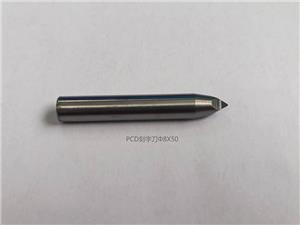
Are you ready to upgrade your marking operations? Download our technical white paper, "PCD Marking Tools: A Comprehensive Guide to Performance and Selection," to learn more about the science behind PCD and how to choose the right tool for your application. Or contact our sales engineers directly to discuss your specific challenges and discover how PCD tools can transform your production line. Don't let worn-out tools mark your success—switch to PCD and mark with confidence.