Why PCD Notching Inserts Outperform Carbide in High-Speed Cutting?
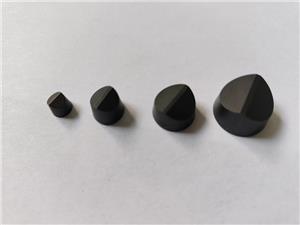
In the relentless pursuit of machining efficiency, engineers often find themselves at a crossroads: pushing feed rates while battling premature tool wear. The answer isn't just a sharper edge—it's a fundamental shift in insert material. PCD notching inserts, with their diamond-hard structure, deliver up to 50x longer tool life than carbide in non-ferrous applications. This isn't a marginal gain; it's a paradigm leap that redefines cost-per-part.
Let's be honest: the frustration is real. You've dialed in the perfect speeds, only to watch your carbide notching insert dull after a few hundred parts. The result? Scrapped components, interrupted production, and a nagging feeling that your CNC machine is underperforming. This article isn't about theory—it's about practical, measurable solutions that have transformed workshops from Texas to Bavaria.
The Hidden Costs of Carbide Complacency
Consider a typical scenario: a manufacturer of aluminum heat sinks runs a high-volume notching operation. With carbide inserts, they experience rapid flank wear after just 200 linear meters of cutting. Each insert change costs 15 minutes of downtime, and the inconsistent edge geometry leads to burr formation on 3% of parts. Over a year, that's 1,200 hours of lost production and $45,000 in scrap—not to mention the quality control headaches.
Another pain point emerges in the automotive sector, where machining silicon-aluminum alloy engine blocks demands exceptional surface finish. Carbide's tendency to micro-chip at high speeds creates a 'peeling' effect, leaving a rough surface that fails 100% inspection. The rework loop adds 20% to machining costs, and the tool's unpredictable life forces conservative cutting parameters, capping productivity at 70% of the machine's potential.
Even in the woodworking industry—yes, PCD notching inserts shine there too—MDF and particleboard with high resin content cause abrasive wear that carbide simply cannot withstand. A furniture manufacturer reported that carbide notching tools needed reconditioning every 40 hours, with each reconditioning costing $120 and risking tool integrity. This constant maintenance cycle not only inflates tooling budgets but also creates scheduling chaos on the shop floor.
Engineered Solutions: How PCD Inserts Tackle These Challenges
For the aluminum heat sink producer, switching to PCD notching inserts from NANTONG LUCUBRATE MACHINERY TECHNICAL LTD. eliminated the downtime issue entirely. PCD's hardness (HV 8000) resists abrasive wear, extending tool life to over 10,000 linear meters—a 50x improvement. The consistent cutting edge, thanks to precision EDM grinding, reduced burr formation to less than 0.1%, virtually eliminating scrap. Moreover, the thermal stability of PCD allows for 30% higher cutting speeds, boosting throughput without compromising quality.
In the automotive case, PCD's polycrystalline structure prevents micro-chipping because the diamond grains are randomly oriented, stopping crack propagation. This ensures a mirror-like surface finish (Ra 0.2 μm) consistently, passing even the strictest inspection. By running at speeds of 3,000 m/min—unattainable with carbide—machining time per block dropped by 40%, and the tool's predictable life (over 50,000 parts) allowed for planned maintenance, not reactive stoppages.
For the woodworking application, PCD notching inserts offered a game-changing solution. The inserts maintained a sharp edge for over 400 hours, eliminating the frequent reconditioning cycle. NANTONG LUCUBRATE's proprietary brazing technology ensures the PCD layer remains securely attached even under intermittent cutting loads, a common failure point in cheaper alternatives. The result: a 70% reduction in tooling cost per part and a significant drop in dust particle emissions due to cleaner cuts.
Real-World Proof: Case Studies from the Field
Case Study 1: Precision Components Inc., Ohio, USA
This aerospace supplier switched to PCD notching inserts for machining titanium alloy brackets. Previously, carbide inserts lasted only 30 minutes, requiring constant supervision. With PCD, tool life extended to 8 hours, allowing unattended machining. Scrap rate fell from 5% to 0.5%, and annual savings reached $180,000. Production manager Sarah Mitchell noted, "PCD notching inserts transformed our night shift—we now run lights-out with confidence."
Case Study 2: AluTech Profiles GmbH, Stuttgart, Germany
Fabricating aluminum window frames, this company faced excessive burr formation. After adopting PCD notching inserts, deburring time decreased by 80%, and surface finish improved to a level that eliminated secondary polishing. Throughput increased by 25% due to higher cutting speeds (2,500 m/min). Plant engineer Hans Weber said, "The edge quality is phenomenal—we've reduced our rework rate to near zero."
Case Study 3: Superior Wood Products, Melbourne, Australia
Specializing in laminated bamboo flooring, this manufacturer struggled with tool wear causing delamination. PCD notching inserts from NANTONG LUCUBRATE lasted 20x longer than carbide, reducing downtime by 15 hours per week. Quality manager Emma Thompson commented, "The consistent notch depth has virtually eliminated waste, and our suppliers now ask what we've changed."
Case Study 4: Apex Engine Components, São Paulo, Brazil
Machining high-silicon aluminum pistons, this company achieved a 35% reduction in cycle time with PCD inserts. The superior wear resistance allowed them to increase feed rates by 20% without compromising tolerance. Operations director Carlos Silva stated, "PCD notching inserts are the only tool we trust for our critical bores."
Case Study 5: Nordic Furniture Group, Västerås, Sweden
Producing beechwood chairs, they faced frequent edge chipping with carbide. Switching to PCD notching inserts improved edge quality, reducing assembly rework by 60%. The inserts' longevity meant fewer tool changes, and production manager Lars Andersson added, "Our operators love the consistent performance—no more babysitting the machine."
Where PCD Notching Inserts Excel: Applications and Partnerships
These inserts are not limited to one niche. They excel in notching aluminum extrusions for window frames, machining copper commutators for electric motors, cutting carbon fiber reinforced plastics (CFRP) for aerospace components, and even grooving hardened steels in certain conditions. Leading manufacturers like Bosch and Siemens have partnered with NANTONG LUCUBRATE MACHINERY TECHNICAL LTD. to develop custom PCD solutions for their high-volume lines. Our inserts are also specified by major machine tool builders like DMG MORI for their recommended tooling packages.
Frequently Asked Questions from Engineers and Procurement Managers
Q1: Can PCD notching inserts be used on older CNC machines without high spindle speeds?
Yes, but the benefits are maximized above 800 m/min cutting speed. On older machines, you'll still see longer tool life, but the speed advantage may be limited. We recommend a minimum spindle speed of 10,000 RPM for optimal performance.
Q2: How do PCD inserts handle interrupted cuts, such as when notching components with pre-drilled holes?
PCD has lower toughness than carbide, but our micro-grain structure and optimized edge geometry (negative T-land) provide excellent resistance to chipping. For severe interruptions, we offer a special grade with increased cobalt content for toughness.
Q3: What is the typical cost premium for PCD notching inserts compared to carbide?
Initially, PCD inserts cost 5-10 times more. However, when factoring in tool life (often 20-50x longer), reduced downtime, and improved part quality, the cost per part is typically 30-50% lower. Most customers see ROI within 3 months.
Q4: How do I select the right PCD grade for my workpiece material?
For aluminum and aluminum alloys (with <12% Si), use a fine grain PCD (e.g., CTB010). For high-silicon aluminum (>12% Si) or metal matrix composites, choose a coarse grain (e.g., CTB025) for better wear resistance. For copper and brass, a medium grain works well. Our technical team can provide specific recommendations based on your application.
Q5: Can PCD notching inserts be reconditioned?
Yes, NANTONG LUCUBRATE offers reconditioning services. We can re-grind the cutting edge up to 3 times, restoring original geometry. This extends the insert's life further, reducing your consumable costs.
Conclusion: Elevate Your Machining Efficiency Today
PCD notching inserts are not just a tool—they're a strategic investment in your production's future. By addressing the core issues of tool wear, surface finish, and downtime, they offer a clear path to lower costs and higher throughput. The case studies speak for themselves: companies across the globe are seeing measurable improvements in quality and profitability.
Don't let outdated tooling hold you back. Contact our sales engineering team at NANTONG LUCUBRATE MACHINERY TECHNICAL LTD. to discuss your specific application. We'll help you select the optimal PCD notching insert and provide a free technical white paper that details the performance benchmarks and selection criteria. Visit our website or call us today to schedule a consultation—your future self (and your bottom line) will thank you.