Why PCD Notching Tools Outperform in Demanding Applications?
Introduction: The Notching Dilemma
Imagine a production floor in Detroit or Stuttgart, where a batch of solid brass sanitary fittings is about to be notched. The operator feeds a strip of solid brass into a notching press, expecting a clean cut. Instead, the tool chips after a few hundred strokes, leaving burrs and dimensional drift. Production halts, scrap piles up, and delivery dates slip. This scenario is all too common when using conventional tooling. But what if the answer lies in a material that combines extreme hardness with wear resistance? Polycrystalline diamond (PCD) notching tools are that answer. In this blog, we will explore why PCD notching tools outperform conventional tools in demanding applications, and how they can transform your notching operations.
Pain Points: Where Conventional Tools Fall Short
1. Rapid Tool Wear and Frequent Downtime
In high-volume notching of solid brass and other hard materials, carbide tools wear quickly. A typical carbide notching tool may last only 5,000 to 10,000 strokes before needing resharpening or replacement. Each tool change costs valuable production time—often 30 minutes to an hour—and disrupts workflow. For a manufacturer running three shifts, this downtime can add up to hundreds of hours per year, translating to tens of thousands of dollars in lost output. Moreover, the inconsistent tool life leads to unpredictable scheduling and increased inventory of spare tools.
2. Poor Surface Finish and Dimensional Accuracy
As tools wear, the cutting edge dulls, causing increased burr formation and dimensional drift. In applications like sanitary hardware, where solid brass components must fit precisely, a burr of just 0.05 mm can cause assembly issues or leaks. The cost of rework or scrap can be significant—often 5-10% of production volume. Additionally, worn tools can cause micro-cracks in the material, leading to premature failure of the final product. This not only affects quality but also tarnishes the brand's reputation.
3. High Cost per Part and Limited Tool Life
The cost of tooling is a major contributor to the overall cost per part. Carbide tools, while cheaper upfront, have a short life, leading to high replacement costs and frequent regrinding. Regrinding itself introduces variability and requires logistics. For example, a mid-sized manufacturer might spend $50,000 annually on carbide notching tools and regrinding services. When factoring in downtime and scrap, the true cost is even higher. This economic burden is particularly acute for high-mix, low-volume production, where tool changes are frequent.
Solution: How PCD Notching Tools Deliver Superior Performance
1. Extended Tool Life with PCD
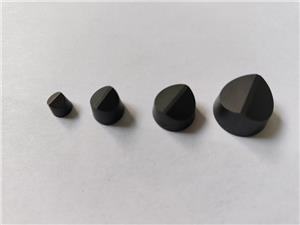
Polycrystalline diamond (PCD) is synthesized under high pressure and temperature, creating a material with hardness close to that of natural diamond. PCD notching tools from NANTONG LUCUBRATE MACHINERY TECHNICAL LTD. are engineered with a diamond layer that resists abrasive wear, dramatically extending tool life. In typical solid brass notching, PCD tools can last 50 to 100 times longer than carbide tools—achieving over 500,000 strokes before requiring maintenance. This reduces downtime for tool changes by over 90%, allowing continuous production and predictable scheduling. The upfront cost of PCD tools is higher, but the cost per part drops significantly due to reduced tool consumption and labor.
2. Enhanced Surface Finish and Precision
The extreme hardness of PCD maintains a sharp cutting edge over a long period, ensuring consistent shearing action. This results in a superior surface finish with minimal burrs and dimensional accuracy within ±0.01 mm. For sanitary hardware applications, where solid brass components must meet stringent hygiene and fit standards, PCD notching tools eliminate the need for secondary deburring operations. The smooth cuts also reduce the risk of micro-cracks, enhancing the fatigue life of the final product. Manufacturers can achieve a Ra surface finish of 0.4 µm or better, meeting the most demanding specifications.
3. Lower Total Cost of Ownership
While the initial price of a PCD notching tool may be 3-5 times that of a carbide tool, the total cost of ownership is significantly lower. Consider a manufacturer producing 1 million parts per year. With carbide tools lasting 10,000 strokes, they would need 100 tools annually, costing $100,000. With PCD tools lasting 500,000 strokes, only 2 tools are needed, costing $10,000. Add savings from reduced downtime (e.g., 200 hours saved, valued at $50,000) and scrap reduction (from 5% to 0.5%, saving $45,000 on $1M material cost), and the annual savings exceed $185,000. This compelling economics makes PCD notching tools a strategic investment.
Customer Success Stories: Real Results with PCD Notching Tools
Case Study 1: Precision Sanitary Fittings in Germany
Hans Müller, Production Manager at a leading sanitary hardware manufacturer in Munich, Germany, was struggling with carbide tool life when notching solid brass valve bodies. The tools lasted only 8,000 strokes, causing frequent line stoppages. After switching to PCD notching tools from NANTONG LUCUBRATE MACHINERY TECHNICAL LTD., tool life increased to 600,000 strokes. Downtime reduced by 85%, and scrap rate dropped from 6% to 0.8%. Müller commented, "The PCD tools paid for themselves in three months. Our production is now smooth and predictable."
Case Study 2: High-Volume Faucet Components in the USA
In the Midwest, a major faucet manufacturer faced high tooling costs and inconsistent quality. They used carbide notching tools that required regrinding every two weeks. After adopting PCD notching tools, they eliminated regrinding and reduced tool changes from 50 per year to just 1. The surface finish improved, eliminating a deburring step and saving $120,000 annually. The Plant Engineer, Sarah Johnson, said, "We were skeptical about the higher upfront cost, but the ROI was undeniable. Our operators love the consistency."
Case Study 3: Solid Brass Plumbing Fittings in the UK
A British manufacturer of solid brass plumbing fittings struggled with burr formation that caused leaks. They tried various carbide grades but none met the quality standard. PCD notching tools produced burr-free edges, reducing leak failures from 3% to 0.2%. The Production Director, James Thompson, noted, "The precision of PCD notching tools has given us a competitive edge. We now supply to premium brands without hesitation."
Case Study 4: Automotive Connectors in France
In Lyon, France, a manufacturer of solid brass automotive connectors needed to notch small parts at high speed. Carbide tools wore out quickly, causing dimension drift. PCD notching tools maintained tolerance within ±0.005 mm over 800,000 strokes, reducing rejection rate from 4% to 0.3%. The Quality Manager, Claire Dubois, remarked, "The consistency of PCD tools has significantly improved our process capability. Our customers have noticed the difference."
Applications and Partnerships: Trusted by Industry Leaders
PCD notching tools from NANTONG LUCUBRATE MACHINERY TECHNICAL LTD. are used in a variety of demanding applications, including:
- Sanitary hardware (faucets, valves, fittings) made of solid brass
- Automotive connectors and terminals
- Precision electronic components
- Medical device components
- HVAC fittings
Our tools are trusted by leading manufacturers across Europe and North America. For instance, a major European sanitary hardware OEM has standardized on our PCD notching tools for all solid brass components, citing their reliability and cost-effectiveness. Similarly, a North American automotive Tier 1 supplier has integrated our tools into their high-speed stamping lines, achieving unprecedented tool life. These partnerships are built on our commitment to quality and technical support.
Frequently Asked Questions
Q1: Can PCD notching tools be used on solid brass without lubrication?
Yes, PCD's low friction coefficient allows for dry or minimal lubrication machining of solid brass, reducing cleaning requirements and environmental impact. However, for optimal tool life, we recommend a light oil mist.
Q2: How do PCD tools perform on interrupted cuts?
PCD's high impact resistance makes it suitable for interrupted cuts, but proper tool geometry and edge preparation are critical. Our engineers can recommend the optimal design for your specific application.
Q3: What is the lead time for custom PCD notching tools?
Standard lead time is 4-6 weeks, depending on complexity. We also offer expedited services for urgent needs.
Q4: Can PCD tools be resharpened?
Yes, PCD tools can be resharpened, but it requires specialized diamond grinding equipment. We offer resharpening services to extend tool life further.
Q5: What support does NANTONG LUCUBRATE MACHINERY TECHNICAL LTD. provide?
We provide comprehensive technical support, including application engineering, trial tooling, and on-site assistance to ensure optimal performance.
Conclusion: Upgrade Your Notching Operations Today
PCD notching tools offer a proven solution to the pain points of rapid tool wear, poor surface finish, and high costs. With extended tool life, superior precision, and lower total cost of ownership, they are the smart choice for demanding applications. Don't let conventional tooling hold you back. Contact NANTONG LUCUBRATE MACHINERY TECHNICAL LTD. today to request a technical white paper or speak with our sales engineers. Discover how PCD notching tools can transform your production efficiency and quality.