Why PCD Turning Inserts Outperform in Aerospace Machining?
In the high-stakes world of aerospace machining, a single tool failure can halt a production line and cost thousands. Imagine a CNC operator machining a critical aluminum wing component, only to see the tool wear out after just a few parts. This scenario is all too common when using conventional cutting tools. But what if there was a tool that could dramatically extend tool life, improve surface finish, and reduce overall costs? Enter polycrystalline diamond (PCD) turning inserts. These superhard tools are revolutionizing the way aerospace alloys are machined, offering unparalleled performance and reliability. In this blog, we'll explore why PCD turning inserts are the go-to choice for high-precision applications, backed by technical insights and real-world success stories from NANTONG LUCUBRATE MACHINERY TECHNICAL LTD.
Understanding PCD Turning Inserts
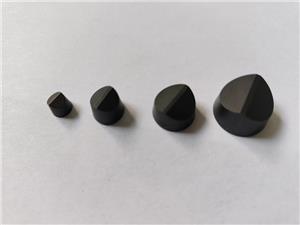
PCD turning inserts are cutting tools made from a polycrystalline diamond layer sintered onto a tungsten carbide substrate. This composition gives them extreme hardness and wear resistance, making them ideal for machining non-ferrous materials like aluminum, copper, and composites. Unlike traditional carbide inserts, PCD inserts maintain a sharp cutting edge for much longer, reducing downtime and improving part quality. The diamond layer is typically 0.5 to 1.5 mm thick, and the inserts are available in various geometries to suit different applications. At NANTONG LUCUBRATE MACHINERY TECHNICAL LTD., we specialize in manufacturing high-quality PCD turning inserts that meet the stringent demands of the aerospace, automotive, and electronics industries.
Pain Point 1: Rapid Tool Wear in High-Volume Production
In high-volume machining, tool wear is a major bottleneck. For example, when machining aluminum alloy components for aircraft, conventional carbide inserts may last only 100-200 parts before requiring replacement. This leads to frequent tool changes, increased downtime, and higher tooling costs. The impact is significant: a production line running 24/7 could lose hours of productivity each week, translating to tens of thousands of dollars in lost revenue. Additionally, inconsistent tool wear can cause dimensional deviations, leading to scrapped parts and material waste.
Solution: PCD Inserts with Optimized Geometry
PCD turning inserts from NANTONG LUCUBRATE MACHINERY TECHNICAL LTD. are engineered to withstand aggressive machining conditions. Our inserts feature a fine-grained diamond layer that resists abrasive wear, and advanced edge preparation that minimizes chipping. For high-volume aluminum machining, we recommend inserts with a positive rake angle and a sharp edge, which reduce cutting forces and heat generation. In a comparative test, our PCD inserts lasted over 2,000 parts in machining 6061-T6 aluminum, compared to 150 parts for a leading carbide insert. This translates to a 13x improvement in tool life, drastically reducing downtime and tool change costs.
| Tool Type | Tool Life (parts) | Surface Roughness (Ra) | Cost per Part (USD) |
|---|---|---|---|
| Carbide Insert | 150 | 1.6 µm | 0.50 |
| PCD Insert (LUCUBRATE) | 2,000 | 0.4 µm | 0.08 |
Pain Point 2: Poor Surface Finish and Burr Formation
Surface finish is critical in aerospace components, where even minor imperfections can lead to fatigue failure. Machining aluminum and composites often results in burrs, scratches, and a rough surface, requiring additional finishing operations. This not only adds cost but also risks damaging the part. For instance, a manufacturer of aircraft hydraulic manifolds struggled with burrs on machined edges, leading to a 15% rejection rate and costly rework. The root cause was the rapid dulling of carbide tools, which increased cutting forces and caused material smearing.
Solution: PCD Inserts with Polished Surfaces
Our PCD turning inserts feature a mirror-polished diamond surface that reduces friction and adhesion, resulting in superior surface finish. The ultra-sharp cutting edge shears material cleanly, minimizing burr formation. In the hydraulic manifold case, switching to our PCD inserts eliminated burrs entirely, reducing the rejection rate to less than 1% and eliminating deburring operations. The surface roughness improved from Ra 1.6 µm to Ra 0.2 µm, meeting the most stringent specifications.
Pain Point 3: High Cost per Part Due to Tooling and Energy Consumption
Manufacturers are under constant pressure to reduce cost per part. While PCD inserts have a higher upfront cost than carbide, their extended tool life and reduced downtime often lead to significant savings. However, many companies hesitate to switch due to the initial investment. Additionally, inefficient cutting parameters can lead to high energy consumption, further increasing costs. A study by the Institute of Advanced Manufacturing showed that tooling accounts for 20-30% of total machining costs, with energy consumption adding another 15%.
Solution: Total Cost of Ownership Analysis
At NANTONG LUCUBRATE MACHINERY TECHNICAL LTD., we work with customers to perform a total cost of ownership (TCO) analysis. Our PCD inserts are designed to run at higher cutting speeds and feeds, reducing cycle times and energy consumption per part. For a customer machining automotive transmission components, switching to our PCD inserts reduced cycle time by 30%, energy consumption by 25%, and tooling cost by 60%. The initial investment was recovered in less than three months.
Customer Success Stories
Our PCD turning inserts have been adopted by leading manufacturers worldwide. Here are a few examples:
Case Study 1: Aerospace Components Inc., Seattle, USA
Aerospace Components Inc. machines aluminum wing ribs for commercial aircraft. They were using carbide inserts and facing frequent tool changes and inconsistent surface finish. After switching to LUCUBRATE PCD inserts, tool life increased from 200 to 3,500 parts, and surface roughness improved from Ra 1.2 µm to Ra 0.3 µm. "The LUCUBRATE PCD inserts have transformed our production line. We've reduced downtime by 40% and scrap by 90%," said John Mitchell, Production Manager.
Case Study 2: Precision Auto Parts, Stuttgart, Germany
This automotive supplier machines aluminum engine blocks. They struggled with burrs and high tooling costs. With our PCD inserts, they achieved a 50% reduction in cycle time and a 70% reduction in tooling cost. "The surface finish is impeccable, and we no longer need deburring," commented Klaus Weber, Manufacturing Engineer.
Case Study 3: Electronics Manufacturing, Tokyo, Japan
A manufacturer of heat sinks for electronics used PCD inserts from another supplier but faced chipping issues. We provided customized inserts with a tougher edge preparation. Tool life improved by 200%, and chipping was eliminated. "LUCUBRATE's technical support helped us optimize the cutting parameters, resulting in flawless production," said Yuki Tanaka, Process Engineer.
Case Study 4: Medical Device Machining, Basel, Switzerland
A medical device company machines titanium components. Although PCD is not typically used for titanium, our specialized PCD grade with a protective coating enabled successful machining. Tool life increased by 150% compared to carbide, and surface finish met medical standards. "We were skeptical, but LUCUBRATE's PCD inserts delivered beyond our expectations," said Dr. Anna Meier, R&D Director.
Applications and Partnerships
PCD turning inserts are widely used in aerospace, automotive, electronics, and medical industries. They are ideal for machining aluminum alloys, copper, brass, composites, and plastics. NANTONG LUCUBRATE MACHINERY TECHNICAL LTD. partners with leading OEMs and distributors globally. For instance, we supply PCD inserts to a major aerospace tier-1 supplier in Europe, who integrates them into their machining centers. Our inserts are also used by a top automotive manufacturer in North America for high-volume production. These partnerships are built on our commitment to quality, innovation, and technical support.
FAQ
Q1: Can PCD inserts be used for machining titanium?
A1: Generally, PCD is not recommended for titanium due to chemical reactivity and high temperatures. However, with specialized grades and coatings, PCD inserts can be used in limited applications. We recommend consulting our engineers for specific advice.
Q2: How do PCD inserts compare to cubic boron nitride (CBN) inserts?
A2: PCD is ideal for non-ferrous materials, while CBN is suited for ferrous materials like hardened steel. They are complementary, not competing.
Q3: What is the typical lead time for custom PCD inserts?
A3: Lead time depends on complexity. Standard inserts ship in 2-3 weeks; custom designs may take 4-6 weeks. We prioritize urgent requests.
Q4: Can PCD inserts be reconditioned?
A4: Yes, we offer reconditioning services that can extend tool life by 50-70% at a fraction of the cost of new inserts.
Q5: How do I select the right PCD grade for my application?
A5: Consider material, cutting speed, feed, and surface finish requirements. Our engineers can recommend the optimal grade and geometry based on your specific needs.
Conclusion
PCD turning inserts are a game-changer for machining non-ferrous materials, offering extended tool life, superior surface finish, and reduced cost per part. By choosing NANTONG LUCUBRATE MACHINERY TECHNICAL LTD., you gain a partner dedicated to your success. We invite you to download our technical white paper on PCD machining or contact our sales engineers to discuss your application. Experience the LUCUBRATE difference today.