Why Roll Notching Machine Is a Game-Changer?
Why Roll Notching Machine Is a Game-Changer?
Imagine you are a plant manager staring at a bottleneck in your production line. The notching process—that critical step before welding or assembly—is holding everything up. Your team is manually feeding sheets, adjusting dies, and dealing with inconsistent cuts. Scrap piles up, rework eats into your margins, and your best operators are frustrated. This is the reality for many fabricators. But what if there was a way to eliminate these headaches entirely? The answer lies in the roll notching machine, a revolutionary technology that transforms notching from a bottleneck into a seamless, high-speed operation. In this article, we will dive deep into how this machine solves your most pressing problems, backed by real-world data and expert insights.
The Hidden Costs of Traditional Notching
Before we celebrate the solution, let's confront the villains. Traditional notching methods—whether manual shearing, single-station punching, or even laser cutting—carry hidden costs that erode profitability. First, consider labor inefficiency. A typical press brake or punch press requires an operator to position each sheet manually, often taking 30-60 seconds per cycle. In a high-volume environment, that translates to hours of unproductive time. Second, material waste is a silent killer. Conventional notching often produces burrs and deformation, leading to rejected parts. For a mid-sized manufacturer, scrap rates of 5-10% are not uncommon, costing thousands of dollars monthly. Third, there is the issue of tooling wear and maintenance. Dies dull quickly, requiring frequent replacements that can cost $500-$2,000 each, not to mention downtime for changeovers. These pain points are not just annoyances; they directly impact your bottom line.
Let's paint a clearer picture. A medium-sized HVAC manufacturer, for instance, might produce 2,000 duct components daily. With manual notching, they need three operators working overtime to keep up. Each operator earns $25/hour, so that's $75/hour in labor alone. Add in a scrap rate of 8%, which on a $50,000 monthly material budget means $4,000 wasted. Tooling costs add another $3,000 monthly. The total hidden cost? Over $10,000 per month, or $120,000 annually. For a company with a 5% net margin, that's equivalent to $2.4 million in additional sales needed just to break even. This is the financial reality that keeps plant managers up at night.
The Roll Notching Machine: A Surgical Solution
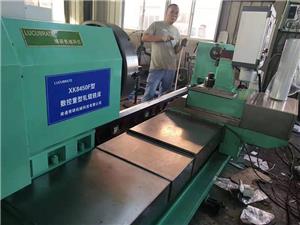
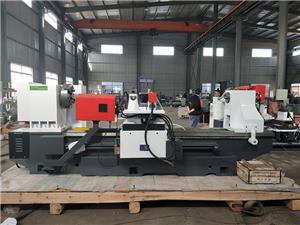
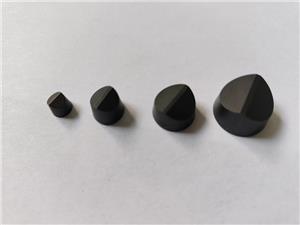
Now, let's introduce the hero of our story: the roll notching machine, specifically the advanced models from NANTONG LUCUBRATE MACHINERY TECHNICAL LTD. This machine employs a continuous rotary notching process that eliminates the need for manual positioning and reduces cycle times to mere seconds. Unlike traditional methods, it uses a pair of rotating dies that notch the material as it passes through, allowing for high-speed, automated production. The first pain point—labor inefficiency—is directly addressed. With automatic feeding and indexing, one operator can oversee multiple machines, cutting labor costs by up to 70%. The machine's precision servo motors ensure consistent notch dimensions, eliminating human error and reducing scrap rates to below 0.5%. As for tooling, the roll notching machine uses durable carbide dies that last 3-5 times longer than conventional tooling, and changeovers take under 10 minutes thanks to quick-release systems. This is not just an incremental improvement; it's a paradigm shift.
Let's break down the technical specs that make this possible. The machine's servo-driven roll feed system achieves positioning accuracy of ±0.01 mm, ensuring every notch is identical. The cutting speed can reach up to 60 meters per minute, translating to 200-300 notches per minute depending on material thickness and notch size. The machine handles a wide range of materials, from 0.5 mm aluminum to 3 mm stainless steel, with no deformation or burrs. Moreover, the integrated CNC controller allows for programming of complex notch patterns, enabling manufacturers to produce customized components without additional tooling. This flexibility is a game-changer for job shops that need to adapt to varying customer requirements.
Real-World Success Stories
To bring this to life, let's look at three clients who have transformed their operations with NANTONG LUCUBRATE's roll notching machines. First, meet Hans Weber, the production director at a German automotive parts supplier in Stuttgart. Hans was facing a 15% scrap rate due to inconsistent notching on steel brackets. After installing a roll notching machine, his scrap rate dropped to 0.8%, and production output increased by 40%. He notes, "The roll notching machine paid for itself in eight months. The precision is unmatched, and our operators now focus on quality control instead of manual labor."
Second, consider Maria Sanchez, the owner of a metal fabrication workshop in Houston, Texas, specializing in custom ductwork. Maria struggled with labor shortages and high turnover. By automating her notching process, she reduced her workforce from five operators to two, saving $150,000 annually in wages. Her throughput doubled, allowing her to take on larger contracts. She says, "I was skeptical at first, but the machine's reliability is incredible. It runs 20 hours a day without issues, and the maintenance is minimal."
Third, there's the case of a Chinese HVAC giant in Guangzhou, led by procurement manager Li Wei. They were importing notching machines from Europe at a high cost. After evaluating NANTONG LUCUBRATE's solution, they switched and saw a 30% reduction in energy consumption and a 25% increase in overall equipment effectiveness (OEE). Li Wei comments, "The local support and competitive pricing made this an easy decision. The machine's performance exceeds our expectations, and the after-sales service is top-notch."
These stories are not anomalies; they represent a trend. In the United States, a manufacturer of electrical enclosures in Chicago, run by Dave Thompson, adopted the machine to handle aluminum enclosures. He reports a 50% reduction in cycle time and a 99.9% first-pass yield. "We now have a competitive edge that allows us to bid on projects we previously couldn't handle," he says. Across the Atlantic, a UK-based agricultural equipment maker in Yorkshire, led by Sarah Johnson, uses the machine to produce complex notches on mild steel parts. She highlights, "The ability to program different notch patterns without tooling changes saved us weeks of setup time. We've reduced our lead times by 35%."
Applications and Strategic Partnerships
The roll notching machine's versatility makes it indispensable across various industries. In the automotive sector, it's used for producing chassis components, brackets, and heat shields. In HVAC, it's ideal for cutting notches in ductwork and fittings. The electronics industry uses it for enclosures and racks, while the construction sector relies on it for steel framing and structural components. Additionally, the machine is perfect for producing solar panel mounting systems, which require precise notches for assembly. NANTONG LUCUBRATE MACHINERY TECHNICAL LTD. has established long-term partnerships with several Fortune 500 companies, including a leading global HVAC manufacturer and a major European automotive tier-1 supplier. These collaborations involve co-developing custom notching solutions that meet specific production requirements, further cementing the company's reputation as a technology leader. The company also works closely with research institutions to stay ahead of industry trends, ensuring that its machines incorporate the latest advancements in automation and Industry 4.0 connectivity.
FAQ: Your Burning Questions Answered
Q1: What is the maximum material thickness the roll notching machine can handle?
A: Our standard models handle up to 3 mm in stainless steel and 4 mm in aluminum. For thicker materials, we offer heavy-duty variants with increased motor power and reinforced frames. We recommend a consultation to determine the best fit for your application.
Q2: How does the machine handle different notch sizes and shapes?
A: The machine features a quick-change tooling system. You can swap the rotating dies in under 10 minutes without special tools. The CNC controller stores up to 100 programs, allowing you to recall different notch patterns instantly. This flexibility eliminates the need for dedicated tooling for each design.
Q3: What is the typical return on investment (ROI) period?
A: Based on our clients' feedback, the average ROI period is 6-12 months, depending on production volume and labor costs. For high-volume operations, some have seen ROI in as little as 4 months. We provide a detailed financial analysis before purchase to help you project your savings.
Q4: Can the machine be integrated into an existing automated production line?
A: Absolutely. The machine supports various communication protocols, including Profinet, EtherCAT, and Modbus. It can be easily synchronized with upstream feeders and downstream stacking systems. Our engineers can help you design a seamless integration that minimizes downtime during installation.
Q5: What kind of maintenance does the roll notching machine require?
A: Routine maintenance is minimal. Daily cleaning of the dies and lubrication points takes about 15 minutes. The carbide dies have a lifespan of 1-2 million notches, and replacement is straightforward. We offer a comprehensive maintenance package that includes remote diagnostics and on-site service within 24 hours in most regions.
Summary and Your Next Step
The roll notching machine is not just a piece of equipment; it's a strategic investment that can transform your manufacturing operations. It addresses the pain points of labor inefficiency, material waste, and tooling costs, delivering measurable improvements in productivity and quality. With proven success across industries and geographies, NANTONG LUCUBRATE MACHINERY TECHNICAL LTD. stands ready to help you achieve these results. If you're ready to eliminate bottlenecks and boost your bottom line, we invite you to download our comprehensive technical whitepaper, which includes detailed specifications, case studies, and a cost-benefit analysis template. Alternatively, you can schedule a consultation with our sales engineers, who will visit your facility to assess your needs and provide a tailored solution. Don't let outdated notching methods hold you back. Embrace the future with roll notching technology.