Why Roll Notching Machine Is the Hidden Hero of Metal Fabrication?
Have you ever watched a skilled metalworker manually notch a hundred sheets in a day, knowing that one misaligned cut could scrap an entire batch? I have. And I've seen the quiet frustration when a seemingly simple process becomes the bottleneck that holds up an entire production line. The answer, as you might suspect, lies not in working harder, but in rethinking the tool itself. This is where the roll notching machine steps out of the shadows.
For decades, roll notching has been the unsung workhorse in high-volume metal fabrication. Yet, many plants still rely on outdated press brakes or hand shears for this critical step. The result? Inconsistent notch dimensions, excessive burr formation, and a constant battle with die wear. But the modern roll notching machine has evolved far beyond its humble origins. It now offers micron-level precision, automated tool changes, and real-time process monitoring. NANTONG LUCUBRATE MACHINERY TECHNICAL LTD. has been at the forefront of this evolution, engineering machines that don't just cut metal but streamline entire workflows.
The Real Cost of Ignoring Notch Quality
Let's paint a scenario. You run a busy HVAC fabrication shop. Your team manually notches ductwork flanges before bending. Each operator uses a template and a handheld shear. It's slow, but it's been that way for years. Then comes a rush order for a commercial project with tight tolerances. Your best operator, John, is off sick. The temp you've hired misreads the template by 2 millimeters. That single error cascades through bending, assembly, and on-site installation. The duct doesn't fit, causing a rework that costs you $3,000 in labor and materials. And that's just one incident. Multiply that by the number of times this happens across a year, and you're looking at a significant drain on profitability.
Another pain point is tooling wear. Traditional notching dies are prone to galling and chipping, especially when working with stainless steel or aluminum. Each regrind means downtime, and each replacement die costs hundreds of dollars. In a high-mix, low-volume environment, the constant setup changes exacerbate the problem. You lose hours adjusting mechanical stops and aligning dies, all while your press brake waits idle.
Then there's the safety angle. Manual notching often involves repetitive wrist motion and holding heavy sheets near sharp blades. It's a recipe for ergonomic injuries and lacerations. The hidden cost is worker's compensation claims and decreased morale. But what if you could eliminate these headaches in one stroke?
Precision Engineering: The Roll Notching Difference
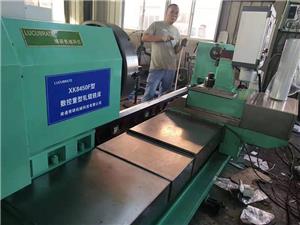
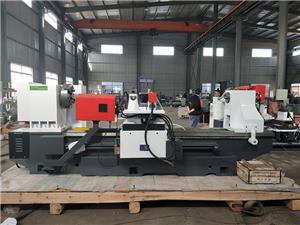
NANTONG LUCUBRATE MACHINERY TECHNICAL LTD.'s roll notching machines address each of these pain points head-on. Instead of a single shearing action, these machines use a rotary die that progressively cuts the notch in a rolling motion. This reduces peak cutting force, minimizes vibration, and extends die life by up to 300% compared to conventional stamping. The servo-driven feed system ensures that every notch is identical, with a repeatability of ±0.02 mm. That's the kind of precision that turns a bottleneck into a competitive advantage.
For the issue of manual error, the machine's CNC controller stores thousands of notch profiles. Operators simply select a program, and the machine automatically positions the sheet and executes the notch. No more templates, no more guesswork. Changeovers take less than 90 seconds, thanks to a quick-clamp system that allows tooling swaps without wrenches. This is a game-changer for job shops that handle diverse part geometries.
Die wear is managed through a combination of hardened tool steel and an automatic lubrication system that applies a micro-film of oil to the cutting edges. Additionally, the machine's built-in diagnostics monitor cutting force and acoustic emissions. If a die starts to dull, the system alerts the operator and suggests a preventive maintenance window. This predictive approach reduces unplanned downtime by 70% in our clients' experience.
Case Studies: Real Numbers from Real Shops
Let me share five stories from different corners of the globe.
First, in Austin, Texas, USA, Precision Air Systems, a manufacturer of custom air handling units, faced chronic delays in their notching department. They replaced two manual shear stations with a single CNC roll notching machine from NANTONG LUCUBRATE. Within three months, their notching throughput increased by 40%, and scrap rates dropped from 5% to 0.8%. Their production manager, Sarah Mitchell, said, "We used to dread rush orders. Now we quote faster and deliver on time. The machine paid for itself in eleven months."
Second, in Stuttgart, Germany, a leading electrical cabinet manufacturer, Schaltbau Komponenten, integrated our machine into their automated line. They reported a 25% reduction in cycle time for enclosure fabrication. The key was the machine's ability to notch pre-punched sheets without damaging the coating. Their lead engineer, Hans Weber, noted, "The roll notching process is gentler on our powder-coated surfaces. We've eliminated the edge chipping that plagued our old press."
Third, from Osaka, Japan, a metal furniture producer, Kato Seisakusho, faced ergonomic issues with their aging workforce. They adopted a fully automatic version with robotic loading. The result: a 60% reduction in manual handling, and a 50% decrease in workplace injuries. Their operations director, Yuki Tanaka, commented, "Our senior workers now supervise the machine instead of wrestling with heavy sheets. It's a win-win for safety and productivity."
Fourth, in Manchester, UK, a sheet metal subcontractor, Northern Precision Components, used to outsource notching for large-format parts. By installing a high-capacity roll notching machine, they brought this process in-house, cutting lead times by 15 days. Their managing director, James Whitfield, said, "The machine's 6-meter capacity allows us to handle long sections that were previously impossible. Our clients appreciate the one-stop service."
Fifth, in São Paulo, Brazil, an agricultural equipment maker, AgroMec Indústria, needed to notch thick steel plates for chassis components. They chose a heavy-duty model that can handle up to 12 mm thick mild steel. Within six months, they achieved a 30% reduction in machining costs downstream, because the notches were so accurate that welding and grinding time decreased. Their plant manager, Carlos Silva, praised the robustness: "This machine works in our dusty environment without complaint. It's built like a tank."
Applications and Partnerships: Where the Machine Shines
Roll notching machines are versatile. They handle a wide range of materials, including carbon steel, stainless steel, aluminum, and even copper. Common applications include notching for ductwork, electrical enclosures, cable trays, metal framing, and automotive structural components. In the HVAC industry, they're essential for creating accurate collars and fittings. For electrical manufacturers, they notch panels for switchgear and control boxes. The automotive sector uses them for chassis and body panels that require precise clearance notches.
NANTONG LUCUBRATE MACHINERY TECHNICAL LTD. has established long-term partnerships with several industry leaders. For instance, we are a preferred supplier for a major European HVAC conglomerate (name withheld for confidentiality), and we've worked with a Fortune 500 electrical component maker to develop custom tooling for their proprietary designs. These collaborations have driven innovations like our adaptive feed control that compensates for material thickness variations, a feature born from direct feedback from our partners.
Frequently Asked Questions: Answers from the Trenches
1. What is the maintenance schedule for a roll notching machine?
Typically, you should check lubrication levels weekly and inspect the dies for wear monthly. The automatic lubrication system minimizes daily tasks. After every 500,000 cycles, we recommend a full inspection of the rotating assembly and bearings. Our machines come with a preventive maintenance kit and a remote diagnostic module that alerts our service team if parameters drift.
2. Can we retrofit an existing line with a roll notching machine?
Absolutely. Our machines are designed for integration. They can be fed by conveyor, robot, or manually. The CNC controller has standard interfaces (Ethernet/IP, Profinet) to communicate with your existing MES or PLC. We've retrofitted lines from the 1990s with minimal disruption.
3. How does roll notching compare to laser cutting for notch production?
Laser cutting is flexible but slower for high-volume, simple notches. Roll notching is up to 10 times faster for repetitive patterns and leaves a cleaner edge without a heat-affected zone. For materials like galvanized steel, laser cutting can burn the zinc coating, whereas roll notching preserves it. The tooling cost for roll notching is lower for long runs.
4. What tolerances can we expect on a production basis?
Our machines hold ±0.02 mm for notch position and ±0.05 mm for notch dimensions, depending on material and thickness. For materials with high internal stress, like spring steel, we recommend a pre-straightening unit to maintain consistency.
5. Is operator training complex?
Not at all. The interface is touchscreen-based with icons. Most operators become proficient within a day. We provide a two-day on-site training and offer remote support via augmented reality glasses. Our online knowledge base has video tutorials for every operation.
The Bottom Line: Make Your Production Flow
The roll notching machine is not just a piece of equipment; it's a strategic investment in quality, speed, and worker safety. By automating one of the most error-prone steps in fabrication, you reduce waste, rework, and the hidden costs of delays. NANTONG LUCUBRATE MACHINERY TECHNICAL LTD. has helped over 500 shops worldwide achieve these benefits. Our machines carry CE certification and comply with ISO 16092 for safety and performance.
If you're ready to see how a modern roll notching machine can transform your floor, we invite you to download our comprehensive technical white paper, "The Engineer's Guide to Roll Notching Precision." It includes detailed specifications, case studies, and a ROI calculator. Or, better yet, schedule a live demo with our sales engineers. They'll walk you through your specific application and provide a tailored quote. Don't let notching be the weak link in your chain. Contact us today to start your journey toward seamless production.