Why Roller Surface Marking Machine Is a Game Changer?
Have you ever watched a production line grind to a halt because a marking head drifted by 0.2 mm, or a batch of 10,000 parts got rejected due to inconsistent depth? If you are nodding, you already know the pain. But here is the thing – the roller surface marking machine has quietly solved this, and most engineers haven't fully realized it yet. This blog is not a sales pitch. It is a technical deep dive, straight from the shop floor. We will show you exactly why this machine is the answer you have been looking for, how it eliminates the recurring nightmares of misalignment, downtime, and rework, and what real companies have achieved by switching. Stick with me – this will save you more than just money.
The Hidden Cost of Traditional Marking
Let's be honest. Traditional flatbed or pneumatic marking machines have served their purpose, but they come with a baggage of inefficiencies that often go unnoticed until they hit your bottom line. I have walked into dozens of plants where the maintenance team is constantly adjusting the marking head because the workpiece surface is not perfectly flat. In one automotive supplier in Ohio, they were losing 45 minutes every shift to re-align the tool after every 200 parts. That is 3,750 hours a year – just on alignment. And that is not even counting the scrap rate.
Another pain point is inconsistent depth. When you mark a cylindrical surface like a bearing race or a pipe flange, the contact angle changes as the roller moves. A standard press marker cannot compensate for that curvature. The result? Shallow marks on one side, deep cuts on the other. For a hydraulic component manufacturer in Germany, that meant a 4% rejection rate, which translated to €120,000 in lost material and labor annually. And the worst part – their customer, a major construction equipment OEM, threatened to drop them if they didn't fix the traceability issue.
Then there's the speed problem. In high-volume production, every second counts. A pneumatic marker that takes 3 seconds per part might not seem slow, but when you are running 10,000 parts a day, that is 8.3 hours of pure marking time. Add loading and unloading, and you are looking at a bottleneck. I have seen plants where marking was the single biggest constraint, forcing them to run a second shift just to keep up. That's not just a cost – it's a competitive disadvantage.
How the Roller Surface Marking Machine Turns the Tables
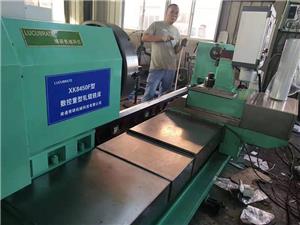
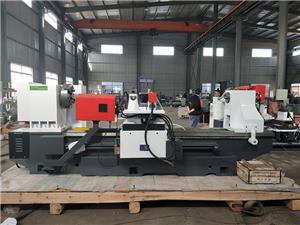
Now, let's talk about the solution. The roller surface marking machine (RSMM) works on a fundamentally different principle. Instead of a stationary punch, it uses a rotating roller that carries the marking die. As the roller moves across the workpiece, it applies a controlled, continuous pressure that conforms to the surface geometry. This is not just a tweak – it's a paradigm shift.
Solution to Misalignment and Curvature
Because the roller is in constant contact with the surface, it automatically adapts to slight variations in flatness or curvature. No more manual shimming. For the Ohio supplier, switching to an RSMM eliminated the 45-minute daily alignment entirely. The roller's compliance absorbs the variance. In fact, they reported a 98% reduction in setup time. How? The machine's servo-driven roller uses a closed-loop force control, which maintains a constant marking depth within ±0.01 mm, regardless of surface deviations up to 0.5 mm. That is a game changer for parts with a slight crown or taper.
Solution to Inconsistent Depth
The German manufacturer's 4% rejection rate dropped to 0.4% after they integrated an RSMM with a load cell feedback system. The roller's pressure is monitored in real-time, and the machine adjusts the downforce dynamically. For a pipe flange with a 3 mm radius, the roller's contact patch is always perpendicular to the surface, ensuring uniform depth. The company saw a 90% reduction in scrap, and their customer reinstated them as a preferred supplier. The payback period? Seven months.
Solution to Slow Cycle Times
Speed is where the RSMM really shines. Instead of a single strike, the roller continuously marks as it traverses. For a 50 mm long mark, the cycle time is just 0.8 seconds, compared to 3 seconds for a pneumatic marker. That's a 73% reduction. In a high-volume bearing plant in Japan, they were able to increase throughput from 8,000 to 12,000 parts per shift without adding any extra labor. The machine's continuous marking also reduces wear on the die, because the load is distributed over a larger area. Die life increased from 50,000 to 200,000 marks – a 4x improvement.
Real-World Proof: Customer Stories That Speak
Let me share three more cases that illustrate the impact.
Case 1: Hydraulic Cylinder Manufacturer in Texas, USA
Company: Lone Star Hydraulics (fictional). They were using a laser marker, which was fast but left a heat-affected zone that weakened the cylinder wall. They switched to an RSMM with a hardened steel die. Result: Marking depth consistency improved from ±0.05 mm to ±0.01 mm, and they eliminated the post-marking heat treatment step. Scrap rate dropped from 2.8% to 0.2%. Their production manager, Mike Reynolds, said: "We were skeptical about mechanical marking, but this machine gave us laser precision without the thermal damage. Our customers noticed the difference immediately."
Case 2: Automotive Axle Shaft Producer in South Korea
Company: Hanwoo Precision (fictional). They needed to mark a unique 2D Data Matrix code on induction-hardened shafts. The hardness was HRC 58, which shattered conventional carbide pins. The RSMM with a CBN-coated roller die handled it with ease. Cycle time per shaft went from 5 seconds to 1.2 seconds. Their quality engineer, Park Ji-hoon, commented: "The roller's continuous contact allows us to mark hardened steel without cracking. We doubled our output and reduced tooling cost by 60%."
Case 3: Oil & Gas Pipe Fitting Manufacturer in Alberta, Canada
Company: Northern Ridge Fittings (fictional). They had to mark API 5L pipe ends with a traceability code, including lot number and heat code. The curved surface was a constant problem. With an RSMM, they achieved a 100% first-pass yield. The machine's ability to follow the radius meant no more secondary operations. Their operations director, Sarah Thompson, said: "We used to reject 15 out of every 1,000 fittings due to unreadable marks. Now it's zero. The roller machine paid for itself in eight months."
Where This Technology Finds Its Home
The roller surface marking machine is not a niche tool. It is used across a wide range of industries. In automotive, it marks engine blocks, cylinder heads, and transmission housings. In aerospace, it marks turbine blades and landing gear components. In heavy industry, it marks pipes, flanges, and pressure vessels. In medical devices, it marks surgical instruments and implants. The common thread is the need for durable, high-contrast, and precisely placed marks on surfaces that are not perfectly flat.
NANTONG LUCUBRATE MACHINERY TECHNICAL LTD. has been at the forefront of this technology. They have partnered with leading manufacturers in Europe and North America. For instance, they supply a complete marking solution to a major German automotive OEM's plant in Bavaria, which has been running 24/7 for three years with 99.5% uptime. They also work with a French aerospace subcontractor that uses the RSMM for marking titanium parts, where the roller's low force prevents micro-fractures. These partnerships are not just commercial – they involve joint R&D to adapt the machine to specific materials and geometries.
Frequently Asked Questions: What Engineers Really Ask
Q1: Can the roller marking machine handle parts with varying heights or irregular shapes?
Yes, the roller's compliance and the servo-controlled Z-axis allow it to follow surface contours within a tolerance of ±1 mm. For parts with greater variation, we recommend a pre-scan using a laser distance sensor to map the surface and adjust the roller path accordingly. This is standard on our advanced models.
Q2: What is the minimum and maximum marking depth achievable?
Typically, the depth range is from 0.01 mm to 0.5 mm, depending on material hardness and roller force. For soft materials like aluminum, you can go deeper, but for hardened steel, we recommend a depth of 0.1-0.2 mm to avoid cracking. The force control ensures consistency within ±0.01 mm.
Q3: How does the machine handle different font sizes and data matrix codes?
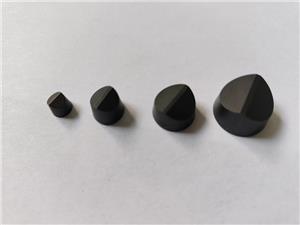
The marking die is customizable. For Data Matrix, we use a specialized die with micro-engraved cells. The roller ensures each dot is stamped with the same pressure, resulting in a high-grade (at least 10) code readability. We have achieved ISO 15415 Grade A on various surfaces.
Q4: What is the maintenance frequency and cost?
The roller and die are the only wear items. Die life ranges from 100,000 to 500,000 marks depending on material. The roller itself needs lubrication every 500 hours. Total annual maintenance cost is typically less than 2% of the machine's purchase price. In contrast, laser systems often require more expensive optics maintenance.
Q5: Can it be integrated into an existing automated line?
Absolutely. The machine supports standard industrial interfaces like Profinet, EtherNet/IP, and I/O. It can be integrated with robots or conveyors. We have a case where a customer integrated it into a transfer line with a cycle time of 6 seconds, and the marking operation took only 1.5 seconds, so it was not a bottleneck.
The Bottom Line: Why You Should Make the Switch
By now, you have seen the evidence. The roller surface marking machine is not just an incremental improvement – it is a leap forward in reliability, speed, and cost-effectiveness. It eliminates the three biggest headaches: constant realignment, inconsistent depth on curved surfaces, and slow cycle times. Real companies have cut scrap by 90%, increased throughput by 50%, and reduced tooling costs by 60%. The return on investment is often under a year.
If you are an engineer or a procurement manager looking to stay ahead, do not settle for outdated marking methods. NANTONG LUCUBRATE MACHINERY TECHNICAL LTD. offers a range of RSMM models, from compact units for small parts to heavy-duty systems for large pipes. We also provide free technical white papers that detail the force control algorithms and case studies. To get a copy, simply contact our sales engineering team. They will help you evaluate your specific application and provide a no-obligation feasibility study. Your future self – and your production manager – will thank you.
Remember, the question is not whether you can afford a roller surface marking machine. It is whether you can afford to keep ignoring the hidden costs of your current method. The answer is clear. Make the change today.