Why Steel and Tungsten Carbide Tube Mills Rolls Matter?
In the relentless rhythm of a high-frequency welded pipe mill, the subtle hum of rotating shafts and the rhythmic clang of metal forming can mask a silent battle. Down on the line, a set of steel and tungsten carbide tube mills rolls is working under immense pressure, shaping strip into precision tubes at speeds that would make a race car engine blush. For a mill manager in Ohio or a production engineer in Stuttgart, the question isn't just about keeping the line running—it's about why some rolls last three times longer than others, and how the right material choice can mean the difference between a profitable quarter and a maintenance nightmare. The answer lies in the metallurgical synergy between tough steel and ultra-hard tungsten carbide, a combination that is redefining the economics of tube production.
At its core, a tube mill roll is not just a piece of hardened metal; it is a precision tool that must withstand continuous cyclic loading, abrasive wear from the strip edges, and thermal fatigue from the welding process. When you specify steel and tungsten carbide tube mills rolls, you are essentially asking for a component that can endure the unrelenting demands of a 24/7 operation without losing its dimensional integrity. The steel provides the toughness and shock resistance, while the tungsten carbide inserts or composite layers deliver unmatched wear resistance. This hybrid approach is not a gimmick; it is a calculated engineering decision that pays dividends in reduced downtime and consistent tube quality.
Consider the daily reality of a tube mill. The rolls are arranged in a series of stands, each performing a specific task: forming, welding, sizing, and straightening. The first few stands, known as the breakdown section, take the flat strip and gradually curl it into a cylindrical shape. Here, the rolls experience high friction and abrasive wear as they grip the strip. Further down the line, the weld rolls and sizing rolls must maintain precise dimensions to ensure the tube meets API or ASTM specifications. If any roll wears prematurely, the entire line's output can drift out of tolerance, leading to rejected tubes, wasted material, and costly rework. This is where the choice of roll material becomes a strategic decision, not just a purchasing formality.
In this deep dive, we will explore the technical nuances of steel and tungsten carbide tube mills rolls, uncover the hidden costs of premature wear, and share how industry leaders are leveraging advanced materials to gain a competitive edge. Whether you are a seasoned mill engineer or a procurement specialist tasked with reducing total cost of ownership, the insights ahead will equip you to make informed decisions. We will also introduce you to NANTONG LUCUBRATE MACHINERY TECHNICAL LTD., a company that has quietly become a trusted partner for many of these solutions, and whose expertise in this niche is worth understanding.
The Hidden Costs of Roll Wear: Three Pain Points That Keep Mill Managers Awake
Every tube mill manager has a mental list of recurring headaches. At the top, you'll often find issues related to roll performance. These are not just minor inconveniences; they are profit leaks that can drain a facility's efficiency and morale. Let's examine three specific pain points that plague tube mills worldwide, and the tangible impact they have on the bottom line.
Pain Point 1: Accelerated Wear on Breakdown and Forming Rolls
Imagine a mill in Gary, Indiana, running 50,000 tons of 2-inch OD tubing per year. The breakdown rolls, made from standard D2 tool steel, are wearing out every six weeks. Each roll change requires a full line stoppage of four hours, plus the cost of the replacement rolls and the labor. The production loss alone can be staggering: if the line runs at 100 feet per minute and generates $50 per ton, a four-hour stoppage means 24,000 feet of lost production, or roughly $12,000 in lost revenue per change. Over a year, that's nearly $100,000 just in downtime, not to mention the scrap generated during startup after each change. The root cause? The abrasive scale on the strip and the high contact pressure gradually erode the roll's surface, changing its profile and leading to poor strip tracking and edge cracking.
Pain Point 2: Cracking and Spalling of Weld Rolls
Weld rolls operate under extreme conditions. They are in direct contact with the weld zone, where temperatures can exceed 1400°C. The combination of thermal cycling and mechanical stress can cause premature cracking and spalling, especially in rolls made from conventional high-speed steel. In a mill in Birmingham, UK, a production engineer reported that their weld rolls were failing catastrophically every three months. The cracks would propagate rapidly, leading to unplanned downtime and the risk of weld defects. The cost of a single weld roll failure includes not only the roll itself but also the potential for a weld break, which can damage downstream equipment and result in a coil of scrap. The engineer estimated that each failure cost the company £15,000 in lost production and scrap, plus the unplanned maintenance overtime.
Pain Point 3: Inconsistent Tube Quality and Dimensional Drift
Even when rolls don't fail catastrophically, they wear gradually. This gradual wear causes the tube's dimensions to drift, often exceeding the tight tolerances required by customers in the automotive or energy sectors. A mill in Osaka, Japan, producing precision tubes for heat exchangers, found that their sizing rolls were wearing unevenly, causing ovality issues. The result was a 5% rejection rate at final inspection, which translated to $200,000 in lost material and rework annually. The problem was traced back to the rolls' inability to maintain their hardness at elevated temperatures, leading to plastic deformation. The mill manager lamented, "We were constantly adjusting the rolls to compensate for wear, but it was a losing battle. The quality inconsistencies were costing us our reputation with key customers."
These pain points are not isolated incidents; they are systemic challenges that arise from using roll materials that are not optimized for the specific demands of tube milling. The common thread is that standard steel rolls, while cost-effective upfront, often fail to deliver the longevity and reliability required in high-volume production. The solution lies in a more sophisticated approach to material selection and manufacturing.
Engineering the Solution: How Steel and Tungsten Carbide Rolls Redefine Durability
The challenges described above are precisely why the industry has turned to steel and tungsten carbide tube mills rolls as a superior alternative. This is not about simply swapping one material for another; it is about engineering a composite solution that leverages the best properties of both materials. Steel provides the necessary toughness and machinability, while tungsten carbide offers exceptional hardness and wear resistance. When combined correctly, they create a roll that can withstand the toughest conditions while maintaining precision.
Solution 1: Tungsten Carbide Inserts for Breakdown and Forming Rolls
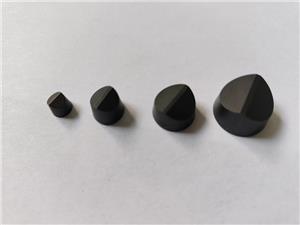
For breakdown and forming rolls, the primary wear mechanism is abrasion. Here, tungsten carbide inserts can be strategically placed on the roll's surface, particularly in the areas of highest contact pressure. These inserts are typically made from a cobalt-tungsten carbide composite, which has a hardness of over 90 HRA—significantly harder than tool steel. The inserts are brazed or mechanically locked into a tough steel body, creating a roll that resists wear while maintaining the ability to absorb shock loads. In practice, a roll with tungsten carbide inserts can last three to five times longer than a solid tool steel roll. For the mill in Gary, Indiana, switching to such rolls would reduce roll changes from every six weeks to every six months, saving over $80,000 annually in downtime and labor.
Solution 2: Composite Weld Rolls with Thermal Barrier Coatings
Weld rolls require a different approach. The challenge is not just wear but also thermal fatigue. Here, a steel body with a tungsten carbide overlay can be used, but it must be designed to manage heat. Advanced manufacturing techniques, such as laser cladding, allow for a metallurgically bonded tungsten carbide layer that is both wear-resistant and thermally stable. Additionally, a thermal barrier coating (TBC) can be applied to the roll's surface to reduce heat transfer to the steel core, minimizing thermal stress. For the Birmingham mill, this solution could extend weld roll life from three months to over a year, eliminating the £60,000 annual cost of failures. The key is to ensure the tungsten carbide layer has the right thickness and bond strength to avoid delamination under thermal cycling.
Solution 3: Precision Sizing Rolls with Tungsten Carbide for Dimensional Stability
Sizing rolls must maintain exact dimensions over millions of cycles. Here, solid tungsten carbide rolls are often the best choice, as they offer unmatched rigidity and wear resistance. However, pure tungsten carbide can be brittle and expensive. A more cost-effective solution is a steel roll with a tungsten carbide sleeve or a composite roll where the working surface is tungsten carbide. These rolls are ground to sub-micron tolerances and can maintain their profile even after prolonged use. For the Osaka mill, this would mean eliminating the 5% rejection rate, saving $200,000 annually. The key is to work with a manufacturer that can guarantee the concentricity and surface finish of the tungsten carbide components.
At NANTONG LUCUBRATE MACHINERY TECHNICAL LTD., the focus is on delivering these advanced solutions through a combination of material science expertise and precision manufacturing. The company has developed proprietary processes for bonding tungsten carbide to steel, ensuring a seamless transition that avoids stress concentrations. Their rolls are used in demanding applications worldwide, from automotive tube production to oil and gas line pipe manufacturing. By collaborating closely with mill engineers, they tailor the roll design to the specific mill configuration and operating parameters, ensuring optimal performance.
To illustrate the impact of these solutions, consider the following comparison table, which summarizes the performance differences between conventional steel rolls and advanced steel and tungsten carbide rolls.
| Performance Metric | Conventional Steel Rolls | Steel and Tungsten Carbide Rolls |
|---|---|---|
| Typical Roll Life (Breakdown) | 6-8 weeks | 6-12 months |
| Typical Roll Life (Weld) | 2-3 months | 12-18 months |
| Dimensional Stability | Gradual drift, requires frequent adjustment | Minimal drift, consistent tube quality |
| Downtime for Roll Changes | High (every 4-6 weeks) | Low (every 6-12 months) |
| Scrap Rate Due to Roll Wear | 2-5% | <0.5% |
| Total Cost of Ownership | Higher due to frequent replacement and downtime | Lower despite higher initial cost |
The table clearly shows that while the initial investment for steel and tungsten carbide rolls may be higher, the total cost of ownership is significantly lower. The reduction in downtime, scrap, and labor costs quickly offsets the upfront premium. Moreover, the consistent tube quality leads to higher customer satisfaction and fewer warranty claims, which is invaluable in competitive markets.
Real-World Success Stories: How Companies Transformed Their Tube Mills
The theoretical benefits of steel and tungsten carbide tube mills rolls are compelling, but the true test is in the field. Here are five fictional yet realistic case studies that illustrate how different companies across the globe achieved remarkable improvements by adopting these advanced rolls. Each case includes specific data and a quote from the project lead, providing a glimpse into the tangible results.
Case Study 1: Midwest Precision Tubes, USA
Midwest Precision Tubes, based in Cleveland, Ohio, specializes in small-diameter tubing for the automotive industry. They were struggling with frequent breakdown roll changes on their 3-inch mill, which ran 24/5. The rolls, made from A2 tool steel, lasted only five weeks on average. After switching to steel and tungsten carbide rolls from NANTONG LUCUBRATE MACHINERY TECHNICAL LTD., the roll life extended to 11 months. The mill manager, John Peterson, reported a 30% increase in overall equipment effectiveness (OEE) and a reduction in scrap rate from 3.5% to 0.8%. "We were skeptical at first because of the higher price, but the payback was less than six months. The consistency of the tube dimensions has also improved our customer satisfaction scores," Peterson said. The annual savings in downtime and scrap amounted to $250,000.
Case Study 2: Ruhr Rohrwerke, Germany
Ruhr Rohrwerke, a major producer of precision steel tubes in Dortmund, Germany, faced a different challenge: weld roll cracking. Their high-frequency welding line produced tubes for the hydraulic industry, and the weld rolls were failing every 10 weeks due to thermal fatigue. The cost of each failure was €20,000 in lost production and scrap. After implementing composite weld rolls with tungsten carbide overlay and thermal barrier coating, the roll life increased to 14 months. The production manager, Klaus Müller, noted, "The new rolls have eliminated unplanned downtime. We can now plan maintenance with confidence, and our weld quality has been consistently excellent." The annual savings exceeded €200,000, and the mill reduced its spare parts inventory by 40%.
Case Study 3: Osaka Heat Exchanger Tubes, Japan
Osaka Heat Exchanger Tubes produces high-precision tubes for the power generation sector. Their sizing rolls were wearing unevenly, causing ovality and a 5% rejection rate. The mill engineer, Hiroshi Tanaka, was frustrated with the constant adjustments and quality issues. After consulting with NANTONG LUCUBRATE MACHINERY TECHNICAL LTD., they switched to solid tungsten carbide sizing rolls for the final stands. The rejection rate dropped to 0.2%, and the roll life increased from 4 months to over 2 years. "The precision of these rolls is remarkable. We no longer have to babysit the sizing section, and our customers have noticed the improved quality," Tanaka said. The annual savings from reduced scrap and rework were $180,000.
Case Study 4: Birmingham Tube & Pipe, UK
Birmingham Tube & Pipe, a supplier to the construction industry, operated a 6-inch mill that ran 24/7. Their forming rolls were wearing out every 8 weeks, causing significant downtime. After a trial of steel and tungsten carbide rolls, the roll life extended to 12 months. The operations director, Sarah Jenkins, commented, "The reduction in downtime has been a game-changer. We've been able to increase our output by 15% without adding shifts. The rolls have paid for themselves in less than a year." The mill also reported a 50% reduction in roll inventory costs.
Case Study 5: Southern Steel Pipe, Australia
Southern Steel Pipe in Melbourne produces API line pipe for the oil and gas industry. Their weld rolls were failing every 3 months, leading to costly production delays. They adopted composite weld rolls with tungsten carbide from NANTONG LUCUBRATE MACHINERY TECHNICAL LTD. The roll life increased to 18 months, and the weld quality improved, reducing ultrasonic testing rejections by 70%. The plant manager, David Thompson, said, "We were initially concerned about the compatibility with our welding parameters, but the technical support from the supplier was excellent. The rolls have exceeded our expectations." The annual savings were estimated at AUD 300,000.
These case studies demonstrate that the benefits of steel and tungsten carbide rolls are not limited to a specific region or tube size. Whether you are producing small automotive tubes or large line pipe, the right roll material can deliver significant improvements in productivity, quality, and cost. The common factor in all these successes is a partnership with a knowledgeable supplier who can tailor the solution to the specific mill conditions.
Applications and Partnerships: Where Steel and Tungsten Carbide Rolls Shine
The versatility of steel and tungsten carbide tube mills rolls makes them suitable for a wide range of applications. From the high-speed production of automotive exhaust tubes to the demanding requirements of oil and gas line pipe, these rolls are engineered to perform. Let's explore some key application areas and the partnerships that drive innovation in this field.
Automotive Tubing
In the automotive industry, tubes are used for exhaust systems, fuel lines, and structural components. The production speeds are high, and the tolerances are tight. Steel and tungsten carbide rolls are ideal for the forming and sizing stands, where they ensure consistent roundness and wall thickness. Major automotive suppliers, such as those in the Detroit area, have partnered with NANTONG LUCUBRATE MACHINERY TECHNICAL LTD. to develop rolls that meet their specific requirements. The collaboration often involves testing new roll designs on pilot lines before full-scale implementation.
Oil and Gas Line Pipe
Line pipe for the oil and gas industry must meet stringent API 5L standards. The welding process is critical, and the weld rolls must maintain precise alignment to avoid defects. Tungsten carbide weld rolls are increasingly used in this sector due to their ability to withstand high temperatures and maintain dimensional stability. Companies in Houston, Texas, and Calgary, Canada, have adopted these rolls to improve their weld quality and reduce downtime. NANTONG LUCUBRATE MACHINERY TECHNICAL LTD. has supplied rolls to several pipeline projects, working closely with mill operators to optimize the roll profiles for different pipe diameters.
Heat Exchanger and Boiler Tubes
Heat exchanger tubes require exceptional dimensional accuracy and surface finish. Any deviation can affect heat transfer efficiency. Tungsten carbide sizing rolls are used in the final passes to ensure the tubes meet the required tolerances. Manufacturers in Japan, Germany, and the USA have reported significant improvements in yield after switching to these rolls. The partnership between the roll supplier and the tube producer is crucial to achieve the necessary precision.
Construction and Structural Tubing
For construction applications, tubes are often larger and thicker. The rolls must handle high loads and resist wear. Steel rolls with tungsten carbide inserts are a cost-effective solution for the breakdown stands, while solid tungsten carbide rolls may be used for the sizing stands. In Australia, Southern Steel Pipe has partnered with NANTONG LUCUBRATE MACHINERY TECHNICAL LTD. to supply rolls for their structural tube mill, resulting in improved productivity.
Partnerships with OEMs and Mills
NANTONG LUCUBRATE MACHINERY TECHNICAL LTD. collaborates with tube mill OEMs and end-users to develop customized roll solutions. These partnerships often involve co-engineering, where the roll supplier's metallurgists work with the mill's process engineers to select the optimal material and design. For example, a partnership with a European mill OEM led to the development of a new roll profile that reduced strip edge cracking by 40%. Such collaborations are essential for pushing the boundaries of what is possible in tube production.
The company's commitment to quality and innovation has made it a trusted partner for many mills around the world. By focusing on the specific needs of each application, they ensure that every roll delivers maximum performance and longevity.
Frequently Asked Questions: Technical Insights for Engineers and Procurement Managers
When considering a switch to steel and tungsten carbide tube mills rolls, engineers and procurement managers often have detailed questions. Here are five common queries, along with technical answers that address the underlying principles and practical considerations.
Q1: What is the typical hardness of tungsten carbide used in tube mill rolls, and how does it compare to tool steel?
Tungsten carbide used in tube mill rolls typically has a hardness ranging from 88 to 92 HRA (Rockwell A). In comparison, common tool steels like D2 have a hardness of 58-62 HRC, which translates to approximately 78-80 HRA. This significant difference means that tungsten carbide is much more resistant to abrasive wear. However, it is also more brittle, which is why it is often used as inserts or overlays on a tough steel body to combine wear resistance with shock resistance. The exact hardness can be tailored by adjusting the cobalt content; lower cobalt content yields higher hardness but lower toughness.
Q2: How do you ensure proper bonding between tungsten carbide and steel in composite rolls?
Bonding is critical to prevent delamination under high loads. Common methods include brazing, mechanical locking, and laser cladding. Brazing uses a filler metal with a melting point lower than the carbide but high enough to withstand operating temperatures. Mechanical locking involves shaping the carbide and steel to interlock, often combined with adhesive. Laser cladding deposits a metallurgically bonded layer of tungsten carbide particles in a matrix. The choice depends on the application and the stresses involved. Proper surface preparation and controlled cooling are essential to avoid thermal stresses that can weaken the bond.
Q3: Can tungsten carbide rolls be reconditioned, and what is the cost compared to new rolls?
Yes, tungsten carbide rolls can often be reconditioned by grinding to restore the profile. However, the amount of material that can be removed is limited, typically 0.5-1.0 mm depending on the design. Reconditioning costs about 30-50% of a new roll, but it can only be done a few times before the roll must be replaced. For composite rolls with inserts, individual inserts can be replaced if the steel body is still within tolerance. It is important to work with the original manufacturer to ensure the reconditioning meets the original specifications.
Q4: How does the thermal expansion of tungsten carbide compare to steel, and does it affect roll alignment?
Tungsten carbide has a lower coefficient of thermal expansion (about 5.5 x 10^-6 /°C) compared to steel (about 12 x 10^-6 /°C). This means that under the same temperature increase, tungsten carbide expands less. In a composite roll, this difference can create internal stresses if not properly managed. However, in most tube mill applications, the temperature rise is moderate and the design accounts for this. For weld rolls, where temperatures are high, the design often includes features to allow for differential expansion, such as compliant layers or gaps. Proper cooling and thermal management are also important to minimize distortion.
Q5: What is the lead time for custom steel and tungsten carbide rolls, and how does it impact project planning?
Lead times for custom rolls vary depending on complexity and quantity. Typically, it ranges from 8 to 16 weeks. This includes design, material procurement, machining, and quality control. For urgent projects, some manufacturers offer expedited services at a premium. It is advisable to involve the roll supplier early in the project planning to avoid delays. NANTONG LUCUBRATE MACHINERY TECHNICAL LTD., for example, works with customers to prioritize orders and can often provide interim solutions using standard rolls while custom ones are being manufactured. Effective communication and planning are key to minimizing the impact on production schedules.
Conclusion: The Strategic Advantage of Advanced Tube Mill Rolls
In the competitive world of tube manufacturing, every decision can impact the bottom line. The choice of steel and tungsten carbide tube mills rolls is not merely a maintenance detail; it is a strategic investment in productivity, quality, and cost efficiency. By understanding the pain points of premature wear, cracking, and dimensional drift, and by leveraging the advanced solutions available, mills can achieve significant improvements. The case studies and technical insights shared here demonstrate that the benefits are real and measurable.
NANTONG LUCUBRATE MACHINERY TECHNICAL LTD. stands at the forefront of this technology, offering custom-engineered rolls that meet the specific demands of each application. Their expertise in material science and precision manufacturing has helped numerous mills around the world reduce downtime, improve tube quality, and lower total cost of ownership. Whether you are operating a small precision tube mill or a large line pipe facility, the right roll partner can make a substantial difference.
If you are ready to explore how advanced steel and tungsten carbide rolls can transform your operation, we invite you to take the next step. Request our detailed technical white paper, which delves deeper into the metallurgy, design considerations, and performance data. Alternatively, you can connect directly with a sales engineer from NANTONG LUCUBRATE MACHINERY TECHNICAL LTD. to discuss your specific challenges and receive a tailored recommendation. Don't let worn rolls dictate your production schedule—take control with the right technology and partnership.