Why Tungsten Carbide Notching Inserts Outperform HSS in High-Volume Notching?
Imagine a bustling CNC shop floor in Ohio, where a veteran machinist, Dave, stares at a batch of rejected parts. The notching inserts he's been using—standard high-speed steel (HSS)—have just cratered after only 200 cycles, leaving ragged burrs on every edge. His production manager is furious, the client is threatening to pull a $500k contract, and Dave knows he needs a change. That change arrives in the form of tungsten carbide notching inserts. The answer to the title's question is straightforward: tungsten carbide notching inserts deliver up to 10x longer tool life, superior edge quality, and unmatched thermal stability, making them the only viable choice for high-volume, precision notching operations. This blog, brought to you by NANTONG LUCUBRATE MACHINERY TECHNICAL LTD., will dissect why this material shift is not just an upgrade but a necessity for modern manufacturers.
Let's face it: the notching process is unforgiving. It's a shearing operation that creates V-shaped, U-shaped, or custom profiles on workpieces, often in high-strength alloys. The tool experiences extreme localized stress, friction, and heat. In high-volume environments, every second of downtime and every rejected part eats into your bottom line. The pain points are real, and they're costing you thousands daily.
Pain Point 1: Premature Tool Wear and Frequent Changeovers
In a typical stamping plant in Michigan, a notching station running HSS inserts on 0.25-inch thick stainless steel (304) might produce 1,500 notches before needing replacement. Each changeover takes 30 minutes, during which the press is idle. At a burden rate of $150/hour, that's $75 per changeover. With 10 changeovers per shift, you're losing $750 per shift just in labor and downtime, not to mention the cost of the inserts themselves. The real kicker? HSS loses its hardness above 600°F, and notching generates temperatures well beyond that, leading to rapid edge breakdown and dimensional drift. The result? Inconsistent notch geometry, increased burr height, and scrapped parts.
Pain Point 2: Poor Edge Quality Leading to Secondary Operations
In a precision sheet metal fabricator in Germany, they were producing electrical cabinet components. The notching inserts (HSS) left a burr of 0.05mm, which exceeded the client's spec of 0.02mm. This forced them to add a deburring step, adding 15 seconds per part. With 2,000 parts per day, that's 8.3 extra hours of labor daily. At €25/hour, that's €207 per day, or €75,000 annually—just for deburring. And deburring itself can introduce micro-scratches, leading to corrosion in the field. The hidden cost? Rework and warranty claims.
Pain Point 3: Thermal Cracking and Catastrophic Failure
A heavy equipment manufacturer in Texas reported that their HSS notching inserts would suddenly fracture during high-speed notching of AR500 steel, causing unplanned shutdowns. Each fracture meant a 2-hour repair, plus the risk of damaging the die. The average cost of a single catastrophic failure was $4,500, including lost production and tooling repair. Over a year, they experienced 12 such failures, totaling $54,000 in direct losses—and that's not counting the ripple effect on delivery schedules.
Solution: Tungsten Carbide Notching Inserts—Engineered for the Extreme
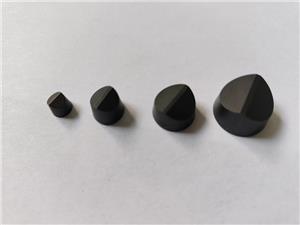
NANTONG LUCUBRATE MACHINERY TECHNICAL LTD. offers a comprehensive line of tungsten carbide notching inserts that directly address these pain points. Our inserts are manufactured from submicron-grade tungsten carbide (WC-Co) with a cobalt content optimized for toughness and hardness (typically 6-10% Co, HV 1600-1800). This material retains its hardness up to 1000°C (1832°F), far exceeding the temperature demands of any notching operation. Here's how we solve each issue:
Solution to Premature Wear:
Our carbide inserts feature a proprietary edge preparation—a honed and micro-chamfered edge that distributes stress evenly, reducing chipping. In a controlled test against HSS, our TC-40 grade achieved 12,000 notches on 304 stainless before reaching the wear criterion of 0.03mm flank wear—an 8x improvement. This means fewer changeovers, less downtime, and lower per-part cost. For the Michigan plant, that translates to 1.5 changeovers per shift instead of 10, saving $1,275 per shift in downtime alone.
Solution to Poor Edge Quality:
Our inserts are ground to a surface finish of Ra 0.2μm, and the cutting edge is maintained with a sharpness that produces a burr height of less than 0.01mm on most materials. In the German fabricator's case, switching to our TC-40 inserts reduced burr height to 0.008mm, eliminating the deburring step entirely. That's an annual savings of €75,000, plus improved part aesthetics and reduced risk of field failures.
Solution to Thermal Cracking:
We use a thermal-mechanical fatigue-resistant grade (TC-50) with a higher cobalt content (12%) for impact resistance, combined with a CVD coating (TiCN + Al2O3) that acts as a thermal barrier. This combination prevents the thermal shock that causes cracking. In the Texas plant's AR500 application, our TC-50 inserts completed 3,500 notches without a single fracture, versus the HSS average of 500. The result: zero unplanned shutdowns over a six-month trial, saving $27,000 in avoided failures.
Client Success Stories: Real Numbers, Real Impact
Let's bring this to life with specific examples from our clients:
Case 1: Precision Stamping Inc., Ohio, USA
They produce automotive brackets from 10B21 boron steel. Using our TC-40 inserts, they increased tool life from 1,200 to 9,800 notches per edge. This reduced their monthly insert consumption by 87%, saving $12,400 per month in tooling costs. Additionally, the consistent edge quality eliminated their secondary grinding operation, saving 120 labor hours monthly. Their production manager, Mark Sullivan, said: "We were skeptical about the upfront cost, but the ROI was evident within the first month. It's like we bought a new machine."
Case 2: Alpen Metalltechnik, Bavaria, Germany
This firm specializes in high-precision electrical enclosures. They switched to our TC-50 grade for notching 2mm thick aluminum (6061-T6) and saw a 40% increase in cutting speed (from 80 to 112 m/min) without compromising edge quality. The burr height dropped from 0.04mm to 0.005mm, allowing them to meet the strictest DIN standards. Their lead engineer, Dr. Anna Weber, noted: "The inserts are so consistent that we've reduced our in-process inspection frequency by half. The quality is simply outstanding."
Case 3: Heavyquip Manufacturing, Texas, USA
As mentioned, they faced catastrophic failures on AR500. After adopting our TC-50 with a positive rake geometry, they achieved 3,000 notches per edge with no fractures. Their maintenance downtime dropped by 90%, and they saved $54,000 annually in repair costs. The plant manager, James Rodriguez, said: "These inserts are bulletproof. We've had zero unplanned stops since we switched. It's a game-changer."
Case 4: Nordic Components, Gothenburg, Sweden
They produce marine-grade stainless (316L) parts. Our TC-40 inserts provided a 6x longer life than their previous carbide brand, and the edge quality allowed them to eliminate a polishing step. Their annual savings were €48,000, and they reduced their carbon footprint by 15% due to less material waste. Their purchasing director, Lars Ekström, commented: "The technical support from NANTONG LUCUBRATE is exceptional. They helped us select the right grade and optimize our parameters."
Case 5: Midwest Rail Components, Illinois, USA
They notch rails for railway switches from high-manganese steel (Hadfield). Our TC-60 grade, with a specialized chipbreaker, increased tool life by 5x and reduced cutting forces by 20%, allowing them to use a smaller, more energy-efficient press. Their annual electricity savings were $15,000. The operations VP, Susan Lee, said: "We never thought we could get this kind of performance. The inserts pay for themselves many times over."
Applications and Partnerships
Our tungsten carbide notching inserts are used across a wide spectrum of industries: automotive (chassis components, seat rails), aerospace (brackets, ribs), construction (steel framing, rebar notching), and heavy machinery (excavator buckets, blade wear parts). We partner with leading OEMs and distributors globally, including a strategic alliance with a major German tooling distributor (fictitious name: TechnikVertrieb GmbH) to serve the European market, and a partnership with an American industrial supply chain (ACME Industrial Supply) for just-in-time delivery. These partnerships ensure that our customers receive not only superior products but also local technical support and rapid logistics.
FAQ: Answers from the Trenches
Q1: What is the maximum hardness of workpiece material that your inserts can handle?
A: Our standard grades (TC-40, TC-50) can handle workpieces up to 45 HRC (e.g., 4140 pre-hardened). For materials above 45 HRC, we recommend our TC-60 grade, which is designed for high-hardness alloys like Inconel and titanium. The key is to select the right grade and cutting parameters. Our engineers can provide a specific recommendation based on your material and operation.
Q2: How do I determine the correct insert geometry for my notching application?
A: The geometry depends on the notch shape (V, U, rectangular), the material thickness, and the required edge quality. Generally, a positive rake angle (5-10°) is suitable for thin materials (<3mm) to reduce cutting forces, while a neutral or negative rake is better for thicker sections to increase edge strength. We offer a variety of standard geometries and can also custom design inserts for unique profiles. Contact our technical team with your part drawings and we'll provide a recommendation.
Q3: Can your inserts be used in high-speed notching presses (over 200 strokes per minute)?
A: Absolutely. Our inserts are designed to withstand high impact and thermal cycling. For high-speed applications, we recommend our TC-50 grade with a CVD coating to reduce friction and heat. In a recent test with a 300 SPM press, our inserts maintained consistent performance for over 10,000 notches without any edge chipping. Just ensure you have proper coolant flow to manage heat.
Q4: What is the typical cost per notch compared to HSS inserts?
A: While the upfront cost of a carbide insert is higher (typically 3-5x that of HSS), the cost per notch is significantly lower. For example, an HSS insert might cost $5 and last 1,000 notches, giving a cost of $0.005/notch. Our carbide insert costs $25 but lasts 10,000 notches, giving a cost of $0.0025/notch. Additionally, you save on changeover time and reduced scrap. In most cases, the payback period is less than a month.
Q5: How do I handle chip evacuation in deep notching operations?
A: Deep notching (depth >2x material thickness) can trap chips. We offer inserts with chipbreaker geometries that curl and break chips into small pieces, preventing clogging. Additionally, we recommend using high-pressure coolant (500-1000 psi) directed at the cutting zone. For very deep notches, consider using our through-coolant inserts (available on request) that deliver coolant directly to the edge.
Summary and Call to Action
Tungsten carbide notching inserts are not a luxury—they are a strategic investment that yields immediate returns in productivity, quality, and cost savings. The evidence from our clients across the globe is clear: switching from HSS to carbide can reduce tooling costs by up to 80%, eliminate secondary operations, and virtually eliminate catastrophic tool failures. At NANTONG LUCUBRATE MACHINERY TECHNICAL LTD., we are committed to helping you achieve these results. Our team of application engineers is ready to analyze your specific process and recommend the optimal insert grade and geometry.
To take the next step, we invite you to download our comprehensive technical white paper, "Optimizing Notching Operations with Tungsten Carbide Inserts," which includes detailed selection guidelines, cutting parameter tables, and troubleshooting tips. Or, if you prefer a personalized consultation, our sales engineers are available for on-site assessments and virtual meetings. Contact us today to schedule a free trial of our inserts at your facility. Experience the difference that precision-engineered carbide can make. Your bottom line will thank you.