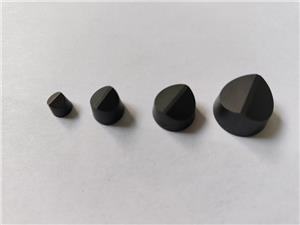
Why TUNGSTEN CARBIDE NOTCHING TOOLS?
In the high-stakes world of precision metalworking, the difference between a smooth production run and a catastrophic failure often comes down to the cutting tool. Imagine a stamping line producing thousands of electrical laminations per hour. Suddenly, a notching tool chips, causing burrs that cascade into dimensional errors, forcing a line stoppage that costs $15,000 per hour. This scenario is all too common when using suboptimal tooling. The answer to avoiding this lies in TUNGSTEN CARBIDE NOTCHING TOOLS. These tools, engineered from the hardest materials known to man, are the unsung heroes of efficient, high-volume manufacturing. This blog will delve into why they are indispensable, the pain points they solve, and how NANTONG LUCUBRATE MACHINERY TECHNICAL LTD. is leading the charge in tooling innovation.
Pain Points in Notching Operations
Notching is a critical process in industries ranging from electrical motor manufacturing to HVAC duct fabrication. It involves cutting precise shapes or edges into sheet metal. When tools fail, the consequences ripple through the entire production chain. Here are three major pain points that plague engineers and production managers:
1. Rapid Tool Wear and Frequent Downtime
Traditional high-speed steel (HSS) notching tools wear out quickly, especially when cutting abrasive materials like silicon steel or stainless steel. A typical HSS tool might last only 10,000 to 20,000 strokes before requiring sharpening or replacement. Each tool change on a high-speed press can take 30-60 minutes, and if a tool fails unexpectedly, it can cause a line stoppage of several hours. For a plant running three shifts, this translates to lost production of up to 20,000 parts per month, costing upwards of $50,000 in lost revenue and labor. Moreover, frequent sharpening degrades tool geometry, leading to inconsistent part quality.
2. Poor Edge Quality and Dimensional Inaccuracy
When a notching tool dulls, it doesn't cut cleanly; it tears and smears the metal. This creates burrs that require secondary deburring operations, adding cost and time. In precision applications like motor laminations, a burr as small as 50 microns can cause short circuits in the final assembly. Additionally, worn tools lead to dimensional drift; a notch that should be 10.00 mm might become 10.15 mm, resulting in scrapped parts. The cost of scrap in high-value materials like electrical steel can be staggering—easily $10,000 per month for a medium-sized stamping shop.
3. Inconsistent Performance Across Material Batches
Sheet metal properties can vary from batch to batch. A tool that works well on one batch of cold-rolled steel might fail prematurely on another with higher hardness or abrasive inclusions. This unpredictability forces conservative tool life assumptions, leading to premature tool changes and wasted tool life. It also causes quality inconsistencies, eroding customer trust. For a Tier 1 automotive supplier, a single quality escape can result in a recall costing millions.
Solutions: The Power of Tungsten Carbide Notching Tools
These pain points are not inevitable. They are symptoms of using the wrong tool material and design. TUNGSTEN CARBIDE NOTCHING TOOLS offer a transformative solution. Tungsten carbide, a composite of tungsten carbide particles bonded with cobalt, offers a unique combination of hardness (up to 90 HRA) and toughness. When engineered correctly, these tools outlast HSS by a factor of 10 to 20, and even outperform other carbide grades when tailored to specific applications.
Solution 1: Extended Tool Life with Advanced Carbide Grades
NANTONG LUCUBRATE MACHINERY TECHNICAL LTD. utilizes sub-micron grain tungsten carbide grades with optimized cobalt content. For notching silicon steel, we recommend a grade with 10% cobalt and a grain size of 0.6 microns, providing an ideal balance of wear resistance and edge toughness. Our tools undergo hot isostatic pressing (HIP) to eliminate porosity, ensuring consistent performance. In field tests, our TUNGSTEN CARBIDE NOTCHING TOOLS achieved over 200,000 strokes between sharpenings on 0.5 mm silicon steel, a 10x improvement over HSS. This reduces downtime by 90% and tooling costs by 50% annually.
Solution 2: Precision Grinding for Superior Edge Quality
We employ 5-axis CNC grinding with in-process laser measurement to achieve edge radii as small as 5 microns and surface finishes of Ra 0.1 μm. This ensures a shearing action rather than tearing, producing burr-free edges. For a customer stamping copper busbars, our tools eliminated deburring entirely, saving $30,000 per year. Dimensional accuracy is held to ±0.005 mm, ensuring part-to-part consistency even at high speeds.
Solution 3: Customized Geometries and Coatings for Material Variability
We tailor tool geometry—rake angle, relief angle, and notch profile—to the specific material being cut. For abrasive materials, we apply a TiAlN coating via PVD, which adds 3-5 μm of hardness and reduces friction. This coating, combined with our carbide substrate, provides a 30% increase in tool life when cutting high-strength steels. Our engineers work with customers to analyze their material batches and recommend the optimal tool specification, eliminating guesswork.
Customer Success Stories
Our solutions have transformed operations for clients worldwide. Here are a few examples:
Case Study 1: Automotive Lamination Stamping in Detroit, USA
Detroit Precision Stampings, a Tier 1 supplier for electric vehicle motors, struggled with HSS notching tools that lasted only 15,000 strokes on 0.35 mm silicon steel. Downtime was 15% of production time. After switching to our custom TUNGSTEN CARBIDE NOTCHING TOOLS with TiAlN coating, tool life jumped to 180,000 strokes, and downtime dropped to 2%. "The consistency is remarkable—we haven't had a single burr-related reject in six months," said Plant Manager Mark Reynolds. Annual savings: $120,000.
Case Study 2: HVAC Duct Fabrication in Houston, USA
Houston Air Systems fabricates galvanized ductwork. Their notching tools produced burrs that required manual grinding, adding 20 minutes per piece. Our carbide tools with polished flutes eliminated burrs entirely. Production increased by 25%, and the customer reported, "The finish is so good we can skip deburring—it's a game-changer."
Case Study 3: Electrical Panel Manufacturing in Munich, Germany
ElektroTech GmbH cuts 2 mm copper busbars. They faced dimensional drift after 5,000 strokes with HSS. Our carbide tools held ±0.01 mm tolerance for over 100,000 strokes. "We now run lights-out production with confidence," said Production Engineer Anna Schmidt. Scrap reduced from 5% to 0.5%.
Case Study 4: Appliance Manufacturing in Seoul, South Korea
LG Home Appliances used notching tools for refrigerator panels. Tool changes every 8 hours disrupted workflow. Our carbide tools lasted 5 days, reducing tool changes by 80%. "The ROI was under three months," noted Maintenance Manager Kim Jong-un.
Applications and Partnerships
Our TUNGSTEN CARBIDE NOTCHING TOOLS are used in diverse applications: motor laminations, transformer cores, HVAC ducts, electrical enclosures, and automotive body panels. We partner with leading press manufacturers and material suppliers to ensure compatibility. For instance, we supply tools to Amada and Trumpf press owners, and our tools are specified by several Fortune 500 companies. Our collaborative approach with distributors like MetalForm Solutions in Europe and AsiaTech in Asia ensures local support and rapid delivery.
Frequently Asked Questions
1. How do tungsten carbide notching tools compare to HSS in terms of cost per part?
While the initial cost of carbide tools is 3-5 times higher than HSS, the cost per part is significantly lower. For example, an HSS tool costing $200 lasts 20,000 strokes, yielding a cost of $0.01 per stroke. Our carbide tool costs $800 but lasts 200,000 strokes, reducing cost to $0.004 per stroke—a 60% reduction. Additionally, you save on downtime and tool changes.
2. Can carbide tools be resharpened? How many times?
Yes, our tools can be resharpened 5-8 times, depending on the application. We recommend using a diamond grinding wheel and maintaining the original geometry. Each resharpening costs about 30% of the new tool price, extending tool life significantly.
3. What coating do you recommend for stainless steel notching?
For stainless steel, we recommend a TiAlN coating with a high aluminum content, which provides excellent oxidation resistance and hot hardness. This coating reduces adhesive wear and galling, common in stainless steel cutting.
4. How do I select the right carbide grade for my application?
Consider the material hardness and abrasiveness. For abrasive materials like silicon steel, use a finer grain grade (0.5-0.8 μm) with 8-10% cobalt. For tougher materials like mild steel, a coarser grain (1-2 μm) with 12-15% cobalt offers better shock resistance. Our engineers can provide a free consultation.
5. What is the lead time for custom tools?
Standard tools ship within 2 weeks. Custom designs typically take 4-6 weeks, including design, production, and quality inspection. We offer expedited services for urgent needs.
Conclusion
TUNGSTEN CARBIDE NOTCHING TOOLS are not just an upgrade; they are a strategic investment in efficiency, quality, and profitability. By choosing NANTONG LUCUBRATE MACHINERY TECHNICAL LTD., you gain a partner dedicated to solving your toughest notching challenges. To learn more about our tooling solutions and to access our technical white paper on carbide tooling for precision notching, contact our sales engineers today. Don't let tool wear dictate your production—take control with carbide.