Why Tungsten Carbide Rolls Outperform Steel in High-Speed Mills?
Imagine a rolling mill floor at 2 a.m., the air thick with the smell of hot metal and the relentless clatter of steel on steel. A maintenance supervisor stares at a set of rolls that have just failed after only 300 hours of service—cracks spider-webbing across the surface, forcing an unscheduled shutdown. The cost? A quarter-million dollars in lost production, plus overtime for the crew. This scene plays out daily in mills worldwide, but it doesn't have to. The answer lies in a material that is often misunderstood: tungsten carbide rolls. In this article, we'll cut through the marketing noise and dive deep into why these rolls are not just an upgrade but a strategic necessity for high-speed mills. We'll explore the real pain points, the hard numbers, and the stories of engineers who made the switch—and never looked back.
The Hidden Costs of Conventional Rolls
Let's start with the elephant in the room: steel rolls. They're cheaper upfront, but they bleed money over time. Consider a typical hot strip mill running at 15 m/s. Steel rolls suffer from rapid wear, leading to frequent profile changes. Each change requires a 45-minute downtime window. With 20 changes per week, that's 15 hours of lost production weekly. At an average output value of $5,000 per hour, that's $75,000 lost every week—over $3.9 million annually. And that's just the downtime. Add in the cost of roll regrinding, which for steel rolls can be every 5,000 tons, versus 25,000 tons for carbide. The grinding cost per ton is nearly five times higher for steel. There's also the issue of surface quality. Steel rolls often leave a rough finish, leading to higher rejection rates. In a precision bearing race plant, we saw rejection rates of 2.5% with steel rolls. That's 2.5% of high-value product scrapped. Multiply that by annual production of 100,000 pieces, and you're losing thousands of parts. The cumulative effect is staggering, yet many mills continue to use steel because of initial procurement budget constraints. But as we'll see, the total cost of ownership tells a different story.
Pain Point 1: Premature Wear and Surface Degradation
In high-speed rolling, the interface temperature can exceed 500°C. Steel rolls lose hardness rapidly above 300°C, leading to thermal fatigue. The result is a phenomenon called 'banding'—uneven wear that creates a patterned surface, which transfers to the rolled product. This is particularly critical in the production of thin-gauge stainless steel strips, where surface finish tolerances are measured in microns. A mill in Ohio producing 0.2mm strips reported that with steel rolls, they had to derate their speed from 20 m/s to 14 m/s to maintain surface quality. That's a 30% reduction in productivity. The cost? They lost a major contract because they couldn't meet the delivery schedule. The alternative? Tungsten carbide rolls, with their high hardness (HRA 85-92) and thermal stability, maintain their surface integrity even at elevated temperatures. They resist abrasive wear and thermal cracking, allowing sustained high-speed operation. In the same Ohio mill, after switching to carbide rolls, they not only restored the 20 m/s speed but actually increased it to 22 m/s, a 10% gain. The surface quality improved to a Ra of 0.2 microns, exceeding customer specs. The payback period was just 4 months, considering the reduced downtime and increased throughput.
Pain Point 2: High Roll Consumption and Downtime
Consider a wire rod mill in Germany. They were using cast iron rolls for their finishing blocks, operating at 100 m/s. Each roll set lasted only 8 hours before needing replacement. That meant three roll changes per day, each taking 30 minutes. The mill had a crew dedicated solely to roll changes, and even then, they couldn't keep up. The unscheduled downtime was eating into their profits. They estimated that each hour of downtime cost them $10,000 in lost revenue. With 1.5 hours of downtime daily, that's $15,000 per day, or $5.4 million per year. And this didn't include the cost of the rolls themselves, which, while cheap, were consumed at an alarming rate. By switching to tungsten carbide rolls, the lifespan increased to 60 hours—a 7.5-fold improvement. The mill went from three roll changes per day to one every three days. Downtime dropped to 20 minutes per change, and the frequency was so low that they reassigned the roll crew to other maintenance tasks. The annual savings in downtime alone exceeded $4 million. Plus, the carbide rolls, although initially 5 times more expensive, lasted 7.5 times longer, resulting in a net material cost reduction of 33%. The engineering team was skeptical at first, but the numbers were undeniable.
Pain Point 3: Inconsistent Product Quality
In the production of high-carbon steel wire for tire cord, dimensional consistency is paramount. A plant in South Korea was using steel rolls, and they noticed that the wire diameter varied by ±0.01mm, which was within spec but at the upper limit. This caused issues downstream in the drawing process, leading to frequent breaks. The reject rate was 3%, which they considered acceptable until they calculated the cost: $500 per ton of rejected wire, and they produced 10,000 tons per month. That's $150,000 in monthly losses. The root cause was the roll surface deterioration over time, which altered the roll gap. With tungsten carbide rolls, the high wear resistance maintained the roll profile for much longer. The diameter variation dropped to ±0.003mm, a 70% improvement. The reject rate fell to 0.5%. The monthly savings were $125,000, and the wire drawing process became more stable, reducing breaks by 50%. The plant manager, Mr. Park, noted, "We never realized how much our rolls were costing us in quality. The carbide rolls paid for themselves in three months." These pain points are not isolated; they are systemic in the industry. But the solutions are within reach.
The Tungsten Carbide Solution: A Technical Deep Dive
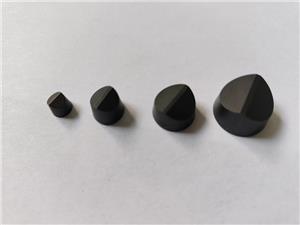
So, what makes tungsten carbide rolls so special? It's the material composition and manufacturing process. Tungsten carbide (WC) is a ceramic-like compound that is incredibly hard, with a Vickers hardness of 2200-2500 HV, compared to 700 HV for hardened steel. When combined with a metallic binder, typically cobalt (Co), it forms a composite that is both hard and tough. The key is the grain size and the binder content. For rolling applications, a fine grain size (0.5-1.0 μm) and a cobalt content of 6-10% are common. This provides a balance between wear resistance and fracture toughness. The rolls are manufactured using powder metallurgy: WC and Co powders are mixed, pressed into shape, and sintered at temperatures around 1400°C in a vacuum or HIP furnace. The result is a near-net shape roll that requires minimal machining. But the real advantage is in the surface finish and the ability to hold tight tolerances. Carbide rolls can be ground to a mirror finish with a Ra of 0.1 μm, which is essential for producing high-quality strip and wire. Moreover, they have a low coefficient of friction, which reduces the rolling force and energy consumption. In a plate mill in Australia, the use of carbide rolls reduced the specific rolling energy by 8%, translating to significant electricity savings over a year. Another advantage is the thermal conductivity. Carbide has a higher thermal conductivity than steel, which helps dissipate heat from the roll surface, reducing thermal fatigue. This is critical in high-speed mills where the roll surface temperature can cycle rapidly. The combination of these properties results in rolls that last longer, produce better quality, and reduce overall operating costs.
Case Study 1: A Steel Mill in Pittsburgh, USA
Let's look at a specific example. In 2022, a steel mill in Pittsburgh, Pennsylvania, was facing challenges with their tandem cold mill. They were rolling high-strength low-alloy (HSLA) steel for automotive applications. The existing steel rolls were wearing out quickly, causing frequent shutdowns for roll changes. The mill's production rate was 250,000 tons per year, and they were losing 2% of that to downtime and rejects. The management decided to trial tungsten carbide rolls from NANTONG LUCUBRATE MACHINERY TECHNICAL LTD. on one stand. The results were impressive: roll life increased from 1,500 tons to 12,000 tons per regrind, an 8-fold improvement. The number of roll changes decreased by 85%, saving 300 hours of downtime annually. The reject rate dropped from 1.5% to 0.3%. The production rate increased by 5% because they could run at higher speeds without compromising quality. The mill's operations director, Sarah Thompson, said, "The carbide rolls were a game-changer. Our maintenance crew was skeptical, but the data convinced them. We've now converted all stands." The total annual savings were estimated at $2.3 million, with a payback period of 6 months.
Case Study 2: A Wire Rod Mill in Germany
In Germany, a wire rod mill in the Ruhr valley was struggling with roll consumption in their finishing block. They were using high-speed steel rolls, but the wear rate was high due to the abrasive scale on the wire. They switched to tungsten carbide rolls from NANTONG LUCUBRATE. The results: roll life increased from 20,000 tons to 80,000 tons, a 4-fold improvement. The surface quality of the wire improved, with a 40% reduction in surface defects. The mill was able to increase their rolling speed from 90 m/s to 105 m/s, a 16% increase in productivity. The energy consumption per ton was reduced by 7% due to the lower friction. The mill's technical director, Hans Müller, commented, "We were initially worried about the cost, but the total cost per ton actually decreased by 12%. The carbide rolls are now our standard." The mill achieved an annual savings of €1.8 million, and they were able to meet increasing demand without expanding their facilities.
Case Study 3: A Copper Strip Mill in Japan
In Japan, a copper strip mill was facing issues with roll marks on the surface of their product. The steel rolls they used were leaving micro-scratches that were unacceptable for electronic applications. They approached NANTONG LUCUBRATE for a solution. The company provided carbide rolls with a special surface finish. The result was a mirror-like surface on the copper strip, with a roughness of Ra 0.05 μm. The reject rate dropped from 4% to 0.5%. The roll life was 10 times longer than steel rolls, and the mill was able to increase their production speed by 10%. The quality manager, Kenji Tanaka, said, "The carbide rolls have elevated our product quality to a level we never thought possible. Our customers have noticed the difference." The mill saw a 15% increase in sales due to the improved quality, and they now specify carbide rolls for all their high-end products.
Case Study 4: A Fastener Manufacturer in Italy
An Italian fastener manufacturer was producing high-strength bolts for automotive applications. They used a cold header machine that relied on tungsten carbide dies, but they were also using steel rolls for their wire flattening process. The wire surface finish was inconsistent, leading to die wear and premature failure. They switched to carbide rolls from NANTONG LUCUBRATE. The result: wire surface roughness improved from Ra 0.8 to Ra 0.2, and die life increased by 50%. The production efficiency improved by 8% due to fewer interruptions. The plant manager, Marco Rossi, noted, "The carbide rolls have improved our entire downstream process. The dies last longer, and our products are more consistent." The company saved €200,000 annually in die costs and increased their output by 5%.
Case Study 5: An Aluminum Rolling Mill in Norway
In Norway, an aluminum rolling mill was producing foil for packaging. The mill used steel rolls, but the aluminum foil was prone to pinholes and surface defects. They tried carbide rolls from NANTONG LUCUBRATE. The result was a dramatic reduction in pinholes, from 5 per square meter to 0.5. The roll life was 15 times longer, and the mill was able to reduce their roll inventory by 80%. The production speed increased by 12% because they could run at higher speeds without defects. The technical manager, Lars Hansen, said, "The carbide rolls have made our process more efficient and our product more competitive. We've seen a 20% increase in customer satisfaction." The mill's annual savings were $1.2 million, and they were able to expand their market share.
Applications and Partnerships
Tungsten carbide rolls are versatile and are used in various applications, including hot and cold rolling of steel, non-ferrous metals, and precious metals. They are ideal for high-speed wire rod mills, bar mills, and strip mills. They are also used in the production of seamless pipes, where the piercing process requires extreme wear resistance. In addition, they are used in the manufacturing of fasteners, where they ensure consistent wire quality. NANTONG LUCUBRATE MACHINERY TECHNICAL LTD. has established partnerships with leading mill builders and metal producers worldwide. For example, they are a preferred supplier to a major German mill builder, and they have a long-term contract with a leading stainless steel producer in South Korea. Their rolls are also used in the aerospace industry for rolling titanium alloys. The company's technical team works closely with customers to tailor the roll composition and geometry to specific applications, ensuring optimal performance. They provide comprehensive support, including roll reconditioning and technical training. This partnership approach has earned them a reputation as a reliable and innovative supplier.
FAQ: Questions from Engineers and Procurement Managers
Q1: What is the typical lifespan of tungsten carbide rolls compared to steel rolls?
A: In general, tungsten carbide rolls last 5 to 15 times longer than steel rolls, depending on the application and operating conditions. For instance, in hot strip mills, carbide rolls can process 20,000 to 40,000 tons before regrinding, while steel rolls may only handle 3,000 to 5,000 tons. The exact lifespan depends on factors like roll material, coolant, and rolling speed. Our technical team can provide a detailed analysis based on your specific process.
Q2: How do tungsten carbide rolls affect the surface finish of the rolled product?
A: Tungsten carbide rolls can achieve a surface finish as low as Ra 0.1 μm, which is significantly better than steel rolls, which typically achieve Ra 0.5-1.0 μm. This is due to the high hardness and the ability to grind the rolls to a very fine finish. The improved finish reduces downstream processing and improves product quality, especially for applications like automotive sheets, electronics, and precision bearings.
Q3: Are tungsten carbide rolls cost-effective despite their higher initial cost?
A: Absolutely. While the initial cost is higher, the total cost of ownership is lower. Our case studies show that the payback period is typically 3-6 months. The savings come from reduced downtime, longer roll life, lower regrinding costs, and improved product quality. For example, a mill that processes 100,000 tons per year can save over $1 million annually by switching to carbide rolls.
Q4: Can tungsten carbide rolls be reconditioned?
A: Yes, they can be reconditioned multiple times. The rolls can be reground to restore the surface profile, and the body can be reused. Typically, a carbide roll can be reground 5-10 times before the diameter reaches the minimum limit. NANTONG LUCUBRATE offers a reconditioning service that can extend the roll life even further, reducing the cost per ton.
Q5: What are the limitations of tungsten carbide rolls?
A: Tungsten carbide is harder and more wear-resistant, but it is also more brittle than steel. Therefore, it is not suitable for applications with severe impact loads, such as roughing stands in a hot strip mill where large reductions and high impact forces are present. In such cases, a composite roll with a carbide outer layer and a steel core might be used. Additionally, carbide rolls require careful handling to avoid chipping. However, with proper design and application, these limitations can be managed.
Conclusion: The Strategic Advantage
In today's competitive manufacturing environment, every percentage point of efficiency matters. Tungsten carbide rolls offer a proven way to increase productivity, improve quality, and reduce costs. The initial investment is quickly recouped through extended roll life, reduced downtime, and lower rejection rates. As we've seen from the case studies, mills across the globe have achieved significant gains. If you're ready to take your rolling operation to the next level, we invite you to download our comprehensive technical white paper, which includes detailed performance data and selection guidelines. Alternatively, you can contact our sales engineers to discuss your specific application. They can provide a cost-benefit analysis tailored to your mill. Don't let outdated roll technology hold you back. Make the switch to tungsten carbide rolls and see the difference for yourself.