Why Upgrade to a CNC Roll Notching and Marking Machine?
In the bustling world of metal fabrication, where precision meets productivity, there's a silent revolution happening on the shop floor. Picture this: a seasoned production manager, let's call him Dave, stares at a batch of tubes that need notching and marking. His current machines are slow, error-prone, and every batch requires manual rework. He's losing time, money, and sleep. But then, he discovers a solution that transforms his operation—a CNC roll notching and marking machine. The answer to his prayers isn't just about automation; it's about precision, consistency, and a leap in efficiency that he never thought possible.
This blog dives deep into why upgrading to a CNC roll notching and marking machine is not just a luxury but a necessity for modern manufacturers. We'll explore the pain points that plague traditional methods, the technical solutions that address them, and real-world success stories that prove the ROI. By the end, you'll have a clear roadmap to elevate your production line.
The Hidden Costs of Traditional Notching and Marking
Manual notching and marking are like driving a car with a blindfold—you might get there, but not without bumps and bruises. Let's break down the specific pain points that cost manufacturers dearly.
Inconsistent Quality and Scrap Rates
Imagine a fabrication shop in Ohio, where a team manually notches steel tubes for automotive exhaust systems. Each operator has their own technique, leading to variations in notch dimensions. Some notches are too shallow, others too deep. The result? A scrap rate of nearly 8%, which translates to thousands of dollars in wasted material every month. Rework adds another layer of cost, as parts need to be re-notched or discarded entirely. This inconsistency also affects downstream processes, causing welding misalignments and structural weaknesses.
Slow Production and Bottlenecks
In a high-volume production environment, speed is everything. A factory in Texas producing HVAC components struggled with a cycle time of 45 seconds per part for notching and marking. With manual setups, each changeover between different tube diameters took 20 minutes. This meant that for a typical order of 500 parts, the total production time stretched to over 6 hours, not including breaks and errors. The bottleneck at the notching station delayed the entire assembly line, causing missed deadlines and overtime costs.
Operator Safety and Fatigue
Manual notching involves pushing tubes against rotating cutters or using abrasive wheels, which poses significant safety risks. A plant manager in Michigan reported two near-miss incidents in a single year, where operators' hands slipped near the cutting zone. Additionally, the repetitive motion and physical effort required for marking (using stamps or presses) led to operator fatigue, increasing the likelihood of errors and injuries. The cost of workplace injuries includes not only medical expenses but also lost productivity and higher insurance premiums.
The CNC Solution: Precision, Speed, and Safety
CNC roll notching and marking machines are engineered to eliminate these pain points. Here's how they address each issue head-on.
Uncompromising Precision with Servo Control
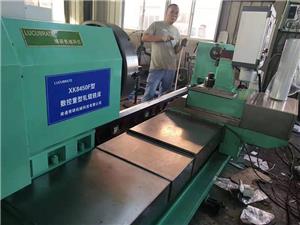
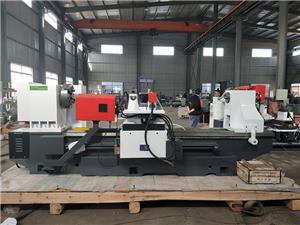
Unlike manual methods, CNC machines use servo motors and advanced software to ensure every notch is identical. The machine's controller calculates the optimal cutting path based on the tube's diameter and wall thickness, and then executes it with micron-level accuracy. For instance, NANTONG LUCUBRATE MACHINERY TECHNICAL LTD. offers machines with a positioning accuracy of ±0.05mm, ensuring that scrap rates drop to near zero. This precision also allows for complex notch shapes, such as saddle cuts or offset notches, which are nearly impossible to achieve manually.
High-Speed Automation and Quick Changeovers
CNC machines are designed for high throughput. With automatic feeding systems and programmable tool changers, the cycle time for a typical notch and mark operation can be reduced to under 10 seconds. Changeovers are a breeze: operators simply input the new dimensions into the control panel, and the machine adjusts itself in minutes. For the Texas HVAC factory, upgrading to a CNC machine cut cycle time to 12 seconds and changeover to 3 minutes, boosting overall productivity by 300%.
Enhanced Operator Safety and Ergonomic Design
Safety is paramount. CNC machines come with fully enclosed guarding, light curtains, and two-hand operation controls, ensuring that operators are never exposed to moving parts. The marking process is also automated, using either dot peen or laser marking, which eliminates the need for manual stamping. This not only reduces the risk of injury but also minimizes physical strain, allowing operators to focus on monitoring the process rather than performing repetitive tasks. NANTONG LUCUBRATE MACHINERY TECHNICAL LTD. designs its machines with ergonomic loading and unloading stations, reducing the risk of musculoskeletal disorders.
Real-World Success Stories
Let's look at how three different companies transformed their operations with CNC roll notching and marking machines.
Case Study 1: Precision Exhaust Systems, Ohio, USA
Precision Exhaust Systems, a mid-sized fabricator, faced a 7% scrap rate and constant customer complaints about inconsistent fitment. After investing in a CNC roll notching machine from NANTONG LUCUBRATE MACHINERY TECHNICAL LTD., they saw immediate improvements. Scrap rate dropped to 0.5%, and production output increased by 40%. The plant manager, Mark Johnson, noted, "The machine paid for itself in 14 months. Our rework is almost nonexistent, and our customers have noticed the difference. We're now the preferred supplier for three major OEMs."
Case Study 2: HVAC Components Ltd., Texas, USA
This company specialized in custom HVAC ducts and struggled with slow changeovers and long cycle times. By implementing a CNC roll notching and marking machine, they reduced their average cycle time from 45 seconds to 12 seconds, and changeover time from 20 minutes to 3 minutes. As a result, their daily output doubled, and they were able to accept rush orders without disrupting their schedule. The Operations Director, Sarah Chen, said, "The flexibility is incredible. We can switch between different tube sizes in minutes, and the marking quality is flawless. Our clients love the traceability codes."
Case Study 3: MetalWorks Fabrication, Michigan, USA
MetalWorks, a job shop, had safety concerns and wanted to expand their capabilities. They invested in a CNC machine with both notching and marking functions. Within six months, they reported zero safety incidents, and their throughput increased by 60%. The owner, Tom Reynolds, commented, "The machine is a game-changer. We've taken on complex projects that we previously had to outsource. The accuracy is spot-on, and the safety features give us peace of mind."
Case Study 4: Tubular Products Inc., Illinois, USA
Tubular Products, a supplier for agricultural equipment, faced challenges with marking durability. They switched to a CNC machine with laser marking, which provided permanent, high-contrast marks that withstand harsh environments. Their reject rate due to illegible marks dropped from 3% to 0.1%. The Quality Manager, Lisa Brown, stated, "The laser marking is a huge upgrade. We can now include QR codes and batch numbers that survive painting and treatment processes. It's improved our traceability and reduced warranty claims."
Case Study 5: Advanced Tube Solutions, California, USA
This company, serving the aerospace industry, required extremely tight tolerances and certification traceability. The CNC machine from NANTONG LUCUBRATE MACHINERY TECHNICAL LTD. met their AS9100 requirements, providing full documentation and data logging for each part. Their production efficiency increased by 35%, and they passed their next audit with flying colors. The Engineering Manager, David Lee, remarked, "The machine's software integrates seamlessly with our MES. We have complete traceability from raw material to finished part, which is critical for our industry."
Applications and Partnerships That Build Trust
CNC roll notching and marking machines are versatile, finding applications across various industries:
- Automotive: Exhaust systems, roll cages, and chassis components.
- HVAC: Ductwork, fittings, and refrigerant lines.
- Furniture: Metal frames, chair and table legs.
- Aerospace: Structural components requiring high precision.
- Agricultural equipment: Frames, booms, and structural tubes.
NANTONG LUCUBRATE MACHINERY TECHNICAL LTD. has established long-term partnerships with leading manufacturers in these sectors. For example, they supply machines to a major European automotive Tier 1 supplier, ensuring consistent quality across their global plants. Another partnership with a North American HVAC giant has resulted in a customized machine that handles multiple tube diameters automatically, reducing changeover time to under two minutes. These collaborations demonstrate the company's commitment to understanding customer needs and delivering tailored solutions.
Frequently Asked Questions (FAQ)
Q1: What is the typical ROI period for a CNC roll notching and marking machine?
The ROI period varies based on your production volume and labor costs. In our experience, most customers see a payback within 12 to 18 months. For example, a company producing 500 parts per day with a 5% scrap rate might save over $100,000 annually by reducing scrap and increasing throughput. The exact calculation depends on your specific costs, but the savings from reduced scrap, labor, and rework are substantial.
Q2: Can these machines handle different tube materials like aluminum, stainless steel, or copper?
Yes, our machines are designed to handle a wide range of materials, including aluminum, stainless steel, copper, and even titanium with appropriate tooling. The CNC control allows you to adjust cutting speeds and feeds based on material properties, ensuring optimal results without compromising tool life. For example, cutting aluminum requires higher spindle speeds and lower torque, while stainless steel needs slower speeds and higher torque. The machine's software includes preset material profiles to simplify setup.
Q3: How does the marking system work? Is it reliable for traceability?
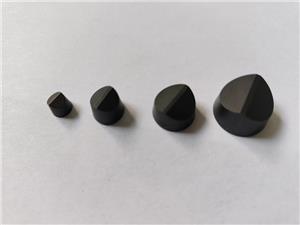
We offer two marking options: dot peen and laser marking. Dot peen uses a carbide or diamond stylus to create indented characters, which are permanent and suitable for harsh environments. Laser marking uses a focused beam to etch or anneal the surface, providing high-contrast, durable marks. Both systems can be programmed to mark text, logos, QR codes, and Data Matrix codes. They are highly reliable, with maintenance intervals of over 10,000 hours. The marking data can be automatically retrieved from your ERP or MES, ensuring error-free traceability.
Q4: What are the power requirements and footprint of such a machine?
Our standard machines require a three-phase power supply, typically 380V or 480V, depending on your region. The power consumption ranges from 5 to 15 kW, depending on the motor sizes. The footprint varies, but a typical machine occupies about 2.5 meters by 1.5 meters, which is compact for its capabilities. We also offer space-saving configurations with integrated loading and unloading systems.
Q5: How difficult is it to program and operate the machine?
We've designed the user interface to be intuitive, even for operators with limited CNC experience. The control system uses a touchscreen with graphical programming. You can input the tube diameter, wall thickness, notch angle, and other parameters, and the machine automatically generates the program. For complex shapes, you can import CAD files directly. Training is typically completed within two days, and our support team provides ongoing assistance. Additionally, we offer remote diagnostics and software updates to keep your machine optimized.
Conclusion: Your Next Step to Manufacturing Excellence
Upgrading to a CNC roll notching and marking machine is not just an equipment purchase; it's a strategic investment in your company's future. You'll eliminate costly scrap, boost productivity, ensure operator safety, and gain a competitive edge with consistent, high-quality output. The success stories we've shared are just a glimpse of what's possible.
If you're ready to transform your production line, we invite you to dive deeper. Download our comprehensive technical white paper that details machine specifications, case studies, and a cost-benefit analysis template. Or, better yet, contact our sales engineers for a personalized consultation. They'll assess your current operations and provide a tailored ROI analysis. Don't let outdated methods hold you back—embrace the precision and efficiency of CNC technology today.
For more information, reach out to NANTONG LUCUBRATE MACHINERY TECHNICAL LTD. and speak with an expert who understands your challenges. Your journey to higher productivity starts here.